

2025 was a wait-and-see kind of year for CRE, and multifamily residential in particular. While investors see green in the medium- and long-term in Mountain West markets, the economic uncertainty vibes are likely to again dominate in 2026.
Those two forces–steady investment in the Salt Lake market and multi-family headwinds nationally–seem to make up many of the dynamics we’ve been seeing lately. Will they repeat in the new year?
Let’s see, first, what the leading indicators are saying.
Architects say it’s not good
The Architecture Billings Index (ABI) survey from November was another downer.
Business for design firms is squishy soft when measured nationally. November was the 13th consecutive month of declining billings at architecture firms, as measured by the AIA/Deltek Architecture Billings Index.
And the trend is growing an ever-longer tail, three years now. In 35 of the last 38 months, reporting firms have said that business is down from the previous month.
“Inquiries into new projects only increased modestly this month, and the value of newly signed design contracts continued to soften,” notes the November report.
But building permits are up locally
After three years of decline from 2021’s height, multi-family permitting in Utah was significantly up in 2025, according to data from the Ivory-Boyer Database at the Kem C. Gardner Policy Institute at the University of Utah.
Yes, permits for multifamily were up in 2025 (defined as duplex and denser). But compared with 2023 and 24’s dismal numbers, there was plenty of room for improvement.
We don’t expect much, if any, aggregate state-wide permit growth for multi-family in 2026.
Here’s 2025 data through September by Dejan Eskic at the Gardner Policy Institute:
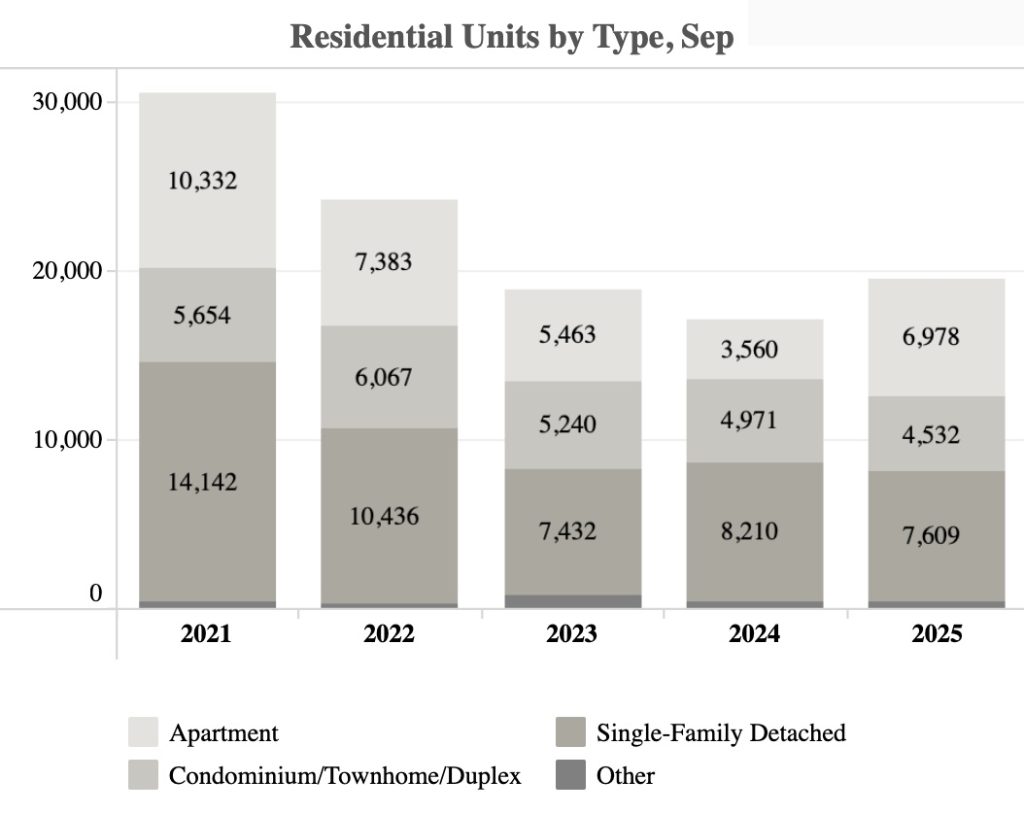
Credit: Kem C. Gardner Policy Institute and Ivory-Boyer Real Estate Center
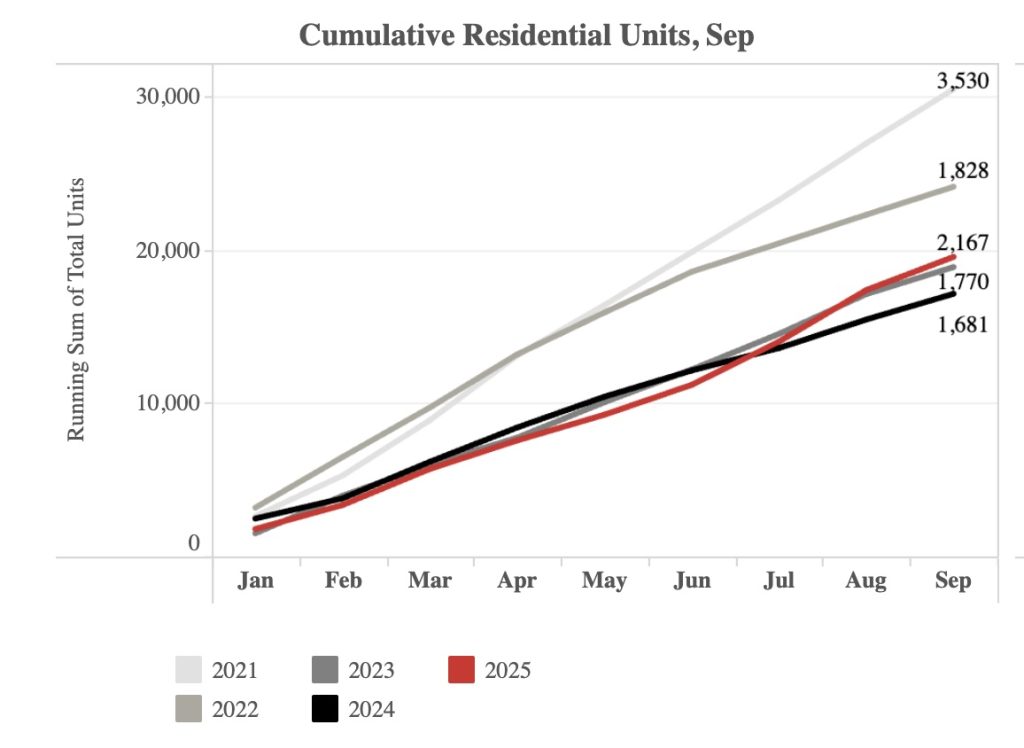
Credit: Kem C. Gardner Policy Institute and the Ivory-Boyer Real Estate Center
What about rents?
For investors, the Salt Lake multi-family market is still in a “correction” stage, where inventory has outpaced demand.
Concessions to entice new renters are at an all-time high. Does that mean that rents are in a free-fall?
Hardly. Concessions are a way to discount rents temporarily, usually only in the first months of a lease. While there has been a small recession in local rents, rent growth is expected to return to the market in 2026, however mildly, and likely lower than inflation.
Will investors make moves?
The soft market for multi-family investors in 2024 and 2025 was predictable, given 2023’s record number of construction deliveries.
For investors, if normal patterns play out, the market will start to correct itself by the end of 2026. Vacancy will decline and concessions to new renters will taper off as supply gets absorbed.
What market correction might look like when returns real estate investors are getting in Salt Lake are poor compared to other markets, as we reported in November, will be seen in 2026. Some say rents will need to rise locally to attract investors that currently have better cap rate options elsewhere.
Yet long-view optimism still predominates among many local professionals. As one put it at ULI’s Trends Conference in November, “If concessions turned off right now in Salt Lake, I think the same amount of demand, the same amount of lease up velocity persists. Because we have those strong job drivers and population growth drivers, some of the best stories long-term out of any state in the West.”
Indeed, despite slowing population growth, housing demand is expected to remain strong statewide.
Investors who are thinking to get ahead of the next demand curve may make some deals in 2026, planning to begin construction in 2027 or 2028. But we wouldn’t expect them to be pulling permits this year.
And remember: New-build CRE investment with high-risk and middling returns faces competition from other sure-bet investment products.
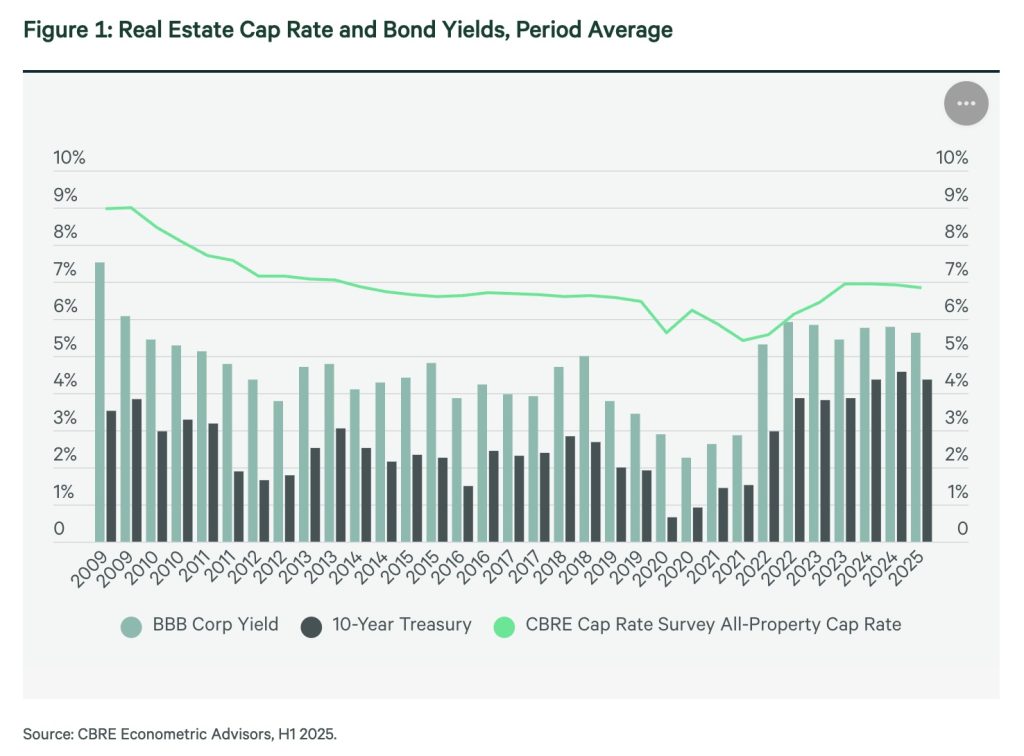
In addition, CBRE reports that owners expect their profits to continue to slide. Cap rates have peaked, the survey’s respondents say.
What about sales?
Borrowing costs have kept a lid on transaction growth since 2023, and there’s not much to report in the local market except small murmurs of normalcy. We’re not expecting much moving of the needle this year, unless borrowing costs dip precipitously.
Sales at bankruptcy are another matter, and will likely make a ripple in 2026 at least through Salt Lake City’s Granary District.
Industry SLC exits the Granary – expect some shuffling of the deck
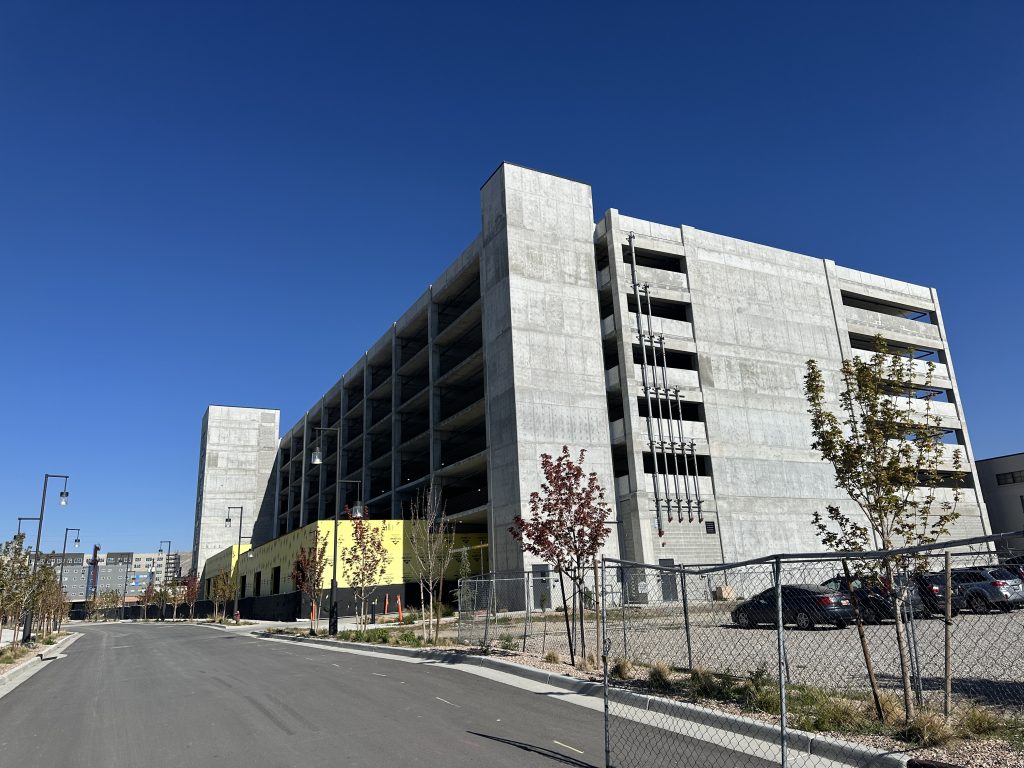
The Granary parking garage in October 2025.
Credited for sparking investment in the Salt Lake City’s Granary District, just southwest of Downtown, Industry SLC, Makers Line, and Catalyst Opportunity Funds built an office building and a parking garage on a $97 million loan that has defaulted.
As we wrote in November, “It’s too soon to say what the downstream effects of a foreclosure and eventual sale could be for the trajectory of the Granary District.
“Catalyst is a partner with other major players in the neighborhood. Specifically, the group said that it has invested $600 million in the broader Granary area, along with Blaser Ventures and Lowe Property Group.
“Blaser and Lowe recently recapitalized the Post District immediately north of the Granary in a $170 million deal.
“Blaser is likely the largest single landholder in the area, with plans to develop holdings from Kilby Court west to Granary Live and more.”
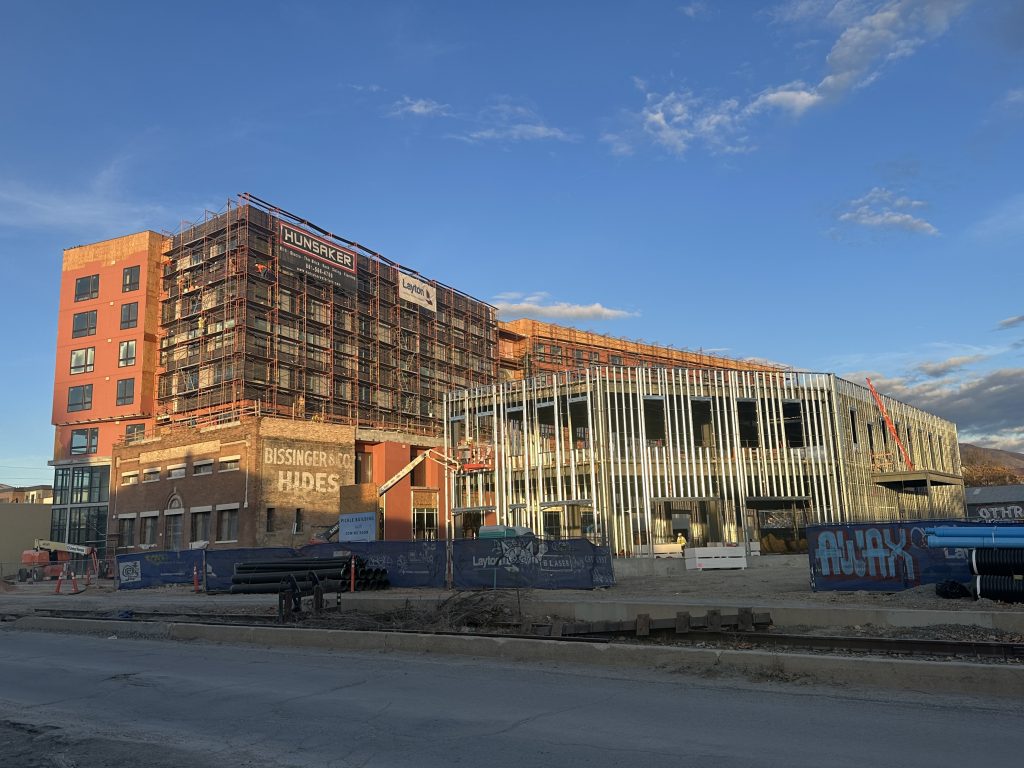
Pickle & Hide, a Blaser Ventures project at 741 S 400 W in November 2025. Photo by Building Salt Lake
Whether the partners behind the Post District will be able to leverage their current investments to scoop up the Industry SLC, or whether legal entanglements will lead to a protracted divorce while other investors weigh in, will be one of the stories we’ll be watching in 2026.
Housing to advance at the Legislature?
As the 2026 session unfolds, Building Salt Lake will continue to follow housing (in)action at the Utah State Legislature.
So far, state leaders have talked big and set some lofty goals, but are yet to deliver on a set of policy and budget initiatives that would move the needle on housing production.
Bill proposals have been many, but we’re not expecting much. Please, Utah state government, surprise us this year.









0 Comments