
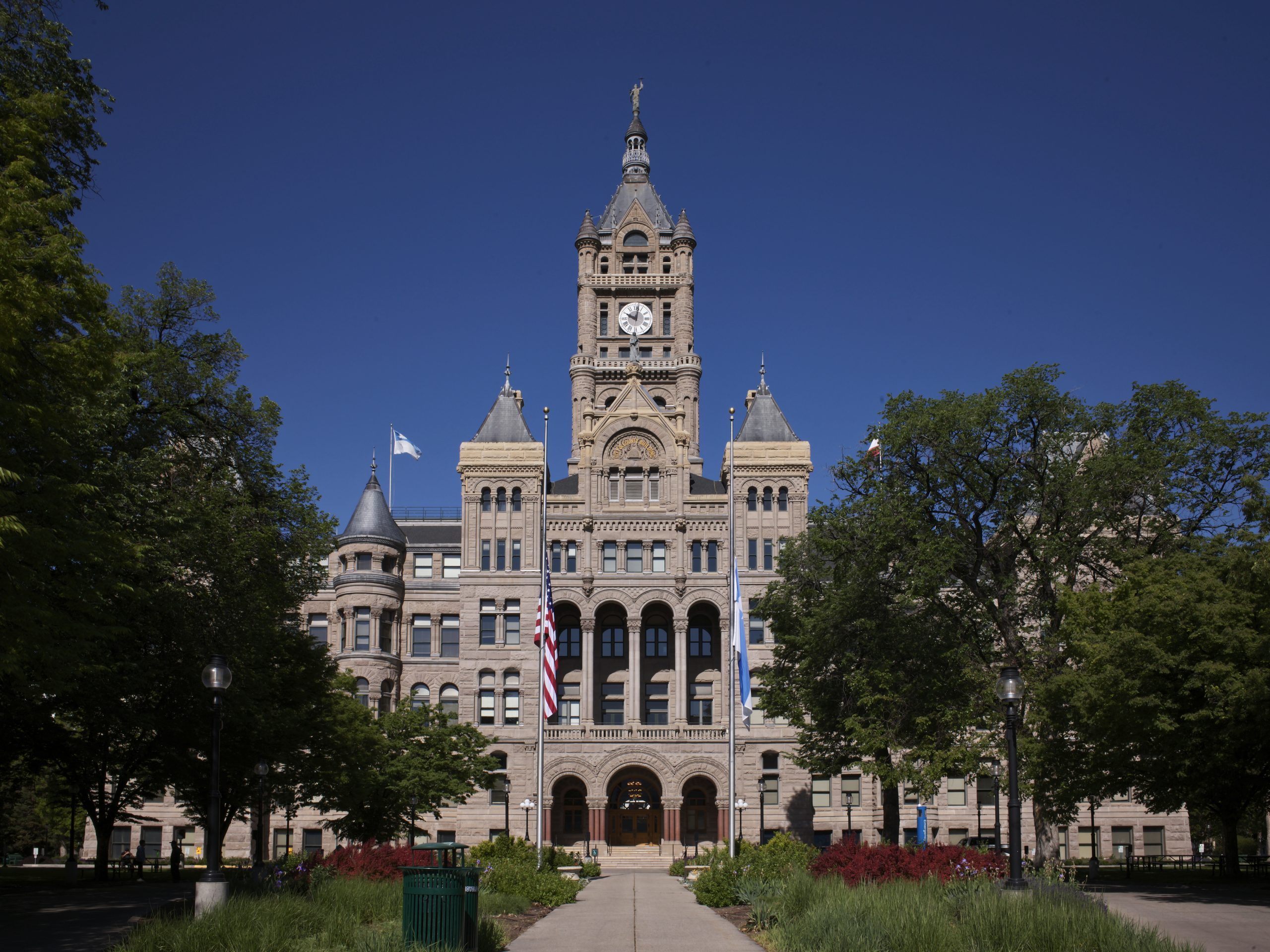
Salt Lake City voters have made it clear — the majority of municipal voters want to keep the status quo of the City Council, as incumbents and a heavily endorsed newcomer either outright declared victory Tuesday or seem to be on their way to reelection.
Tuesday’s voting results follow a general pro-development stance and a number of housing policy changes approved by the City Council in recent months, including overhauling the city’s mixed-use zoning code, changing design review standards and the ever-present expansion of new affordable housing units citywide.
Those types of reforms appear poised to move forward, as the council still has a handful of potential changes before it.
In a new term, the council could consider altering the single-family zoning code and adjusting the RMF-35 and -45 zones, both of which haven’t yet reached their desks. Infrastructure and road improvements will surely be ongoing focuses for council members, though Senate Bill 195 has complicated traffic calming plans and projects like the Green Loop.
As of Wednesday afternoon, council incumbents who seem to be on their way to victory include Sarah Young in District 7 (who ran unopposed), Victoria Petro in District 1 and Chris Wharton in District 3. The council’s lone newcomer is likely to be Erika Carlsen, who declared victory over her District 5 opponent Tuesday night. Carlsen will replace Darin Mano, who did not seek reelection and endorsed Carlsen.
District 3 (Avenues, Capitol Hill)
In the most crowded race, Wharton fended off four candidates to win his third term on the council and remain the group’s most tenured member. Wharton, who declared victory Tuesday night, gathered 50% of votes in the third round of voting, beating software developer Blake McClary’s 28% and Liddy Huntsman-Hernandez’s 22%. The other two candidates, Jake Seastrand and David Berg, were eliminated in the first and second rounds, respectively.
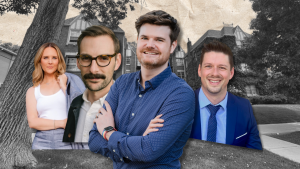
The expansion of affordable housing units is one of Wharton’s proudest achievements during his time on the council, he told Building Salt Lake previously. Wharton has been a proponent for added density in his district. He said the diverse housing stock in the Lower Avenues, much of which was built before zoning laws, is what makes the neighborhood so desirable, and other neighborhoods should use it as a model.
Still, Wharton was notably skeptical of a plan to replace a vacant lot in the Upper Avenues with a single-family subdivision built by Ivory Homes. That development took four years before it obtained final approval.
He told BSL last month that if the city can, “find a way to to add density in places where it makes sense and to add diversity of housing stock, not only are you going to get neighborhoods that are better able to withstand economic trends, but you’re going to get that neighborhood character that makes all of Salt Lake city’s neighborhoods unique.”
The district could see another test of its willingness to allow new density if Intermountain Health moves forward with its plan to replace LDS Hospital in the Upper Avenues with a new one built on the Sears Block.
Transportation also loomed over the District 3 race. Wharton emphasized the need for expanding Utah Transit Authority bus lines and expanding active transit — though he said the district’s varying elevation can make that difficult.
Wharton’s opponents took a different approach and slammed policies that Wharton has largely been supportive of within the district and across town.
McClary told BSL last month he was in favor of concentrating biking infrastructure instead of having bike lanes on more streets, saying, “not every road should be a bike utopia.”
“We should pick which roads are really the bike-type pathways and double down,” he said during an interview with BSL. “Let’s make them as nice as we have the 9-Line today. But that doesn’t mean it needs to be every single road. I believe this makes it safer for bikers.”
Huntsman-Hernandez took that a step further, as she questioned whether the city’s expansion of bike lanes has been worth the trouble. She told BSL that the long-term traffic impacts from bike lanes still isn’t clear, adding she had talked to numerous voters who had buyer’s remorse over bike lanes.
“There’s not been enough transparency about what that actually means, how that’s going to affect our commutes to work,” Huntsman-Hernandez told BSL previously. “I just think that we need to start looking at what we’ve implemented and seeing how that’s working in the future.”
Huntsman-Hernandez also criticized the city council for their deals with the Smith Entertainment Group for redeveloping areas near the Delta Center and the Salt Palace Convention Center. The council approved a 0.5% sales tax increase in October 2024 to fund the redevelopment.
She railed against special interest groups and told BSL that, “the No. 1 special interest group that I think is going to destroy Downtown Salt Lake City is the Ryan Smith Entertainment Group.”
That criticism may not have registered with east side voters in District 3. However, that same message seems to have carried more weight among voters on the west side.
District 1 (West side north)
In the city’s closest council race, Petro grabbed 52% of the vote compared to her competitor, newcomer Stephen Otterstrom, who tallied the remaining 48%. A third candidate, Yussuf Abdi, withdrew his candidacy last month and endorsed Petro.
The race has yet to be called, and one precinct has yet to report results as of mid-day Wednesday. But the narrow preliminary results may point to discontent in a district that has seen perhaps the most intense amount of development in recent years.
Many of Salt Lake City’s LIHTC developments have been concentrated along North Temple, and about half of those projects are in District 1.
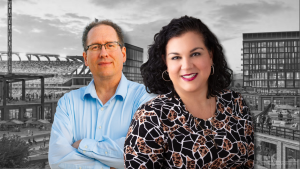
Petro told BSL that developments in the area will obviously continue into the future — especially in the nearby Power District — but she talks with developers frequently in order to voice her constituents’ wants and needs. She also worried that concentrating low-income housing developments in one area, which also features a number of nearby industrial sites, will have negative effects down the road.
Though Petro seems to be on her way toward a second term on the council, the narrow vote count with Otterstrom is surprising. Otterstrom told BSL a big reason he jumped into the District 1 race was his frustration with the city’s Downtown deal with SEG, citing it as an example of the city government siding with billionaires over everyday residents.
Otterstrom told BSL the city should focus more on small businesses and offer support to mom and pop shops instead of pushing millions in taxpayer funds to companies like SEG, saying that he felt betrayed by the current council over such deals.
The 47-year-old Fairpark resident said he’s hesitant to treat LIHTC developments as a permanent housing solution, pointing out that often the deed restrictions on such properties can expire and drive up rents for tenants. He instead focused on cooperative housing approaches as a better alternative, and he told BSL he would lead a charge toward that model if elected.
This post will be updated if the preliminary results change and Otterstrom overtakes Petro. But to the southeast, the council will have a new face, and it’s one that the mayor and council all endorsed.
District 5 (Ballpark, Liberty Wells, East Liberty)
The council’s lone new addition appears likely to be Erika Carlsen in District 5.
From the outset, Carlsen seemed to be the heir-apparent on the council. She gathered endorsements from every other council member as well as from Salt Lake City Mayor Erin Mendenhall. Carlsen was also endorsed by the current District 5 council member, Darin Mano, who was not seeking reelection.
According to the latest polling results, Carlsen gathered 66% of votes compared to the runner-up Amy J. Hawkins’ 31%. Vance Hansen came in third with 3%.
Last month, Carlsen told BSL she’s in favor of the council’s policy changes around housing and transportation, adding she is all for making it easier to build homes and support local businesses. Carlsen supports the expansion of ADUs in the city, saying that type of housing and density can, “build a stronger neighborhood, stronger community.”
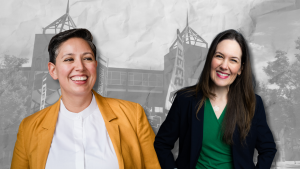
Ballpark NEXT has been the talk of the neighborhood since the city released its plans this summer, and while Carlsen has been generally in support of the proposal, Hawkins has been more critical, largely over the lack of green space.
Both Hawkins and Carlsen said the neighborhood desperately needs more for-sale housing, but the two offered differing priorities when asked how to make Ballpark more family-friendly.
Carlsen said the cost of housing is a large reason why families are opting for the suburbs. She said the city needs to prioritize building family-sized units, instead of keeping the trend of developing complexes that feature mainly studio and one-bedroom units. By taking a gentle density approach, she previously told BSL, “we can create and deliver more housing so that people can live where they work.”
Public safety was a particular concern of Hawkins’ campaign. She said a number of her Ballpark neighbors have moved away because of crime, not the lack of amenities or opportunities in the neighborhood. By taking a regional approach and coordinating with state officials, as Hawkins has been doing, she believes improving public safety and expanding for-sale housing stock is a way to make Ballpark a potential destination for families.
“… We can become the neighborhood where individuals and families choose to get a foothold in the community and get to build equity for the first time,” Hawkins told BSL last month. “I think that would be the best possible future for this neighborhood.”













0 Comments