
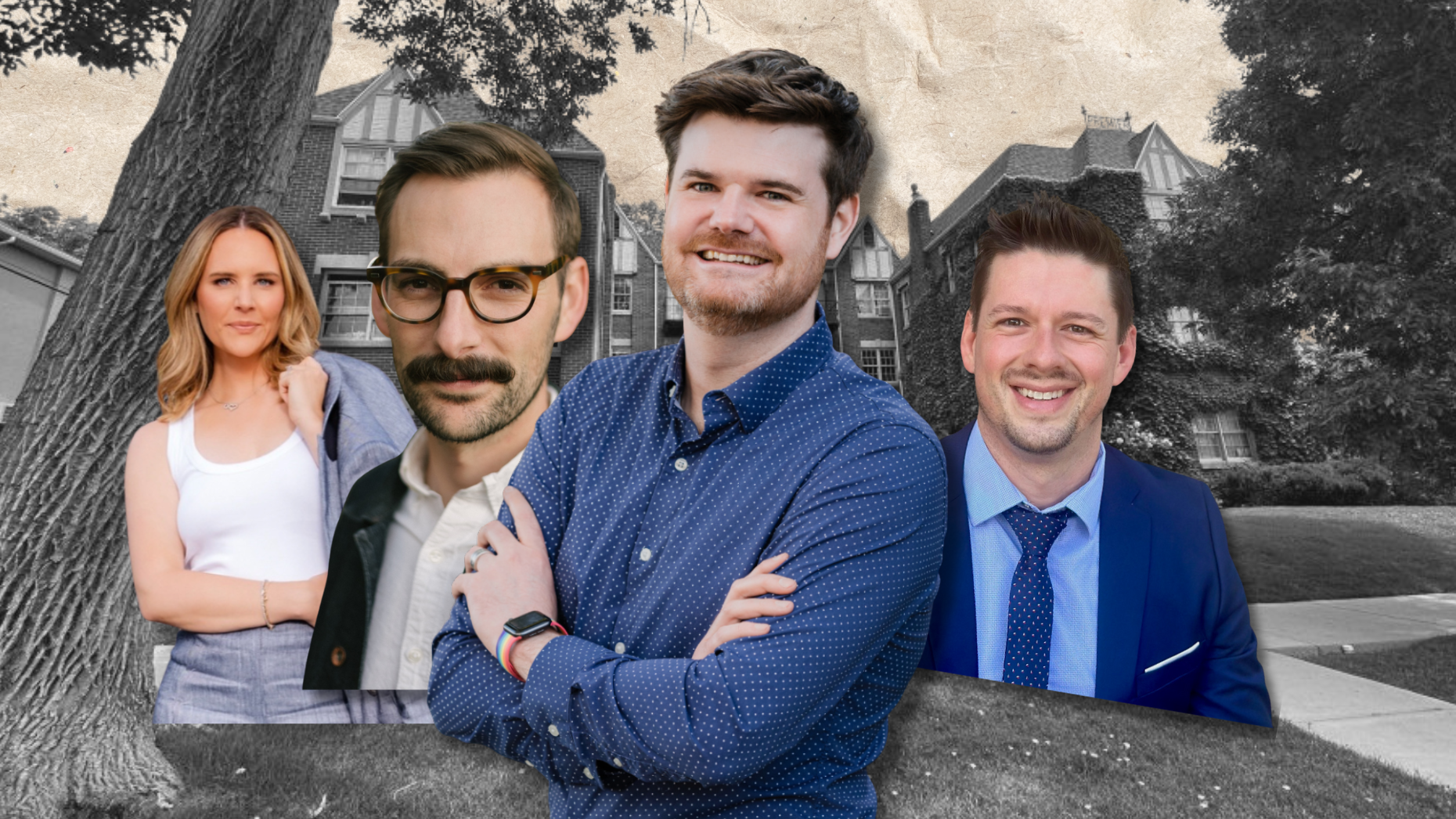
In some of Salt Lake City’s oldest neighborhoods, candidates are targeting an incumbent on the future of real estate development, the condition of parks and policies that might make the city more friendly to families.
Incumbent Council Member Chris Wharton is seeking his third term on the council, while candidates Blake McClary, Jake Seastrand, Liddy Huntsman-Hernandez and David Berg are trying to be the new face of District 3.
Building Salt Lake interviewed the majority of candidates to get their takes on housing, transportation, density and other topics relevant to people living in District 3 and citywide.
One District 3 candidate, David Berg, was not interviewed by Building Salt Lake. After initially responding to an email, Berg did not respond to subsequent emails from BSL attempting to schedule an interview.
CHRIS WHARTON
Seeking his third term on the City Council, Chris Wharton, a 41-year-old resident of Marmalade, is an attorney who practices family law and LGBTQ advocacy in Salt Lake City.
Wharton said he’s running for reelection to bring continuity and experience to the council, saying there’s been high turnover on the council in recent years.
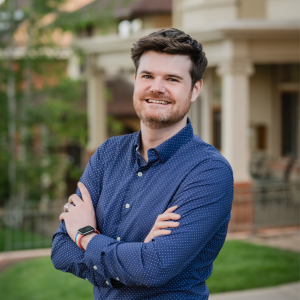
Chris Wharton. Courtesy image
“I never thought that after serving two terms that I would be the most senior member of the Council, but that’s just the way that it worked out,” Wharton said.
Wharton said one of the highlights of his time on the council has been the expansion of new affordable housing units across the city, adding that he wants to expand rent-to-own programs in the city. He said he will continue to support entities like the Perpetual Housing Fund if reelected to the council.
Housing affordability is a key issue among Wharton’s constituents, he said. While much of D3 is zoned as single-family housing, he contended that the Avenues is closer to a 50-50 split between standalone single family homes and buildings with multiple units, whether the latter has an ADU or multiple units under the same roof.
Because much of the Lower Avenues was developed before zoning laws, the neighborhood has a mix of different forms of housing, and Wharton said that’s one of the reasons why it’s such a desirable neighborhood. The diverse housing stock in the Lower Avenues needs to be a model for other neighborhoods, he said.
“I think that if we can do that, and find a way to to add density in places where it makes sense and to add diversity of housing stock, not only are you going to get neighborhoods that are better able to withstand economic trends, but you’re going to get that neighborhood character that makes all of Salt Lake city’s neighborhoods unique,” Wharton said.
The Avenues also has a unique problem with its varying elevations, which makes walkability more difficult. While Wharton said the city’s East-West transportation connections still need improvement, Wharton said he wants to expand Utah Transit Authority bus lines within his district in the hopes of getting people out of their cars.
“The Avenues is great because it’s so proximate to Downtown, but the challenge is that it’s so steep that for a lot of people, unless you’re in pretty peak fitness, it can be really hard for people to use active transportation,” Wharton said. “I want to find a way to still make it more walkable, or still make active transit an option.”
BLAKE MCCLARY
Blake McClary is a 36-year-old resident of the Avenues, and he works in the tech sector developing software. He said he’s running to represent District 3 because of his neighbors’ frustration with the current City Council and Mayor Erin Mendenhall.
He said the costs of services in Salt Lake City continue to rise while the services provided to residents declines. One example he cited was Salt Lake City’s increasing water bills. McClary said his water bill doubled in recent months without any change in usage.
“You see this in things like our parks,” McClary said. “For example, our parks are not well maintained. They have become de facto shelters for people when they shouldn’t be. It’s not humane for them, and it’s not a good use of our park space.”
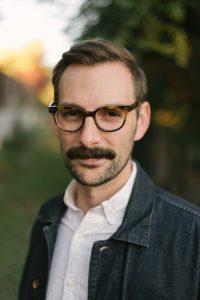
Blake McClary. Courtesy image
McClary said he’s supportive of the city’s recent zoning changes, but that the city needs to do a better job of trying to keep families in Salt Lake City. The school district closed four elementary schools last year, and McClary said the city needs to get creative if it hopes to make the city more hospitable to families.
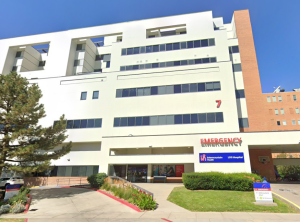
McClary recently pitched a plan to voters that would seek to redevelop LDS Hospital into housing if the complex is vacated and its services moved to Intermountain Health’s yet-to-be-built hospital Downtown. While that plan may be difficult to execute, it’s in line with his overall sentiment that Salt Lake City needs more family-sized, for-sale units to keep families in the city.
“One of the things that we can really dig into is creating townhomes, urban cottages, row houses, that kind of housing product,” McClary said. “It isn’t the traditional single family home, because that’s not very scalable, right? Especially in my district, where it’s mostly built out. So I would love the city to focus on prioritizing condos and townhomes, stuff that people can purchase, as well as stuff that is just a little bit bigger in nature.”
McClary said he’s a proponent of biking infrastructure, as he bikes to work on one of his two e-bikes. He said he would prefer the city concentrate on building biking infrastructure in certain areas and doing it well, rather than have mediocre bike lanes in more streets.
“We like bike infrastructure, but not every road should be a bike utopia,” he said. “We should pick which roads are really the bike-type pathways and double down. Let’s make them as nice as we have the 9-Line today. But that doesn’t mean it needs to be every single road. I believe this makes it safer for bikers.”
McClary has been critical of Wharton’s tenure and said it’s time for new representation. One of his recent frustrations with city hall has been with Mendenhall’s FY2026 budget. The city’s budget increased 6.7% between FY25 and FY26, and Mendenhall said in May the budget increase is driven “almost entirely by inflation and the rising cost of maintaining the services and infrastructure we already have.”
McClary said the city has started to dip into its fund balance to cover the budget, which he said is poor planning on the part of city leadership and the council. Mendenhall also mentioned in May that a property tax increase could be possible in the near future, which McClary said is financially irresponsible.
“This, to me, is negligence that the city council did not push back on the mayor, because you just have to be able to maintain the budget in the city, and that’s a big part of the council’s job, and Chris (Wharton) did not do that this year,” McClary said. “This is where we need a bigger check and balance on the system.”
For McClary, the city needs to be good at the basics: roads, parks, garbage disposal, utilities. He doesn’t believe the current city government is doing enough, and instead he believes the city is more focused on large legacy projects like the Green Loop.
“It’ll cost $500 million, but our parks, like Liberty Park and Pioneer Park, are not what they should be today,” he said of the Green Loop project. “I think many people would agree with that. That’s what I’m hearing at the doors. So why would we go spend $500 million at least on a brand new park when we can’t even maintain the parks that we already have existing today?”
LIDDY HUNTSMAN-HERNANDEZ
Elizabeth “Liddy” Huntsman-Hernandez is a 37-year-old resident of the Avenues, and she describes herself as a stay-at-home mom and an advocate for Type 1 Diabetes and mental health.
Liddy is one of seven children of former Utah governor and presidential candidate Jon Huntsman Jr. Huntsman-Hernandez was living in the Dominican Republic, which is where her husband is from, as well as Pennsylvania and New York City before she moved to the Avenues in recent years where she grew up.
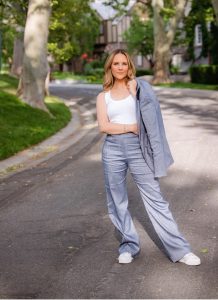
Liddy Huntsman-Hernandez. Courtesy image
“Moving back in the same neighborhood that I grew up in, I realized how much had changed,” Huntsman-Hernandez said. “The advocacy is just in my nature. When I see something, I want to make change. That’s really a big reason why I want to give back to this community, because it’s given me everything.”
As a candidate for city council, Huntsman-Hernandez said she tries to view decisions through the lens of a few questions: “Does this improve livability, does this improve affordability, and does this help families succeed in the city?”
She said that some issues, like the city’s Downtown parking changes and expansion of bike lanes, had good intent but haven’t been implemented correctly. She questions what the long-term strategy would be for upping hourly parking rates and extending enforcement time. For bike lanes, she also questions what the long-term impacts could be to the city’s overall traffic.
“I’ve talked to a lot of voters who are having buyer’s remorse when it comes to voting for the bike lanes,” Huntsman-Hernandez said. “There’s not been enough transparency about what that actually means, how that’s going to affect our commutes to work. I just think that we need to start looking at what we’ve implemented and seeing how that’s working in the future.”
For District 3, she said the area’s biggest transportation issue is a lack of organization and a master plan. She cited the recent parking issues at the University of Utah, and though it’s not in District 3, Huntsman-Hernandez said the district often bears the brunt of the university’s spillover traffic.
“We have the infrastructure to create a great transportation plan around bikes, the FrontRunner, Trax, busses,” she said. “I just don’t think that we’re organized.”
While growing up in the Avenues, Huntsman-Hernandez said families were everywhere. Now, Salt Lake City is closing schools and consistently losing families to places like Draper or Daybreak.
While the city certainly needs affordable housing units and apartments, Huntsman-Hernandez said building one-bedroom apartments won’t help families. She believes the Avenues should largely remain single-family homes, but there’s room to grow with modest ADU expansion.
“We have too many of the wrong kind of units that are being built,” she said. “When it comes to District 3 — think heavy-Avenues area — should be very gentle density.”
Public safety and expanding mental health services is another point of focus for Huntsman-Hernandez. She wants to create the city’s first mental health task force and pinpoint what can be done to better serve those in need of help and strengthen the city’s public safety. She feels that a lack of public safety is damaging the city, adding, “in order for us to move forward economically, we need to change how we look at public safety.”
Huntsman-Hernandez described herself as an independent, as she criticized the current council and mayor’s office for being too beholden to special interest groups. She criticized the council’s votes to approve the .5% sales tax increase and the $900 million set aside to create the city’s Sports, Entertainment, Culture, and Convention District (SECC).
She added, “the No. 1 special interest group that I think is going to destroy Downtown Salt Lake City is the Ryan Smith Entertainment Group.”
“I want to be able to be an independent voice,” Huntsman-Hernandez said. “If you want to say, ‘Do you think City Hall is independent?’ Absolutely not, everybody votes 0-7 with the mayor. So when you say, ‘Why aren’t these programs being implemented correctly?’ I’ll tell you why, everybody is part of the same club.”
JAKE SEASTRAND
One of the handful of newcomers to the District 3 race is Jake Seastrand, a 36-year-old resident of the stretch of Fairpark that’s located in the district. While Seastrand is a judicial assistant for the Salt Lake County Justice Court, he and his husband also own and operate a residential and commercial cleaning company.
Seastrand said he chose to run for office after seeing so many working professionals being priced out of their neighborhoods, adding he wants to be involved in city decisions while keeping the issue of affordability in mind.
“As a longtime resident of Salt Lake City, I generally am concerned about (housing affordability), and I don’t know how anyone will ever be able to afford a home in the neighborhood that they love,” Seastrand said. “So that challenge, that urgent challenge, really called me to action. It really motivated me to run for city council, and I do want to create real change.”
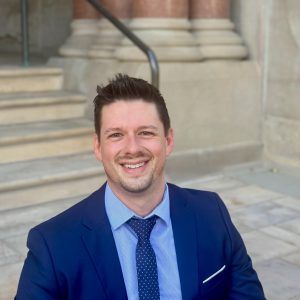
Jake Seastrand. Courtesy image
Seastrand said he supports Salt Lake City’s recent changes to its mixed-use zoning code, but he believes the city can do more. He said making changes to the city’s zoning code is an easy way the city can enable new housing without costing taxpayers money.
“The reality is that we need more housing options across the city, and in District 3, specifically, it’s already fairly urbanized — it’s single family homes, mostly,” he said. “We are seeing some changes on the western edge of the district in Fairpark and Marmalade with more higher density housing, but I’d like to see that exclusionary zoning taken back, and that would be my first step.”
Seastrand said the most pressing issues he’s heard from District 3 constituents are housing and transportation. He said Avenues residents told him they worry about being forced into creating large-scale housing density as part of the upcoming overhaul of the Avenues Community Plan.
Basic infrastructure updates are another concern Seastrand has heard from D3 residents. He said he tripped on plenty of raised sidewalks while canvassing, and others in the district emphasized the need for additional work on city roads and sidewalks. He said while the city and state are focused on larger projects like widening Interstate 15, “you kind of forget that neighborhoods need that too. They need consistent, regular upgrades.”
Seastrand said he believes the district’s biggest transportation issue is the balance between pedestrian safety and efficient neighborhood connections. He acknowledged that the city will continue to be car-centric, but traffic-calming measures should be expanded across Salt Lake City. He said District 3 constituents don’t believe the city’s move to lower speed limits had much of an impact, adding that drivers will always speed.
“Traffic calming measures, like curb extensions, better lighting, raised crosswalks, these kinds of things will really improve (safety), and just goes back to basic infrastructure,” he said.
VOTING
Ballots will start being mailed to registered voters on Oct. 14. Salt Lake County residents can also register to vote in-person at the Salt Lake County Clerk’s Office or residents can register to vote on Election Day, Tuesday, Nov. 4, at voting centers around the county.















0 Comments