
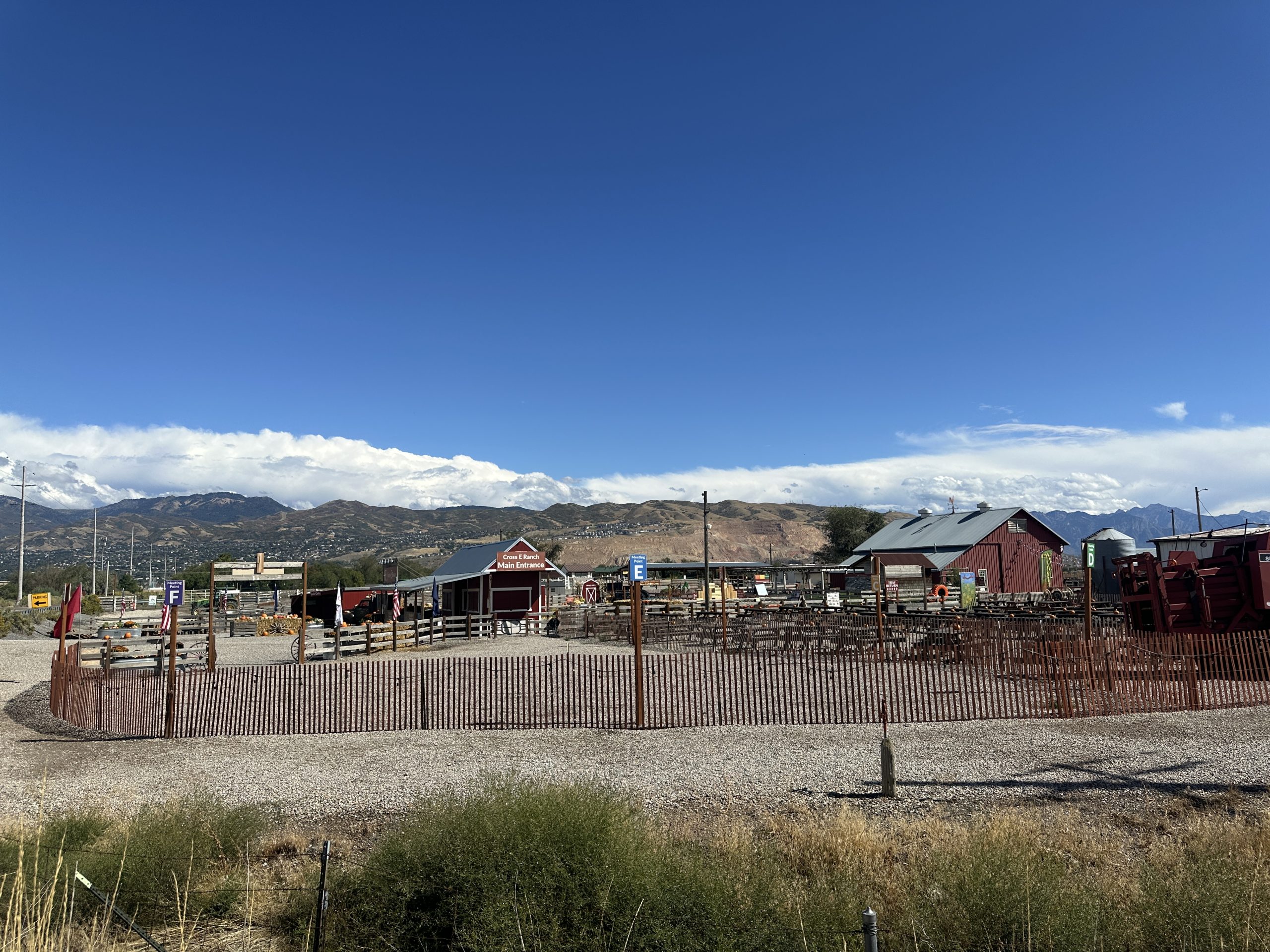
The family behind Cross E Ranch, the fall festival farm on the Jordan River at Salt Lake City’s far north end, has asked the city to rezone about 65 acres of the property for multifamily housing.
The application asks the city to rezone roughly 40 acres to RMF-30 and 25 acres to RMF-45.
The remaining roughly 150 acres would stay in the M-1A Northpoint Light Industrial zone, where a development agreement would lock in the ranch’s farming, festival and event uses.
At the applicant’s preliminary range of 8 to 29 units per acre, the rezone could allow roughly 520 to 1,885 homes.
Co-owner Heather Limon told Building Salt Lake the housing is how the family would keep the rest of the farm.
“We’re trying to make it so we can keep part of it in farming,” she said. “And in doing that, we can keep the majority of it actually in farming if the city will let us build something that makes a little bit more money.”
The filing is the latest chapter in a long retreat of agriculture from the northwest quadrant. Limon’s family once farmed the land where Salt Lake City International Airport now sits, leased the ground where the new state prison was built, and rented the fields that became the Northpoint warehouse district.
The ranch’s roughly 215 acres are what’s left, and Limon is blunt about their value as farmland: “200 acres of salty ground is not a farm.”
The whole ownership covers about 215 acres near 2200 West at the Jordan River, where Salt Lake City meets Davis County.
The proposed residential tract is the southern 65 acres, south of Center Street (3500 North) between 3200 West and the river. That’s the land closest to existing development and planned utility lines. It’s also where the fall festival operates today.
The RMF-30 zone would cover the lower-scale portion, with RMF-45 allowing moderate-scale buildings. The application says the housing could include both ownership and rental units but doesn’t commit to a product mix. It notes the zoning does “not approve a particular subdivision, building program, density, or site plan.”
Because this is a privately initiated rezone, city code requires the applicant to offer community benefits roughly proportionate to the new development rights.
Cross E’s package includes housing, protection of about 150 acres of ranchland, the applicants building the infrastructure, and an airport navigation easement.
The companion development agreement would also settle what the ranch can do on its remaining M-1A land.
Its use schedule runs from goat barns and you-pick orchards to zip lines, high and low ropes courses, a paintball range, a paddle boat and fishing lake, a wedding and event barn, private group tent camping and seasonal RV and boat storage. The application rules out a public RV campground or “KOA-style operation.”
The application acknowledges the city may also require a general plan amendment if staff finds the housing zones don’t match the adopted future land use map.
Why sell part of the farm?
Limon said the pressure comes from inside the family. When one generation of a farm family passes, siblings who don’t farm need to be paid their share, and in Salt Lake City the land is worth far more than anything it can grow.
“That’s farming’s biggest problem,” she said. “When that generation dies off that has the farms, and particularly in a place like Salt Lake City where the land value is so high. We would never be able to produce enough on the ground farming to pay any siblings out.”
The ranch has never paid for itself, Limon said. Her father kept it going with income from the family’s farms in Idaho, near Raft River and American Falls, and used it to winter cattle in a climate milder than Idaho’s or Wyoming’s.
“We always just called it a money pit,” she said. After her father died, “we would have been gone had we not done the entertainment business.”
The Cross E acreage is the last piece of a much larger footprint. Limon said her grandparents farmed the ground where the airport now sits before selling to the airport.
Her father leased farmland across the northwest quadrant for decades, including the site of the state prison, the duck clubs west of the airport, and the fields that now hold Northpoint’s big warehouses.
“Just little by little, as we’ve lost different pieces of ground … it makes it pretty impossible to run much of a program in Salt Lake City,” she said. “Then we’re just left with this last 200 little acres.”
The city annexed the ranch as part of roughly 1,300 acres of Northpoint in June 2025, applying the M-1A zone it created that January for light industrial uses near homes and farms. Limon said the new zone barred the largest warehouses, which ended the family’s earlier plan to sell the south end for industrial development. She said she wasn’t complaining about the change.
If the housing rezone fails, Limon said the likely outcome is a full sale to industrial users. “We’ll probably have to sell everything and have everything go into warehousing,” she said.
Being next to the airport, she said, the realistic options for the land are “either housing or warehousing.” 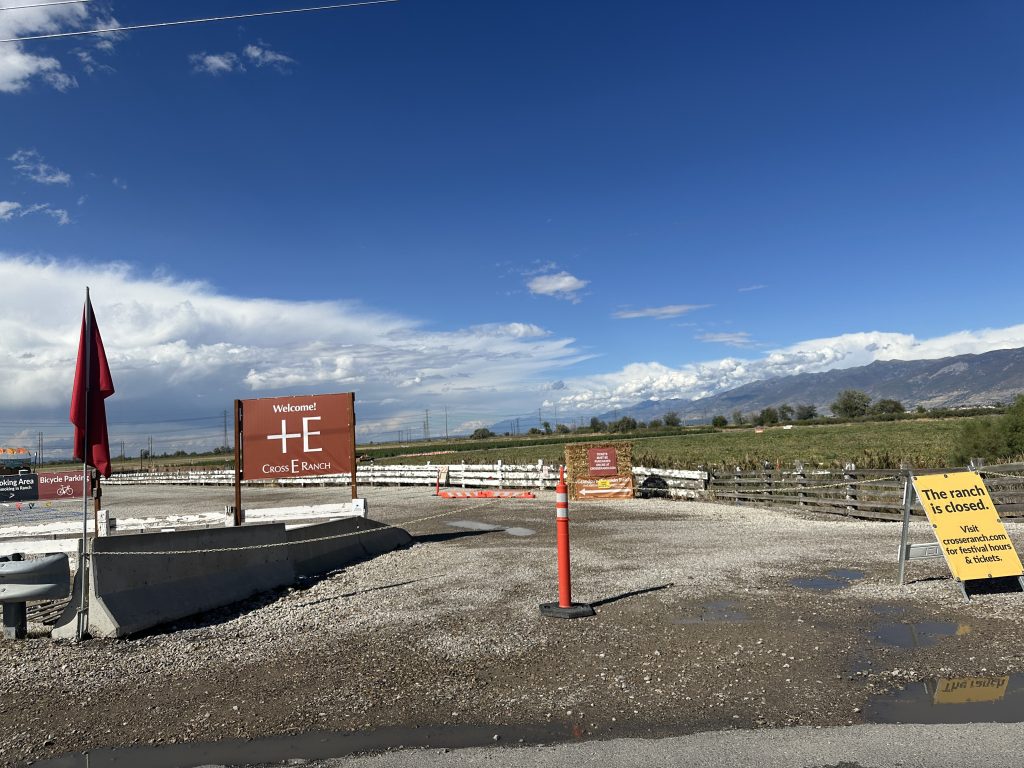
What happens to the festival?
Under the proposal, the festival would move across Center Street to the northern area. Limon said the family has built most of its attractions to be movable. The buildings are “old sheds” they’ve revamped and would replace with new structures, including food venues.
The pumpkins already grow on the north field, so the corn maze is the main crop that would have to move. “Obviously it will take us a while to rebuild it up to the level it is,” Limon said.
She estimated about 50,000 people visit. “We’ve tried to keep it very farmish and not make it too carnivalish,” she said.
Nothing has been sold, Limon said. “It’s not even sold yet. I have no contracts … City hasn’t approved anything.” This year’s festival runs through Halloween.













0 Comments