

After an issue with another project in the Granary District, it doesn’t seem that time has healed all wounds between the Salt Lake City Council and a local developer.
During a meeting Tuesday with the Salt Lake City Community Reinvestment Agency (CRA), council members acting as CRA board members denounced a plan to allocate tax increment funds to the Silo Park development in the Granary District. The council opted to not vote on the proposal and said it would instead discuss it again at a later meeting.
Silo Park is a mixed-use project located between 500-600 South and 400-500 West that spans around 8.2 acres. It includes a number of buildings, including a LIHTC project that consists of 180 units offered at 60% AMI, as well as 560 market-rate apartments.
The project also includes a 175-room hotel, an urban park and a total of nearly 75,000 square feet of commercial space. Beyond the housing units, the block would also contain food and beverage offerings, including two recently announced restaurants that include a bowling alley and live music venue.
The proposal would allow the project’s developers, Blaser Ventures and Lowe Property Group, to essentially borrow up to $51,486,631 of tax increment funds over a 25-year term. This tax increment would be done via a Housing and Transit Reinvestment Zone, or HTRZ. An HTRZ is a tool authorized by state code that allows cities to give part of an area’s tax increment to support development near areas with transit nodes. Silo Park lies within the Salt Lake Central HTRZ, making it eligible for funds.
HTRZ applicants can get between 60%-90% of an area’s tax increment, if approved by a city. In this case, the developers are requesting close to the 90% maximum.
The proposal also sought a handful of exceptions to a handful of CRA sustainability policies, including a policy to only allow all-electric appliances in CRA-backed developments. The proposal seeks a waiver to allow gas cookstoves in planned restaurant spaces, as well as gas appliances in residential common areas and gas water heaters in both commercial spaces and in housing units. The proposal also seeks a waiver on another CRA policy that requires buildings to be net-zero for emissions onsite.
Council members didn’t seem to be interested in the new F&B offerings or the new housing units. Instead, they seemed hesitant to allow the tax increment reimbursement request to go forward and questioned the requested waivers.
Some council members cited the fresh wounds from a past project in the Granary District.
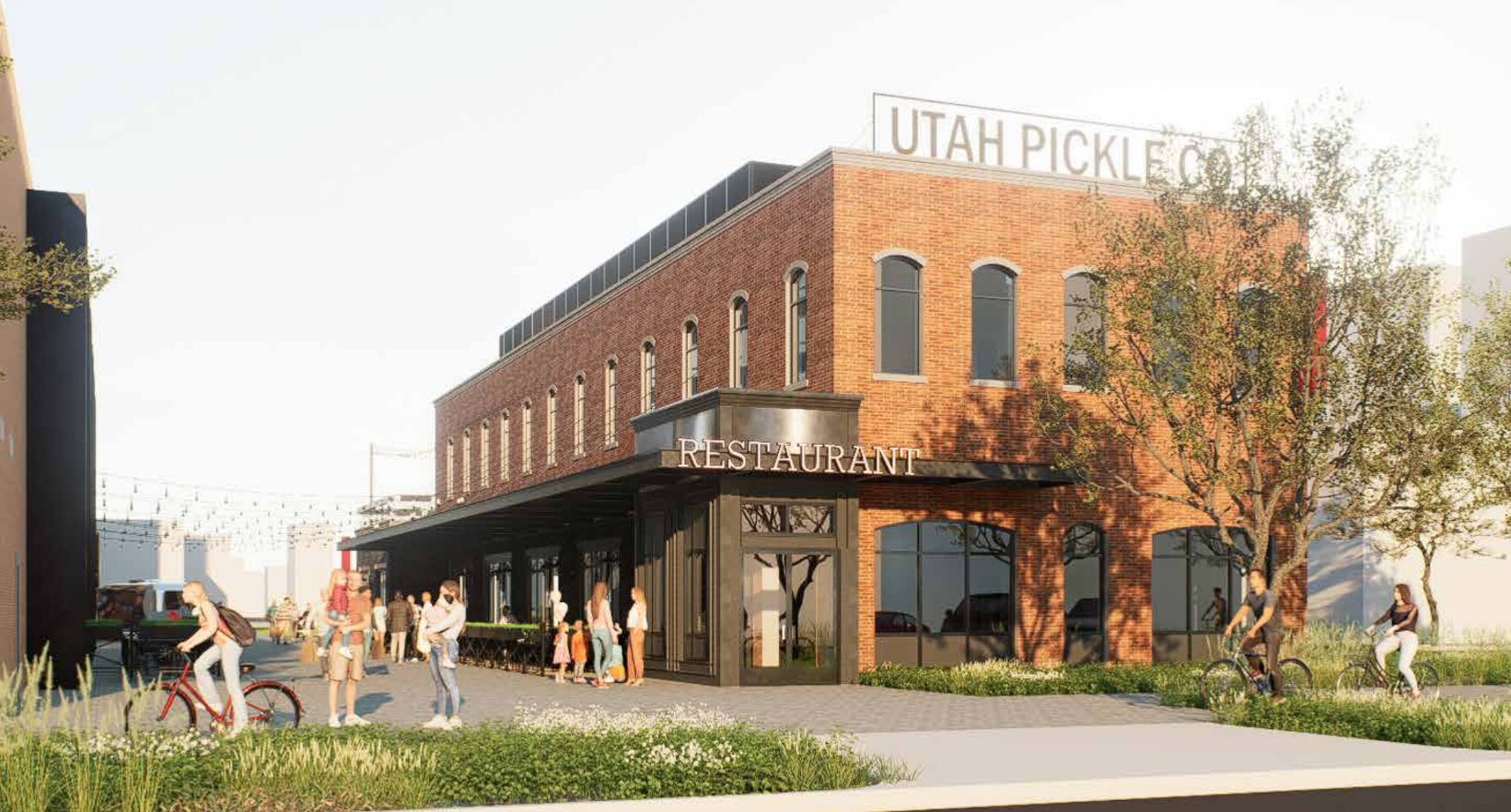
Last year, Blaser Ventures opted to demolish the historic Pickle building as part of the Pickle and Hide project, which is located two blocks to the south of Silo Park along 400 West. The Pickle building was supposed to be renovated instead of demolished, but it was deemed to be structurally unsound and was demolished with city approval.
The Pickle building is now in the process of being rebuilt with its past design and similar footprint.
Brandon Blaser, president of Blaser Ventures, has repeatedly apologized for the demo since, and has also added that the project will now be able to use more recycled materials than initially planned with the renovation route. Regardless, the demolition threw an initial tax increment deal with Salt Lake City into question.
In April, the city council opted to reduce the project’s tax increment allotment by around $1 million — which was enough to send a message but not outright kill the project, Blaser later told Building Salt Lake.
Council Member Alejandro Puy seemed to be the most frustrated with the Silos proposal Tuesday, saying, “there’s a lot of concerning things here, yet again.”
He asked CRA director Danny Walz how long the agency’s sustainability policies have been on the books.
Walz said they were passed around 2021. In response, Puy said, “so we have a policy on the books, the developer decided to ignore it.”
Puy said he struggles with the prospect of approving tax funds to the project, “especially knowing the track record.”
In a question to Walz about the development’s namesake historic silos that are slated to be preserved as part of the development, Puy alluded to the past issue with the Pickle building.
“What happens if the silos all the sudden are decided to be unsavable and get demolished without any communication with the city? What happens in that situation,” Puy asked. “I want to ensure that we have all the protections that we’re supposed to have to ensure that we have something to go back to, because in the past it was almost impossible for us to dare to ask the people’s money back for something that we agreed (to).”
Puy added that he has “trust issues” following the Pickle building situation, and emphasized that public funds are at stake with these types of deals.
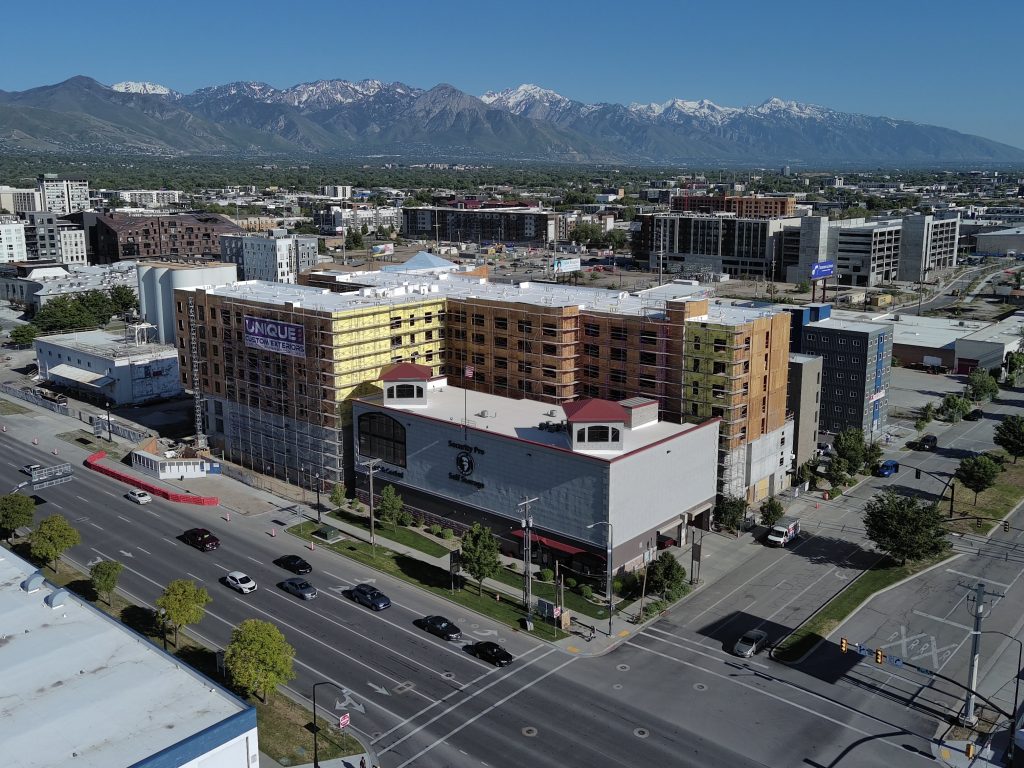
Silo Park, looking southeast. Photo by Devin Zander | Building Salt Lake
In an email to BSL following the meeting, Blaser said he and his company are still looking forward to working with the CRA on the Silos project. He emphasized how the proposal seeks to build affordable units beyond what is required by state or city HTRZ guidelines.
“A large project like this is challenging, and it is not unexpected that questions will arise,” Blaser told BSL in the email. “We have worked closely with staff since our application was made back in June 2025 and have been working on the term sheet for CRA approval since the beginning of this year. We are confident that we can answer any remaining questions promptly and, with the CRA’s support, deliver these affordable units and commercial retail space while preserving the character and history of the Silos.”
Multiple council members said they needed more time to process the waiver requests in the proposal, saying they received the requests just days before the Tuesday meeting.
“Now I understand there may be a limit to some more time because we can’t be here forever, but I know that I personally would benefit from more time understanding what’s at stake here,” said Council Member Erika Carlsen.
Council Member Dan Dugan, who also serves as the CRA board chair, said the conversation Tuesday should point the CRA staff and the developer in the right direction, adding, “We’ve got a lot of things going on between now and the end of the year.”
“If you want this to happen quickly, respond quickly, and we’ll get back to you in a timely fashion, because we don’t like to sit around here,” he said before moving onto the next CRA agenda item. No vote was taken Tuesday on the Silo Park proposal.
It’s not clear when CRA staff could bring the proposal back to the city council for review or a vote.















Salt Lake City city Council doing the bidding of developers. Nothing unusual here. We’re pretending is though this isn’t going to get approved… how ridiculous.
We need leadership that is willing to just flat out, sayino to developers. If you want to do development, then make it make sense without using public funds. Dan Dugan has been doing the bidding of developers since he’s been in office. Time for new leadership.