
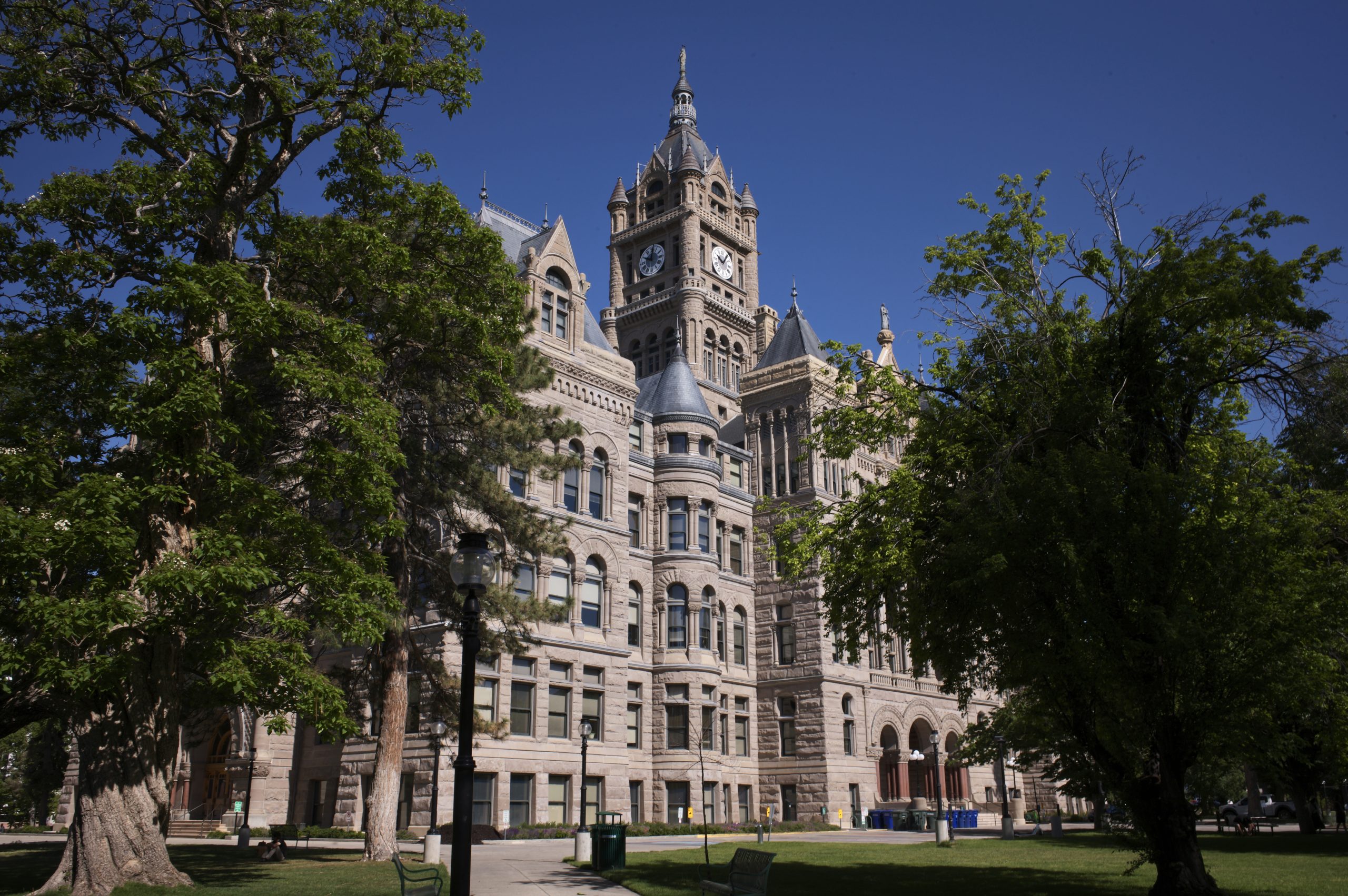
Salt Lake City is setting aside millions of dollars for housing programs aimed at building wealth for renters, hoping to bridge the gap between renting and home ownership for city residents. This year’s spend outpaced last year’s inaugural outlay, and the mayor’s proposed budget for 26-27 looks to commit even more to the Residential Wealth Building program in the coming year.
On Tuesday, the Salt Lake City Council — acting as board members of the city’s Community Reinvestment Agency — voted to approve $6.46 million for two projects in Glendale. In only its second year, the program is still considered in its pilot stage.
Browne Sebright, a project manager for the CRA, said the program is aimed at funding types of affordable housing developments that, “bridge the wealth gap between renters and homeowners, supporting projects that may not meet the underwriting terms of our annual Housing Development Loan Program NOFA.” He added that the program is also used for jumpstarting, “funding models that could demonstrate where future financing would be successful.”
Sebright said the funds are available for both rental and owner-occupied properties, though both of the projects selected this year feature ownership opportunities.
The projects
One project receiving funds will be Brix on Tenth, which will be a slate of 46 for-sale townhomes located at 1549 S. 1000 West. Half of those units will be sold at market rate, while the other half will be sold to households earning between 80-100% AMI. The project includes two- and three-bedroom units, and the development is being built by Garbett Homes.
Brix will utilize deed restrictions for a 35-year period. For the Brix project, Sebright said developers will use CRA funds to establish a pool that will be used for down payment assistance and 0% interest “silent” second mortgages.
“What is important to understand about this model is when a home appreciates in value over time, these silent second mortgages appreciate proportionally to the value of those homes,” Sebright explained. “So when the home is sold, the silent second mortgage is paid back to the fund, including its share of the home’s appreciated value. That allows the homeowner to still capture some of the equity from home appreciation, but it also allows the down payment fund to appreciate at the same rate of that home, so those funds can be deployed for the next round of income qualifying values, ensuring long term affordability across multiple generations of homeowners.”
The proposal for the Brix project were first reported by Building Salt Lake in 2024, and the plans made public back then are similar to those included in a presentation from city staff. In total, the Brix project will receive just under $4 million from the CRA.

The Brix on Tenth development. Image via Garbett Homes
The other project getting CRA funds is Gladhouse 3, which will be a development with eight affordable single-family homes located at 1084 W. 1700 South. The homes will be sold to households making 80% AMI or below, and it will utilize a community land trust to keep prices low. The development will consist of two- and three-bedroom units.
It will be built by Community Development Corporation of Utah, or CDCU, and the project will receive just over $2.46 million from the CRA.
Gladhouse 3 is scheduled to break ground later this year, and it’s slated to be completed and absorbed by mid-2027, according to a presentation from city staff. Brix is scheduled to break ground in “early-to-mid 2026” and be finished and absorbed by 2028.
The funding
The money comes from three CRA funds, including nearly $4 million coming from the CRA Westside Community Initiative, which is only available for projects west of Interstate 15. Over $1.5 million comes from the CRA School District Required Family Housing fund, which is available for projects with three or more bedrooms, as well as $1 million from the CRA Housing Development Loan Fund, which is available for any projects within the city.
Council members had a handful of questions for city staff regarding administration costs and other aspects of the two projects, but numerous council members voiced their strong support for the program. The council later voted unanimously to approve the funding allocations to the two projects.
Council Chair Alejandro Puy it’s great to see not only affordable, for-sale units being built in his district, but also for those units to meet the CRA’s environmental goals.
“To me, it’s amazing to see that developers are able to put products for-sale in some creative manners, but product for-sale at some affordability levels and also at the same time meet the environmental goals of the CRA,” Puy said. “I want to make sure that’s highlighted in this process, because many times there’s this conversation that those two (aspects) cannot be met. Many developers struggle with that, but we have evidence here in front of us that it’s possible.”
The $6.46 million allocated for wealth-building projects is around double the amount from the program’s first year, as the CRA set aside $3.2 million last year, according to CRA spokesperson Tauni Barker. Barker added the CRA has requested additional funding as part of the city’s Fiscal Year 2027 budget, as the agency plans to keep the program going.
Barker said the CRA is requesting $10 million for affordable housing in the FY27 budget, which would include the Housing Development Loan Program and the wealth-building program. The exact amount for the wealth-building program will be determined in the city’s budgeting process, which will be taking place over the next several weeks.
Salt Lake City has seen other wealth building projects pay dividends for tenants. One particularly noteworthy project is the Arbor 515 tower in Central City, a mixed-use project in a former office tower.
The nonprofit Perpetual Housing Fund (PHF), which is behind that project, started with $10 million in ARPA funds to buy the old office building, later resulting in a 96-unit project that also has a Montessori school and office space for other nonprofits.
For PHF, any profits that would typically go to a developer — like a building’s annual cash flow or profits from selling the building — are instead given back to renters as part of their business model.
Creating more wealth-building units has been one of the city’s goals since 2023 as part of the Housing SLC plan. As a part of that plan, the city set out to enable the creation of 2,000 new units for both affordable and deeply affordable units, as well as enable 1,000 wealth-building units. The plan aims to meet those marks by June 2028.
As of March 31, which is most recent data, the city has far surpassed its affordable housing goal, with over 2,800 units built. For deeply affordable and wealth-building units, the city is still lagging behind. The latest data from the city says just under 700 deeply affordable units have been built, planned or are under construction. Just over 150 wealth building units have been built or have been planned.








0 Comments