

After alluding to the possibility for years, Salt Lake City Mayor Erin Mendenhall is proposing a property tax hike of 12.5% in the hopes of generating $13.5 million toward the city’s budget.
The proposed property tax hike would come out to paying an additional $9.87 per month (or $118.44 per year) for the average Salt Lake City home, which would be valued at $624,000, according to mayor’s office.
During a presentation Tuesday night before the Salt Lake City Council, the mayor pitched her FY2027 budget, which totals $498,863,053. That’s a 1.57% increase from last year’s approved budget, but it’s also less than her proposed budget last year, which topped $500 million for the first time in city history.
Mendenhall said the decision to propose a property tax increase didn’t come lightly, but the choice was made in lieu of other alternatives.
“We exhausted every other option before proposing increases to property taxes and fees,” Mendenhall said Tuesday. “What remains after this are choices none of us want to make — laying off dozens of City employees, cutting services Salt Lakers depend upon, or delaying infrastructure we’ll need for the next 20 years.”
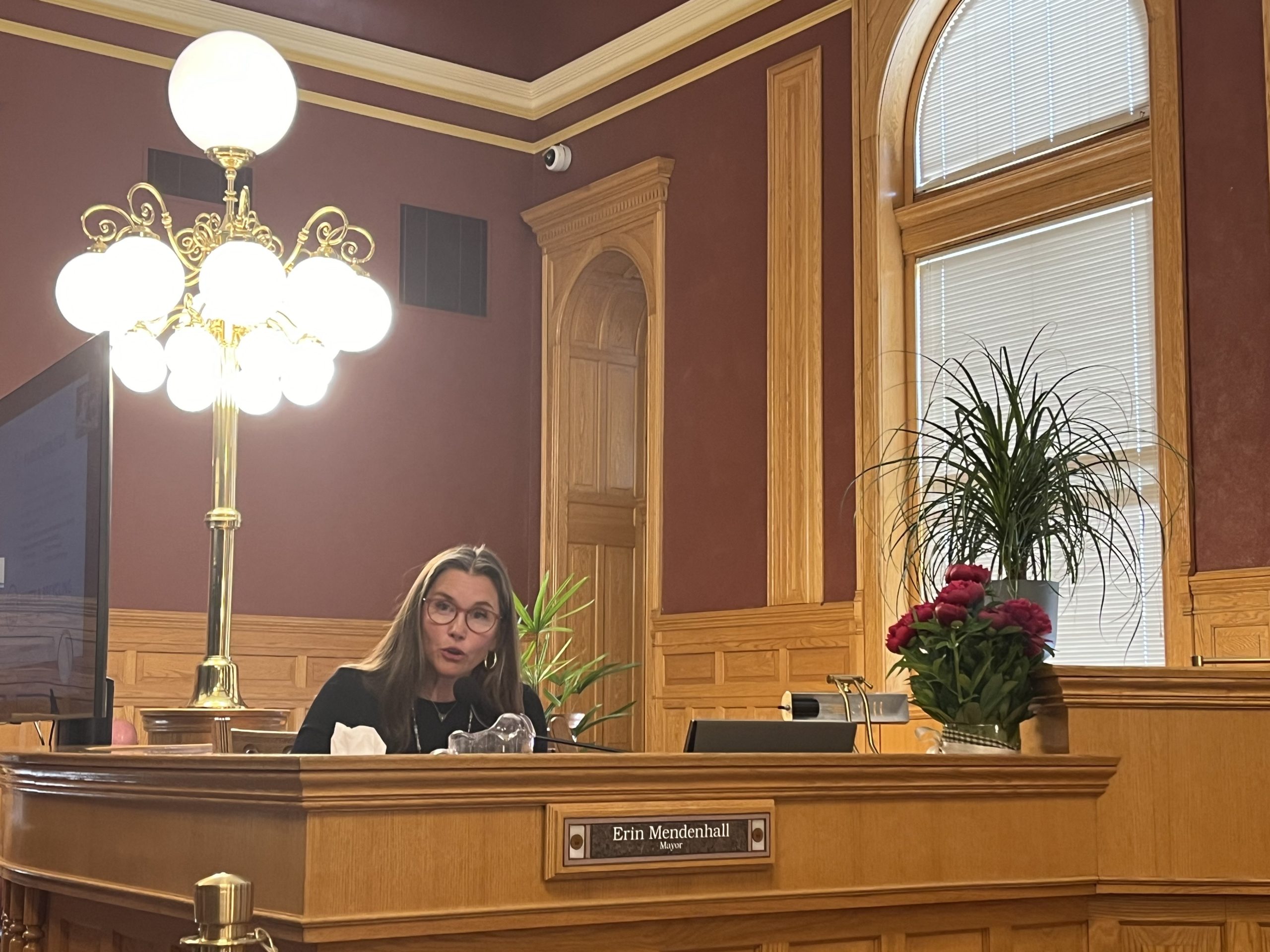
Salt Lake City Mayor Erin Mendenhall presents her budget proposal for Fiscal Year 2027 on Tuesday, May 5, 2026. Photo by Jacob Scholl | Building Salt Lake
Of that property tax hike, nearly half of those funds would go toward capital improvements and infrastructure, according to Mendenhall’s presentation. Around 8% would be used to maintain parks, trails, and public lands.
Included in her proposal is a request for $10 million in funds for affordable housing projects, which is an increase from previous years.
For FY26, Mendenhall requested $5 million for deeply affordable housing units, which the council approved. The city sorely lacks this type of unit as part of its Housing SLC goals, which aims to build 2,000 of these units before June 2028.
Deeply affordable units are available to households making 30% AMI or below. In Salt Lake City, the AMI for a family of four is $122,700, according to the city. For example, that family would have to be under $36,800 per year in order to qualify for deeply affordable units.
Mendenhall had requested $8 million for affordable housing projects in FY25, which was available for projects offering units at 80% AMI. At that mark, a family of four would need a household income at or below $98,150 to qualify for those units.
For capital improvement projects, Mendenhall said the city will focus on street repairs, parks system maintenance and pedestrian safety projects. She said the latter was largely in response to input and comment from Salt Lakers, as city CIP funds will be used for street crossing improvements at Rose Park, Whittier and Highland Park elementary schools.
PROPOSED FEE INCREASES
In addition to property taxes, Mendenhall’s budget is also proposing an increase to public utility costs, including water, sewer, stormwater and street lighting. For a single-family household with low water use, monthly utility bills would be noticeably higher.
The monthly water bill would go up around $14, sewer would increase by $11, stormwater by $2 and street lighting by $2.50, Mendenhall’s slides said. Garbage and recycling fees would increase by roughly $3 per month.
“I know this is a lot to hear, and I know these increases will be difficult for many Salt Lakers to absorb,” Mendenhall said. “I know your electric bill is going up, because so is the city’s. I know you’re paying more for gas, because so are we. But I also know that waiting would only make these costs higher.”
She added that much of the fee increases are due to needed infrastructure repairs, saying the city’s water and sewer systems are aging and in need of updates. Mendenhall added, “Its maintenance is expensive, yes, but not nearly as expensive as its failure would be.”
Prior to the tax hike, Mendenhall said the city made around $13.2 million in cuts to the citywide budget. The city opted to keep vacant positions open for longer or eliminated those positions altogether, which the mayor said led to over $6 million in savings. She projected the city will save another $3 million in the coming year due to those vacancies.
Despite the cuts and cost-saving measures, Mendenhall said FY27 will be a year of the city tightening its belt. The city faces shrinking federal funding and inflation making essential purchases more costly, but she struck an optimistic tone for the future of the city, as Mendenhall frequently does.
Between shrinking federal funding for cities and inflation making essential purchases more costly, she said it’s the city’s responsibility to make tough choices.
“This is a year of constraints, but it is not a retreat from our responsibilities. This is a year of rising costs, but it is not one of lowering standards. And this is a year when hard decisions now can help us avoid harder choices later.”








0 Comments