
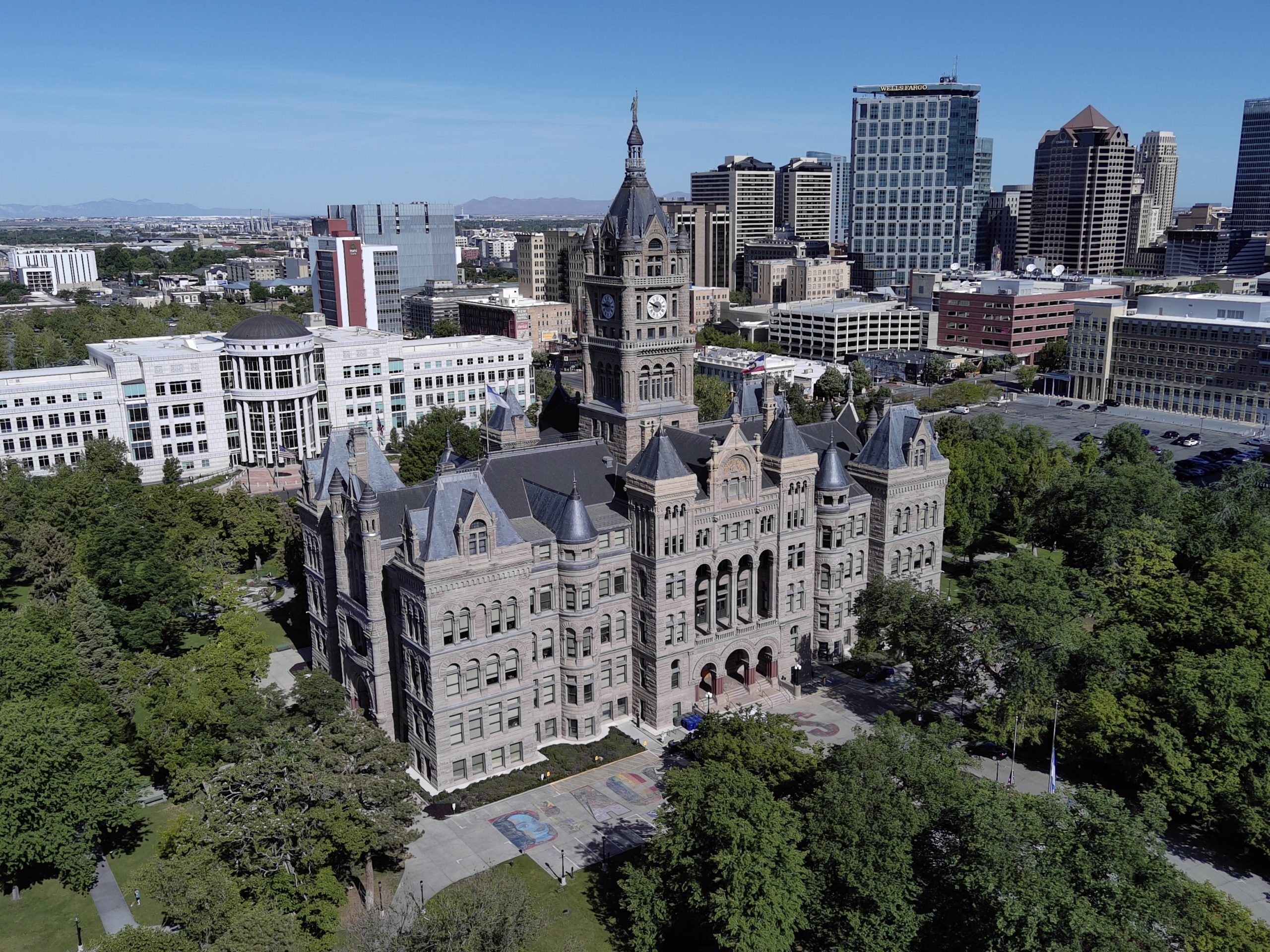
Developers, take note — timelines for some of Salt Lake City’s land use approvals are changing and extensions are being capped.
In a quick vote last week, members of the Salt Lake City Council unanimously approved a measure to modify the city’s land use application code, making adjustments to actions that can extend timelines following city approvals and limiting extension requests on projects.
Though the council did not discuss the merits of the ordinance before voting last week, city officials briefed the council during a March 3 work session meeting. The ordinance impacts five types of applications: final plat, street dedication, conditional use, design review and planned development.
Nick Norris, the city’s planning director, briefed the council during that meeting. He said some of the city’s land use applications currently have a shelf life of one year unless they apply for a building permit. After filing that application, Norris said builders “have an option to extend that indefinitely.”
Norris said the ordinance establishes expiration dates for final plat and street dedication applications, both of which had no expiration date previously. A final plat now must be recorded within 18 months, and a street dedication must record the plat within 180 days of approval. Norris noted there’s an exception if the plat application is part of a phased subdivision.
Common applications to the city — specifically for conditional uses, design reviews and planned developments — previously had a 12-month expiration date. After getting approval for any of those applications, builders previously could avoid the approval expiring by filing a building permit application.
“What’s changing here is what satisfies that expiration,” Norris said. “So right now, it’s a submitted building permit, but there’s other things that someone can take that essentially vest their approval.”
Under the ordinance approved last week, builders now have additional actions they can take to avoid expiration, like filing a final plat application, executing a development agreement or getting a business license — though the latter only applies for a conditional use permit. Filing a building permit application is still a way to avoid an expiration.
Norris added that if one of these methods expires — for example, if someone submits a building permit for a project approved via design review, then the building permit expires — then the land use approval would also expire under the approved ordinance.
According to Salt Lake City code, work must begin within 180 days of the building permit being issued, or else the permit is void.
For all conditional use, planned development and design review applications, the ordinance would also allow for a one-time, 12-month extension request.
“Right now, people can ask for multiple (extensions) with no limit, and so this would cap that. You get the one time ask,” Norris said during the March 3 work session.
That means developers will have to restart the process for design review and planned development approvals after 24 months without a building permit issuance.
Council Member Dan Dugan asked Norris how often extensions are requested. Norris said in recent years, most of the projects approved via design reviews and planned developments ask for extensions. However, Norris said the extensions are typically requested due to, “things that are outside their control and the city’s control, it’s really the financial market and their ability to get funding.”
About a month after the March 3 work session, council members voted to approve the changes during an April 7 formal meeting. That vote took place just before the council voted to reject a proposal that sought to rezone a parcel of land near Sugar House Park, which would’ve teed up a hotel to be built on the property.
The vote is the latest change to city building standards in recent months. Last August, the council approved a number of changes to the city’s design review standards, making changes to allowable facade length and massing, among other aspects. The council also overhauled its mixed-use zoning code and updated its missing middle zones in the past year.















0 Comments