

In what felt like a formality, the City Council this week approved most of Provo-based Smith Entertainment Group’s (SEG) request to change the zoning rules for a Sports, Entertainment, Culture and Convention District at the Delta Center and the two blocks to the east, currently part of the Salt Palace Convention Center.
The zoning changes apply to the D-4 zone, and expands arena-scale signage to the two Salt Palace blocks.
While the city approved the base zoning changes requested by SEG, the company may need adjustments in the code to achieve their development goals, and if so, city ordinance provides the option of undergoing design review.
Perhaps anticipating the likelihood of needing design review approval, SEG asked the City Council to allow them to bypass the design review process and instead undergo “administrative review.”
The design review process includes a public open house and Planning Commission review – two steps SEG wants to avoid.
Not the least perhaps because Bree Scheer, a veteran member of the Planning Commission and retired University of Utah professor, has been an outspoken critic of the lack of public review of the SEG project. The Planning Commission voted unanimously against SEG’s requisition zoning changes in June.
Let’s see how different interests fared in the Council’s decision and what’s likely coming next.
What the council did
Smith Entertainment Group is the majority owner of the Utah Jazz (NBA), Real Salt Lake (MLS), the Utah Royals (NWSL), and the Utah Hockey Club (NHL).

The main changes approved to the D-4 zone on SEG’s targeted three blocks in west Downtown are the following:
Building height: Maximum height changed from 75 feet to 600 feet. Design review is required for any structure 200 feet or taller, which is the same requirement as in the D-1 zone. The city originally proposed to require design review over 75 feet.
Stadiums and commercial parking changed from conditional use (needing Planning Commission approval) to a permitted use.
Front and corner yard setbacks removed for buildings fronted with plazas and similar public space.
Stadium sign overlay, currently enjoyed by the Delta Center block, extended to the two Salt Palace blocks. This will mainly allow larger signs; digital signage and video screens are already allowed in the D-4 and D-1 zones.
Dodging the design review process? In addition, the Council rejected, politely, SEG’s request for “administrative review” of changes that would normally undergo the design review process. As City Council Senior Policy Analyst Nick Tarbet wrote in an email, “the Council did express a willingness to consider allowing staff level review” after the development agreement is hammered out between the parties–”if they [Council Members] are satisfied that the conditions are sufficiently clear and strong enough to promote quality design.”
What’s this Development Agreement?
As mandated by SB 272, SEG and the City had to agree on the terms of a Participation Agreement and transmit it to a State committee by September 1.
One of the stipulations of the legislation was to have all zoning changes approved by the time of submission to the committee, which the City Hall achieved this week.
Design concerns have been top of mind for some interests at City Hall, not the least the City Council and the Planning Division–two bodies that seemingly recognized that the D-4 zoning itself won’t achieve what the City wants to see. Planning Director Nick Norris stated in an email, “The guidelines are expected to be more extensive than what the zoning code currently requires in the D4 zone.”
We don’t know what the city will be specifically pushing for, but some of the design priorities are included in the Participation Agreement, like spatial protections for and promotion of Japantown.
City Council Members were reminded by staff before the vote that concerns about the brightness and placement of signage would be addressed in the Development Agreement, which is referenced multiple times in the Participation Agreement between the two parties.
That Agreement will run through the Planning and City Council processes, with a stop at the Planning Commission for a recommendation and a final vote at the Council.
How soon will we know what it’s going to look like?
While “on pause” may not be the exactly correct description, questions about details of the process to produce the Development Agreement were not answered directly by either end of City Hall.
“In the coming months” was offered by City Council staff, while Planning Director Norris stated “The Development Agreement is somewhat dependent on what Salt Lake County decides to do with the land where the Salt Palace and Abravanel Hall are located. The County has to consent to any proposal involving County land, whether it is a new building or a sign.”
The County and SEG have set a December 31, 2025 deadline for coming to an agreement for SEG to long-term lease or purchase County property on the two Salt Palace blocks. What’s almost certain is that the western wing of the Salt Palace, between 200 and 300 West, will be coming down.
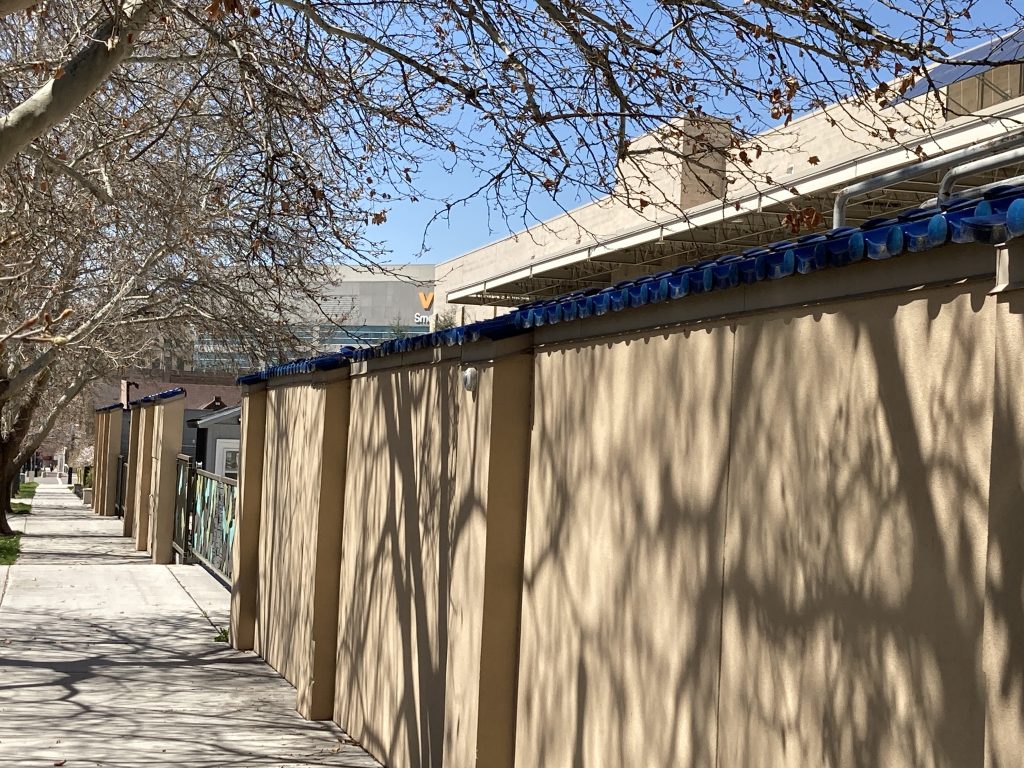
The fate of the city’s grand orchestra space, Abravanel Hall, attached to the northeast corner of the Salt Palace, is to be determined in the negotiations over the Development Agreement.
Who will decide the content of the Development Agreement at Salt Lake City Hall? The City Mayor’s Office declined to offer a list of the city departments involved in the negotiations for agreement with SEG.
But the public will be involved to some extent–the Planning Commission and the City Council will hold their usual public meetings to present and vet the proposal.
Reaction
We asked veteran Planning Commissioner Scheer whether she thought the design review requirement reinforced by the City Council was enough to ensure adequate public review of SEG’s plans.
“This zoning amendment has given SEG everything they could want, as-of-right, so the only possible chance to even see it is the Design Review,” Scheer said.
As to the development agreement process, she stated, “The City Council is putting all their trust in a negotiated development agreement, which is not public until the very last minute when they approve it. Who will negotiate it? We will just have to trust SEG.”
Scheer’s comments neglected to acknowledge that the Development Agreement will also pass through the Planning Division, including Planning Commission review and recommendation.
That process, Scheer did note, is important for transparency and surfacing the public interest. “Going to the Planning Commission means going to the public, the stakeholders, and the neighbors. It means that a city staff member has leverage. At the PC meeting, people are invited to comment. The press can be there, it’s all on Youtube.”
That Development Agreement? Keep your eyes on this website for future coverage.
















0 Comments