

South Salt Lake is moving closer toward approving a plan that could lead to a more connected urban core being built in the city’s northern edge.
Last week, the South Salt Lake Planning Commission quickly voted to approve the South Salt Lake Downtown Connect plan, which is described as, “an aspirational document leading the city to a more exciting and prosperous urban future,” according to the document. Members of the city Planning Commission voted Thursday to forward a positive recommendation to the South Salt Lake City Council.
The plan would encompass around 100 acres of South Salt Lake, all of which is focused around two of its UTA stations: Central Pointe, which services S-Line and TRAX Blue, Green and Red Lines, and the S-Line South Salt Lake stop located further to the east.
The plan offers a much different vision for South Salt Lake than what it currently looks like, as the city’s current car-heavy planning could give way to a more urbanized, transit-focused downtown core with new housing and retail space.
“This plan forms the foundation of new zoning decisions and helps prioritize where public dollars go first,” the Downtown Connect plan says.
Eliza Ungricht, the city’s deputy community development director, told commissioners last Thursday that the plan is a requirement under state law, as cities must submit a Station Area Plan as part of the city’s required moderate income housing plan. She said the planning commission last heard a presentation on this plan back in February 2024, but city staff later realized the plan wasn’t fully approved to move forward.
“We thought we were done, and then we came back and realized it needed to get certified by (the Wasatch Front Regional Council),” Ungricht said during the Thursday meeting. She added the planning commission and the city council must approve the plan before it can be reviewed and certified by the WFRC.
A large focus of the plan is to improve citywide connections and create a more walkable, multimodal city. Ungricht said one example of this is the city’s aspiration to build a train grade crossing at Utopia Avenue that would link the street to the Central Pointe station.
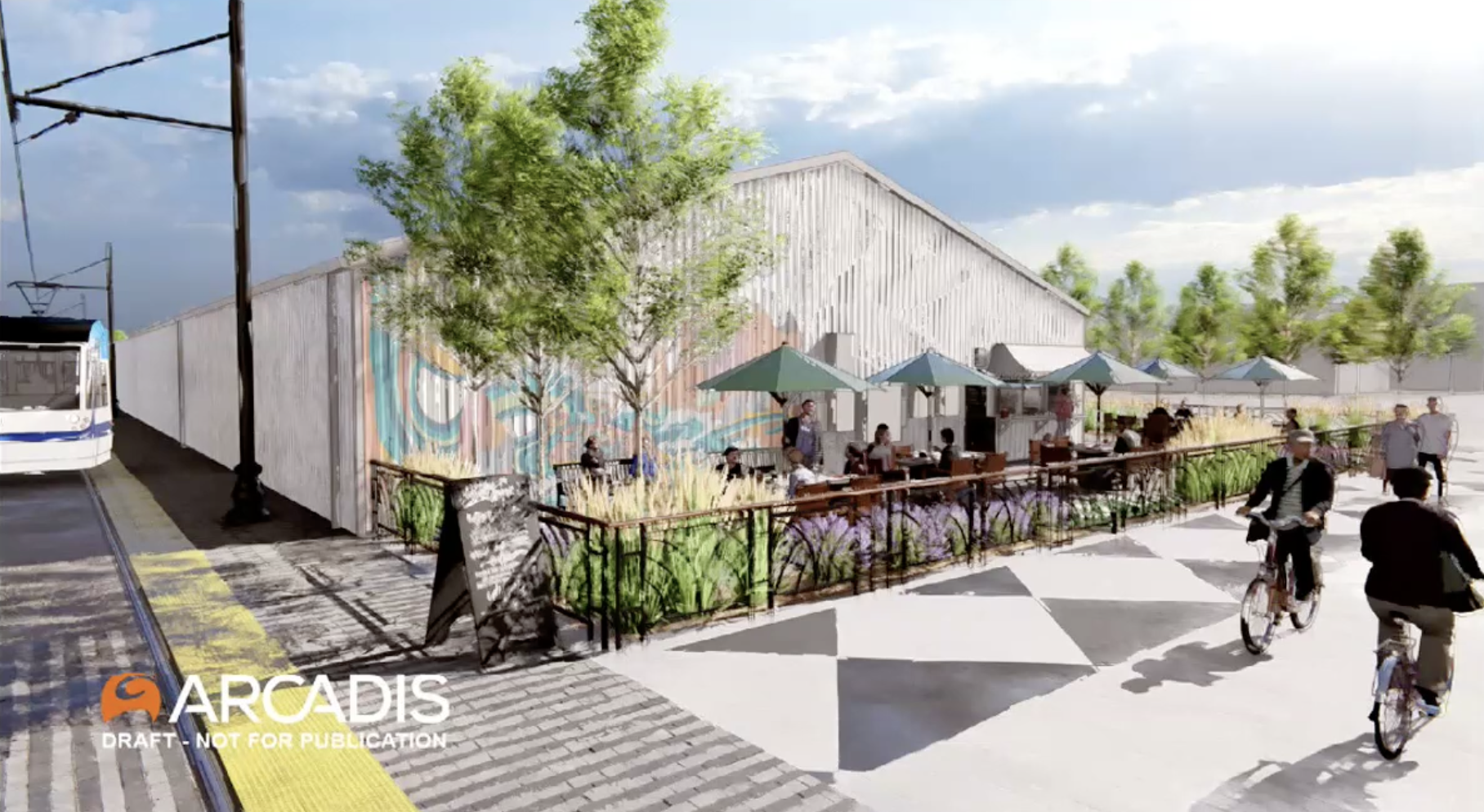
“Once it’s in a plan that is adopted, you can get on UTA’s plans and WFRC’s plans, and then you can hopefully get funding for it,” Ungricht said. “And so this was one of our big pushes of this plan is to get an at-grade crossing there so people don’t have to walk to 21st South.”
The Downtown Connect plan goes hand-in-hand with the city’s Housing and Transit Reinvestment Zone (HTRZ), which the city was approved for in 2023. The HTRZ plan — which has the same boundaries as the Downtown Connect plan, but are separate documents — says the area could bring in over 5,000 new housing units in the coming years. Having an HTRZ plan means the city can unlock state funds that can spur development near transit hubs.
Though the plan discussed Thursday is a requirement under state law, it’s a step in the right direction for a city that has seen little progress toward creating a downtown core.
However, that’s started to change in recent months, as the city planning commission has also recently signed off on the Market Center development, which if built would create 478 affordable housing units and retail space along the S-Line. The opening of One Burton, a 180-unit market-rate apartment complex, is another notable event for the city’s urban core, as the development is also near the S-Line.






0 Comments