

It’s been just over two years since a handful of interconnected Utah-based development and construction companies abruptly collapsed, leaving employees without work and subcontractors unpaid for their labor. But the fallout continues.
Makers Line, Q Factor and other companies connected to H. Jason Winkler and Ellen P. Winkler rode a period of construction growth for years until the businesses failed in fall 2023. Projects in multiple states across the country were left unfinished in the wake of the Makers Line collapse. Some investors saw their funds vanish.
While the companies closed up virtually overnight, a string of lawsuits spanning the country shows the fallout for the owners is far from over.
Once hailed as the developer behind projects like Industry SLC — a sleek, adaptive reuse office building that kicked off development in the Granary District — the Winklers remain mired in lawsuits, defaults and the reality that several marquee projects never took off in the first place.
Just last month, the company that now runs Industry SLC defaulted on a $97.3 million loan, as the office building and a nearby parking garage in the Granary District are now in receivership. Two other Industry buildings in Denver have suffered similar fates in the past.
Makers Line and connected businesses have left a trail of lawsuits in the wake of their collapse. Many of those lawsuits are not based in Utah, but in other states around the country. Building Salt Lake has followed lawsuits in Montana, Michigan, New York and elsewhere — all of which are still ongoing, and some have faced issues in the litigation along the way.
The lawsuits reveal an alleged pattern of behavior. Investors suing in different states have accused Winkler and the companies of overstating financial contributions to projects, misappropriating draw funds from loans and failing to tell investors that the Winklers controlled the subcontracting companies being used on the projects, among other allegations.
While the lawsuits are still being adjudicated, one thing is now clear: the Winklers once sought to take the Industry brand nationwide, but they or companies associated with them are no longer affiliated with Industry at anywhere near the same scale, and the brand itself is fading away.
The allegations in the lawsuits track claims made in the aftermath of the October 2023 collapse of Makers Line, which some described at the time as a house of cards and loose accounting that caught up with the company’s owners as the market slowed.
Jason Winkler did not respond to requests for comment on the lawsuits.

The Industry SLC building.
Industry Bozeman
In 2021, Jason Winkler sought investors for a project in Bozeman, Montana, that was supposed to be known as Industry Bozeman, according to a complaint filed by investors in September 2024 in a Montana state court.
The proposed complex was described as an 87,000-square-foot modern office building that would be built at Montana State University’s Innovation Campus, according to a 2022 news release from the university.
Winkler and Montana leaders were on hand for the site’s groundbreaking in 2022, and among those in attendance were Montana Gov. Greg Gianforte and then-MSU President Waded Cruzado.
“At its core, Industry is about infusing activity through purposeful placemaking,” Winkler said in the MSU news release. “Industry Bozeman will be a catalyst for the MSU Innovation Campus’ creative and entrepreneurial vision, and we are thankful to the MSU Alumni Foundation, MSU and the city of Bozeman for welcoming us into this fast-paced market.”
For the Industry Bozeman project, investors contributed over $7.5 million to fund the development. Winkler told investors he would contribute $830,000 to the project as part of an operating agreement, according to the lawsuit. But according to the lawsuit, he didn’t contribute that amount.
“Winkler knew the representation was false when it was made, though all of (the investors) did not,” the complaint says.
The lawsuit also alleges some draw requests from a construction loan authorized by Winkler were for “goods that were not used for the Project and intentionally authorized representations about the level of completion of the Project that were not accurate.”
The lawsuit alleges that Winkler picked a number of companies he or his wife controlled to carry out the Bozeman project. These companies include Drumbeat Colorado as the architect, Makers Line as the general contractor, Forge Metals as a subcontractor and Titus Shortcrete as a material subcontractor. The lawsuit says the Winklers failed to tell investors that they had ownership interests in all those companies.
Winkler allegedly approved two draw requests that were used to pay subcontractors, which the lawsuit says included Titus Shortcrete and/or Forge Metals. From those two requests, over $450,000 are “unaccounted for,” and seemingly did not go toward the project in any way, the court filing says.
By the summer of 2023, Makers Line stopped work on the building and the bank had stopped allowing draw requests for the project, the lawsuit says.
In November 2023, Industry Bozeman investors cut ties with the Winklers and removed all of their associated businesses from the project. The project was later finished and is now known as Engine Works.
Court records obtained by Building Salt Lake show that Winkler, Q Factor and Makers Line have gone through three sets of attorneys as of November. A Nov. 6 court order indicated a new set of attorneys had not yet been entered into the court as representing Jason Winkler and the businesses.
Plaintiffs’ attorneys have tried to depose a Q Factor company representative — which could be Winkler or someone else designated to be deposed on behalf of the company — on multiple occasions, though the frequent changes in counsel have delayed those depositions, the court order says. The case is still pending, along with others across the country.
Industry Detroit
The Winklers attempted to expand their Industry franchise to the east when they started work on Industry Detroit, which was announced in 2019.
At that time, Ellen Winkler told Curbed Detroit that “saving old buildings is one of our core values and the bones of these buildings are incredible. We love designing spaces and places that stay true to the soul of a city. We couldn’t be happier to be kicking off Industry Detroit.”
The project aimed to convert a formerly vacant, historic school in West Midtown Detroit into a 123,000 square foot mixed-use office building, according to the website of Urban Action Community Development, a financing company that focuses on projects in urban low-income communities.
When a $20 million construction loan closed for the project, the Winklers were expected to contribute over $473,000 in equity to the project. Instead, the Winklers allegedly used loan proceeds intended to be used to pay to Makers Line and other subcontractors to cover that contribution, according to a lawsuit filed in a Michigan court by investors in August.
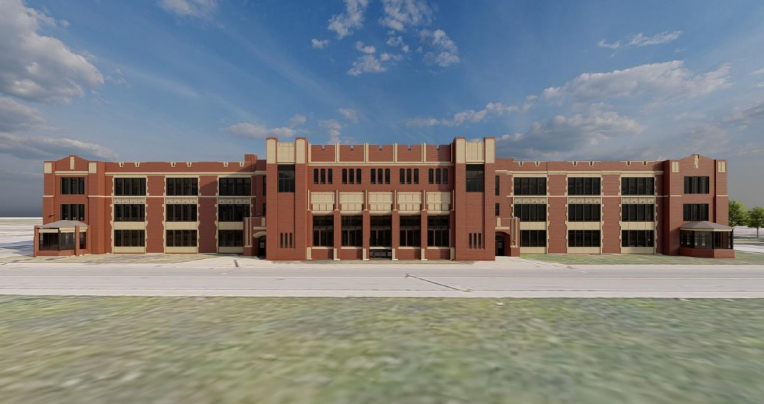
An exterior rendering of Industry Detroit. Image via City of Detroit
By May 2023, Jason Winkler allegedly claimed he had contributed over $862,000 in equity to the project, but the lawsuit alleges he had actually contributed, “far less.” In addition to Makers Line, Winkler had also enlisted other subcontractors they owned for the project, including Forge Metals and BH Rockers, the lawsuit says.
“(Jason) Winkler did not inform Plaintiffs that Forge and BH Rockers were merely conduits subcontracting the bulk of any work awarded them and charging undisclosed mark-ups without adding value,” the lawsuit says.
By the time that Makers Line collapsed in fall 2023, the Michigan lawsuit says Winkler did nothing to terminate the construction company from the Industry Detroit project. After Makers Line and Q Factor abandoned the project, “it was determined that Q Factor had billed Industry Detroit for significantly more work than had actually been completed,” the lawsuit says.
Makers Line and Q Factor had completed less than 50% of the work needed for the building, the lawsuit says. Between the increase in needed completion costs and the Winklers’ actions on the project, the lawsuit says the damage to the project is expected to exceed $10 million. Plaintiffs in the case are seeking to be awarded over $10 million, which would include interest and attorney’s fees.
The lawsuit says the project has not been completed. However, a CBRE listing indicates the building, which is now being called Jefferson Hub, has over 67,000 square feet of office space available.
Michigan court records indicate the lawsuit is still ongoing, as the most recent court date listed was for a status conference on Dec. 8.
New York
In a New York federal court, an Arkansas-based bank is trying to collect on multiple loans issued to Makers Line and the Winklers, which the bank says they have defaulted on.
In December 2024, Encore Bank filed a civil suit against Makers Line and the Winklers, claiming the couple and the business failed to make payments on two mortgages and lines of credit, according to court records.
Encore Bank claimed the Winklers used an LLC, called Ossining River Associates, to execute two mortgages against a parcel of land in Ossining, New York. New York property records show the parcel consisted of 14.29 acres, and its taxable value is around $1.8 million.
Not only did Encore give them the mortgages, but they also approved $5 million in a line of credit for Makers Line and another $1 million commercial line of credit to the Winklers, the court document says.
In February 2024, the bank and the Winklers entered into a forbearance agreement after “admitted defaults” on their debts, the court document says. However, by June of that year, the Winklers failed to pay in accordance with their agreement with the bank, the lawsuit says.
A notice of default was later served, with the bank requesting the Winklers pay over $5.2 million by Sept. 16, 2024. When that deadline passed without Encore Bank getting paid the full amount, the bank moved to foreclose on the Ossining land.
Encore Bank later filed a motion for default judgment on July 30 and filed proof of service to defendants the same week. Days later, a federal judge ordered the Winklers to have their attorneys enter an appearance into the court record no later than Aug. 28 and respond to the motion for default judgement, according to federal court records.
On Aug. 28, the court received “a voicemail and correspondence” from Jason Winkler, where he said Encore Bank had mailed the court order to an old address and he had received the order late.
The Winklers transferred their Salt Lake City home to Gregg Pacchiana, Ellen Winkler’s brother, two days after the Makers Line collapse. The property was listed for sale in May for $3.75 million. It sold off-market this year for an undisclosed price.
Because of an alleged correspondence mixup, the court ordered Encore Bank to re-serve the order to the Winklers no later than Sept. 12, according to a court document filed on Aug. 29. Court records indicate the bank mailed the order on Sept. 5 to 619 S. 600 West in Salt Lake City — which is a building that property records show is owned by Jason Winkler. Court records also show the order was also mailed to an address in Wilson, Wyoming near Jackson Hole Mountain Resort.
The Aug. 29 court filing also extended the deadline for the Winklers’ attorneys to enter a notice of appearance and to respond to the default judgement motion no later than Sept. 26. As of December, no attorney has entered their name into the court record on the Winklers’ behalf. The last filing in the case was in September, and no future court dates have been scheduled.
Utah
As for here in Utah, Winkler appears to have at least one development still in the works. But court records show outstanding debts and active court cases.
A townhome development located at the corner of South Temple and Chicago Street would create 30 units on .84 acres.
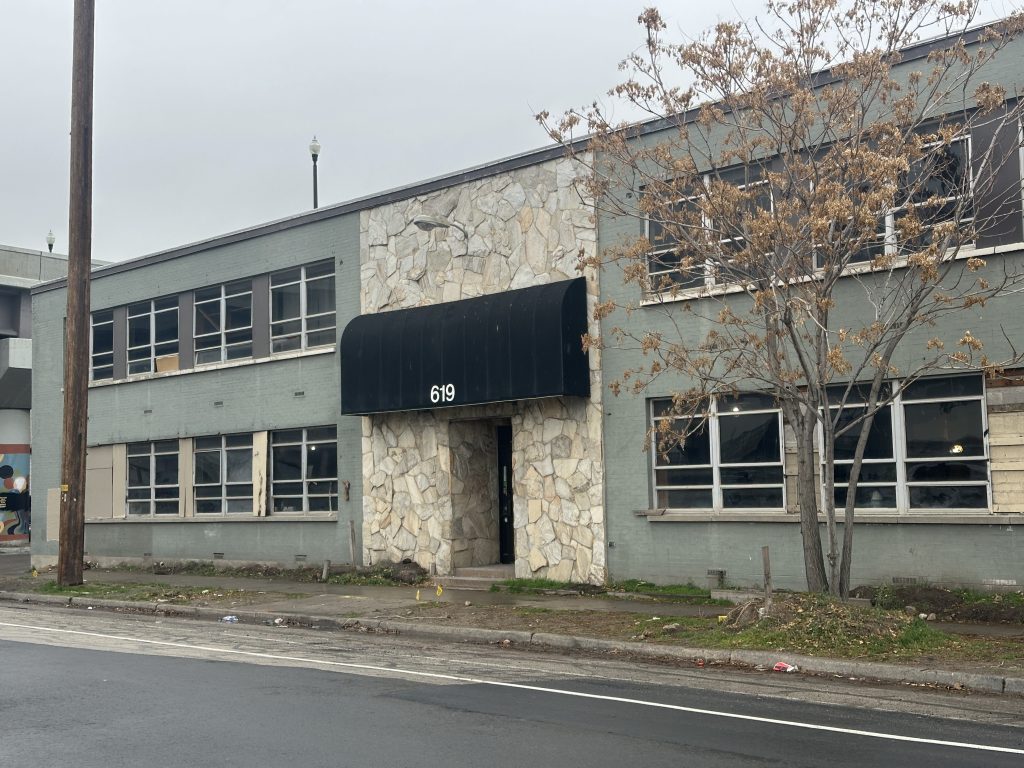
H. Jason Winkler still owns the building at 619 S. 600 W. in Salt Lake City, county records show.
Back in November 2023, Pacchiana loaned Jason Winkler $3 million for the Chicago Street townhomes project, but in February 2024, a notice of default was filed on the property. The notice says the default occurred because payments and interest on the loan went unpaid. A notice of trustee sale was later filed on June 24 with Salt Lake County, which said the property would be sold at public auction on July 29.
However as of December, county records indicate the property is still owned by Chicago St. Townhomes Property LLC, and state business records show that LLC is owned by Jason Winkler. On Nov. 24, Salt Lake City received an application for the site to be subdivided, which would allow for each townhome unit to be purchased.
Though the project seems to be moving forward, the company that owns the land was hit with a noteworthy judgment last September.
In September 2024, a Salt Lake County judge levied a judgment of over $182,000 against Chicago St. Townhomes Property LLC and Makers Line, with the money going toward a Layton plumbing company.
County recorder records show the plumbing company released their lien against the townhomes property in September of this year, which is typically a sign that a debt has been repaid in full. However, court records do not indicate the judgment has been paid to the plumbing company, as typically a satisfaction of judgment document is filed in court once the judgment has been paid in full.
Court records also show Makers Line still has unpaid liens against them. The company owes the Utah Labor Commission over $76,000 across four judgments, according to court records.
The fallout for other Makers Line projects in Utah is still being played out in court, as a handful of lawsuits over failed or unfinished developments are still active.
In late December 2023, Roers, a Minnesota-based developer, sued Makers Line over issues with an apartment building in Ballpark. Roers accused Makers Line of a number of costly missteps, including installing a wrong set of windows that cost the company $280,000 to replace. Roers also alleged that Titus Shotcrete, a subcontractor the Winklers owned, of being over two months late on foundation work.
Overall, the lawsuit alleged Roers had suffered at least $5 million in damages due to Makers Line’s actions. Utah court records indicate the lawsuit is still pending.
In January 2024, Summa Terra sued Makers Line over two projects in Ogden, Union Walk and Hunter’s Landing, and accused Makers Line of shoddy construction work. Most notably, the company accused Makers Line of knowingly using non-fire treated lumber to frame both buildings. The untreated lumber led city officials to issue stop work orders, and the Union Walk building later had to be demolished due to a number of issues.
That lawsuit is still making its way through the court system, and an oral arguments hearing is scheduled for next March.














0 Comments