
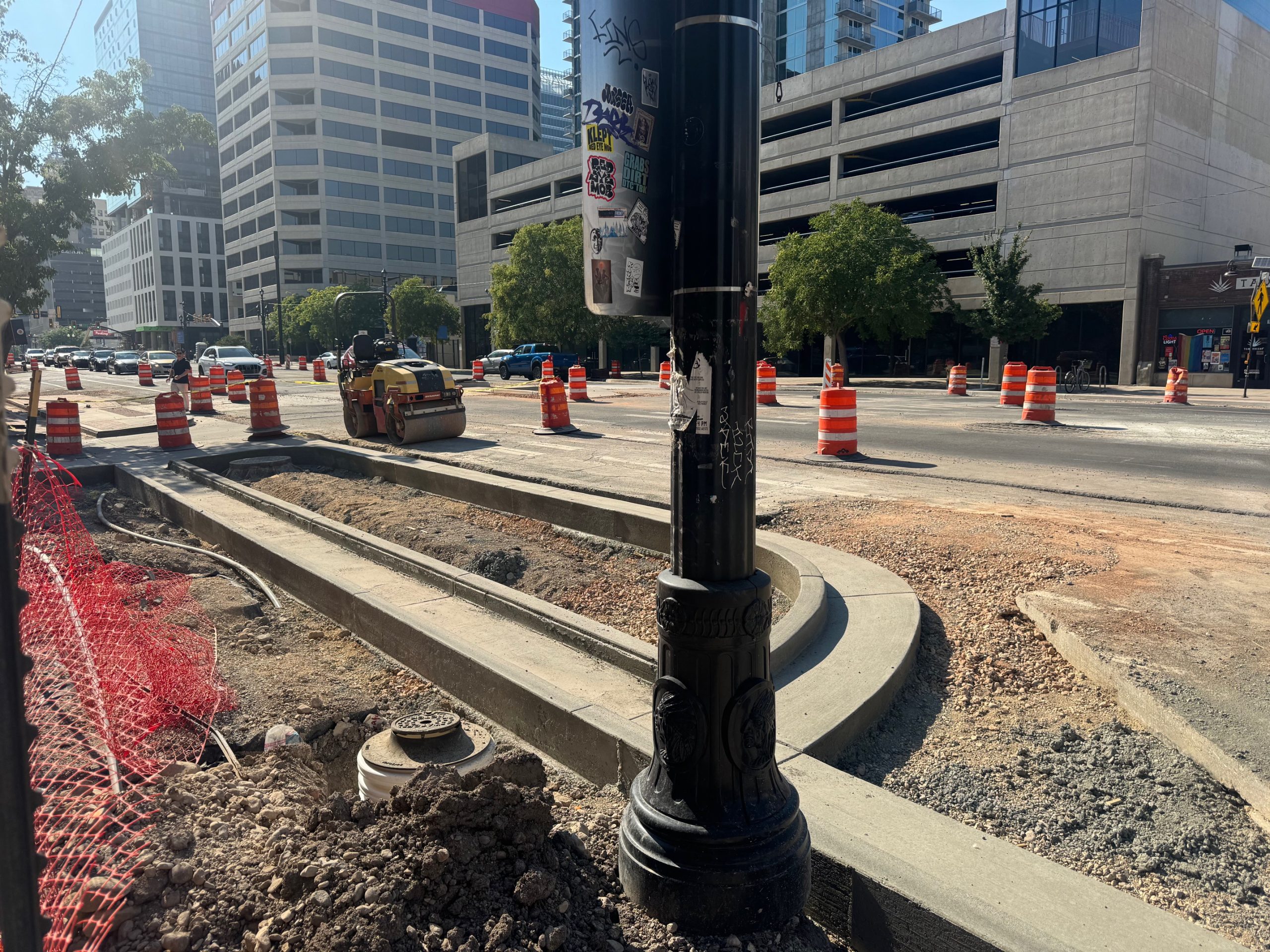
It’s been over six years since Salt Lake City voters approved the Funding our Future street reconstruction bond and the city council approved a sales tax bump, and city officials are approaching the end of their list of roads to improve — just in the nick of time.
Since the 2018 vote, Funding our Future has not only paid for reconstructing dozens of roads throughout Salt Lake City, but also improvements to bike trails and upgraded bus lines in cooperation with the Utah Transit Authority. And with the Utah Legislature’s recent passage of Senate Bill 195, which mandates major roadway plans be approved by the Utah Department of Transportation, future road work could take even longer to finish.
Though the city’s transportation department will finalize its data before the end of the year, early figures show the improved bike trails and expanded bus lines have dramatically increased the number of people using public transit and commuting on bikes.
Jon Larsen, Salt Lake City’s transportation director, told Building Salt Lake that some bus routes have seen ridership grow exponentially since the Funding our Future initiative began.
The Utah Transit Authority’s Route 9 bus — which starts west of Redwood Road before crossing much of the city along 900 South and ends at the University of Utah — is one of the examples of success. Larsen said before getting FOF money, the Route 9 bus had stops every half hour and didn’t have weekend service. After the funding, the route increased to stops every 15 minutes, as well as adding evening and weekend service.
In October 2018, “there were just under 700 riders per weekday on the Route 9,” Larsen said. “Then in October of 2019, so two months after the new service started, it had already basically doubled to 1,500 riders a day … fast forward a little bit to October of 2024, and it’s 2,500 riders.”
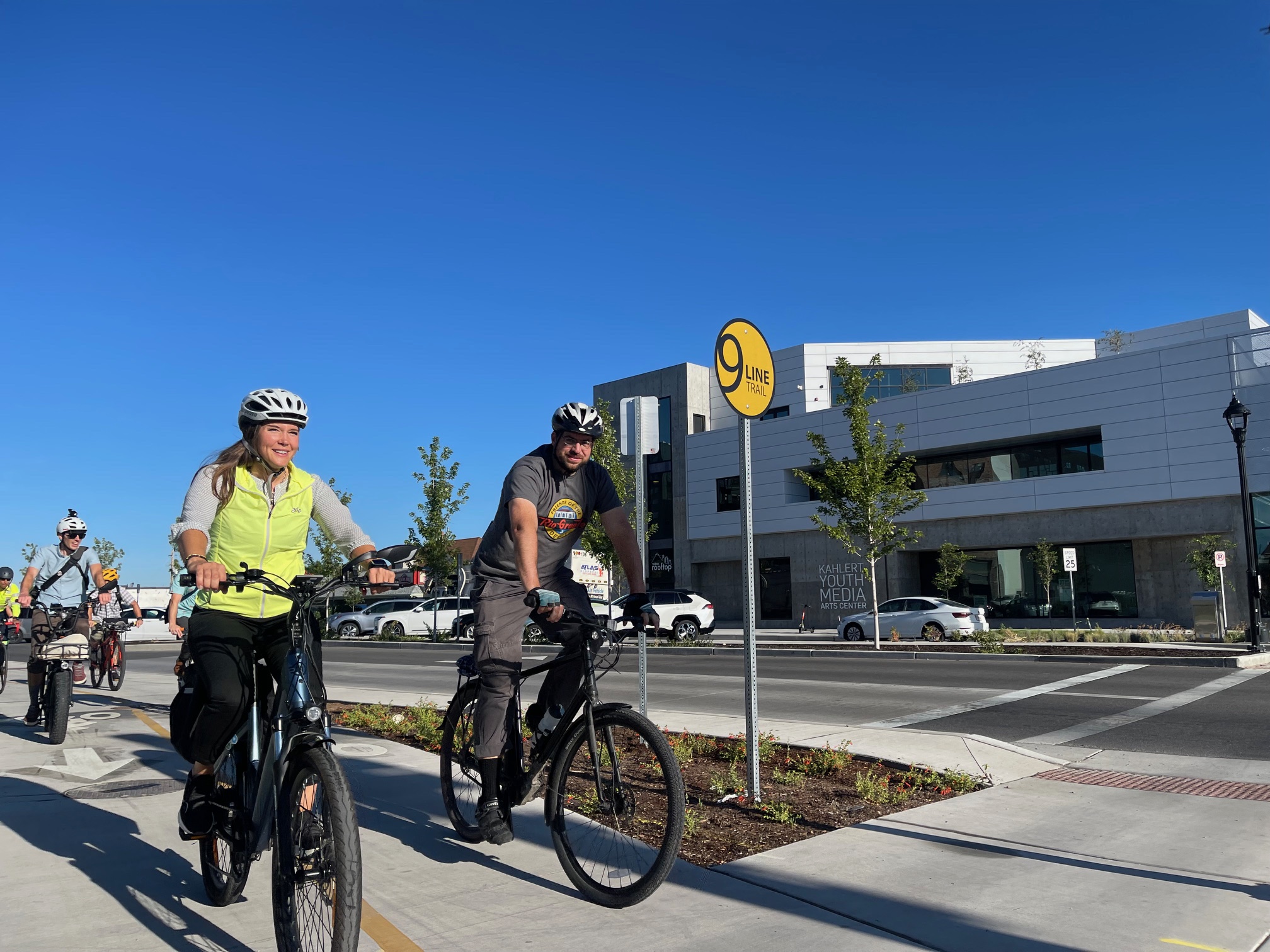
Another example of FOF infrastructure improvements is along bike trails. Larsen said the city put in count stations along major trail routes to measure the amount of foot and bike traffic. One area that sees heavy pedestrian and bike usage is 900 South — which is known as the 9 Line Trail.
“In April in the Maven District, we averaged over 400 cyclists a day,” Larsen said. “We had more bikes than pedestrians. This is about between 200 East and 300 East … anyone who goes out there, you see how active it is. The investment is really, really paying off.”
The city regularly collects data points on walk and bike counts, traffic counts, traffic speeds and transit usage, but now, it’s just a matter of assembling that data. Larsen said the city must collect and present that data to the state by October.
While some of the data collected by the city shows improvements to bus ridership and bike lane usage, measuring car traffic data is more difficult, Larsen said. While the city has plenty of data on car traffic before FOF improvements began, it’s the post project data that’s been hard to gauge.
“We have a lot of before data, and so we’re going to be collecting a lot of after data this year,” Larsen said. “Partly what’s been a challenge with collecting after data is — the pandemic really messed things up for us. I think by now we’re pretty close to whatever the heck the new normal is. So this will be a big year for data collection, especially for the (car) traffic data.”
He said collecting good car traffic data in recent years has been difficult, due in part to the sheer amount of construction throughout Salt Lake City. One example Larsen cited was 2100 South, which was the site of utility improvements last year and will likely be under construction until this fall.
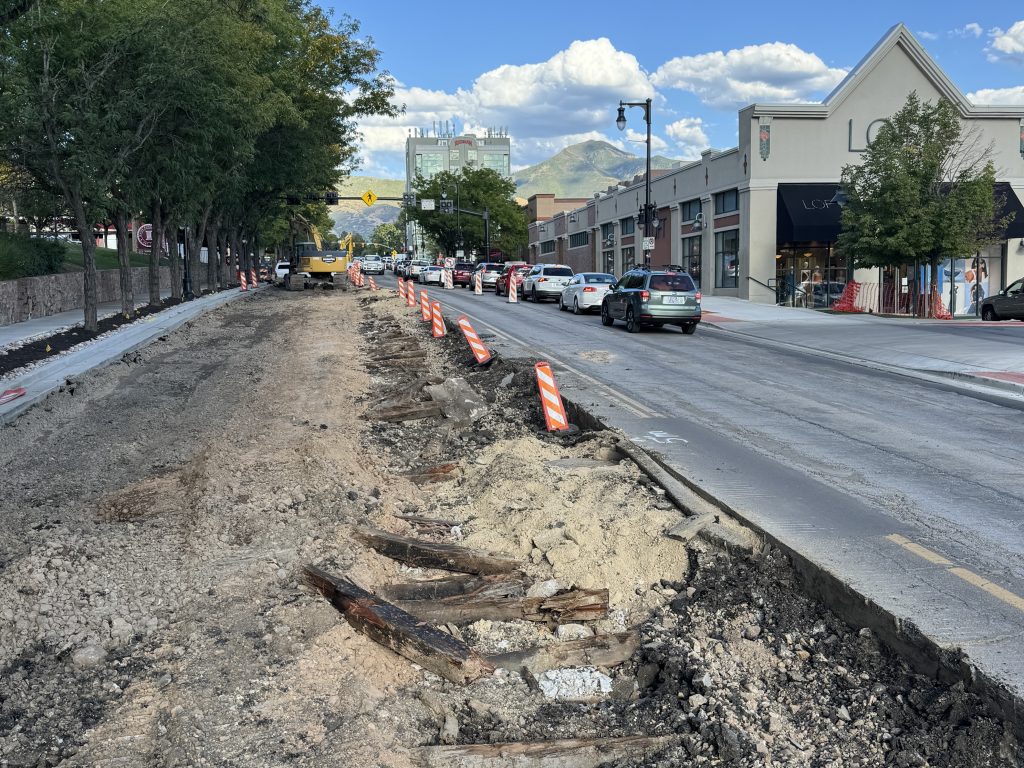
Downtown, Larsen said work on a natural gas pipeline near 200 South took longer than expected, which delayed road improvements by a year.
“But things have been opening up, and so hopefully we can get some good after data, and that people can put some of the trauma from the construction behind them, and not conflate that with blaming the bus lanes or the bike lanes, when in reality it was the congestion was due to some pretty intense construction impacts,” Larsen said.
Future Construction Issues
One issue that city staff will face is the implementation of SB195, which Larsen said will be a challenge for his department. Though transportation officials already have to conduct traffic studies on potential changes, the added layer of state oversight will likely delay construction timelines.
“The fact that now we have to get UDOT permission to do projects on city streets, that’s really unprecedented,” Larsen said.
He added that SB195 also creates more work for people at UDOT. Larsen said state transportation officials had not expressed concern over what Salt Lake City planned to do with its streets. UDOT and the city have a great relationship, Larsen said, and the two entities have worked closely to meet the same goals.
“But there’s a small group of really well connected people that are really upset that it’s not as easy to drive around Salt Lake as it was in the mid-80s, so they made their voice heard up at the legislature,” he said.
Either way, Larsen said work will continue on FOF projects, and future projects will seek state approval as dictated by the new bill.
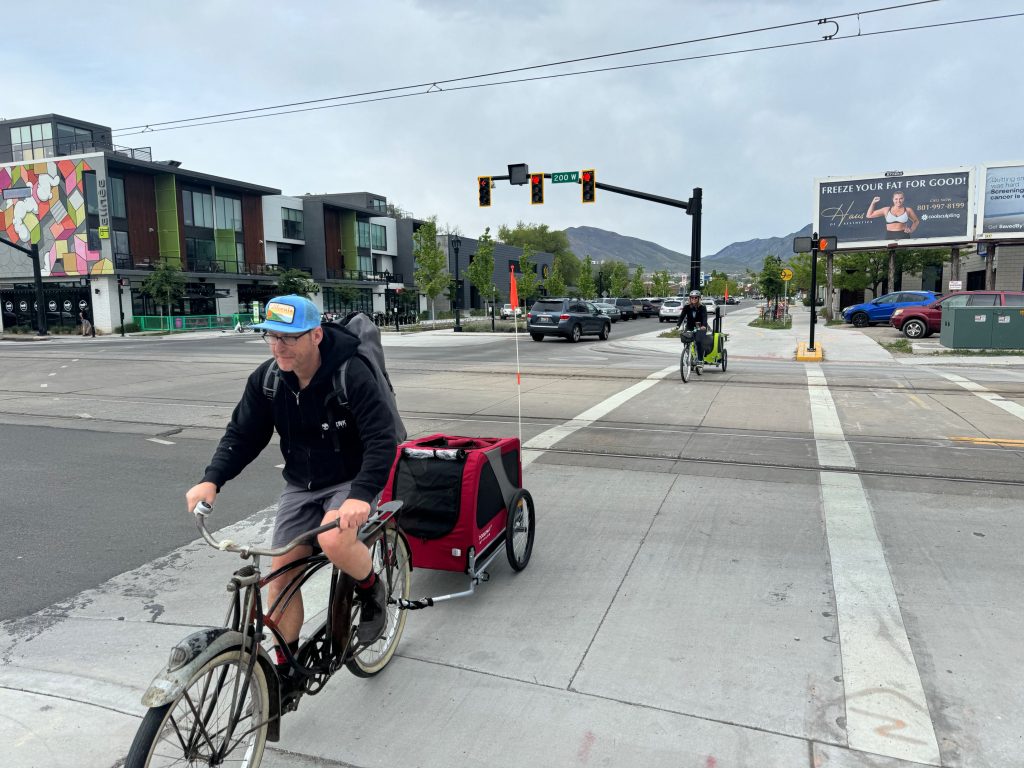
Larsen looks to have most construction downtown wrapped up by 2027, which would help ease congestion during what should be a busy time.
Between April and October 2027, The Church of Jesus Christ of Latter-day Saints is expected to open its Salt Lake Temple — an event that will draw huge crowds Downtown.
Larsen likened the city’s widespread construction to that of a home renovation — saying it’s a tough stretch of time that’s worth the wait.
“It’s like a giant kitchen remodel,” Larsen said. “It’s super inconvenient, but when it’s done, it’s like, ‘dang, this is nice.’”













0 Comments