
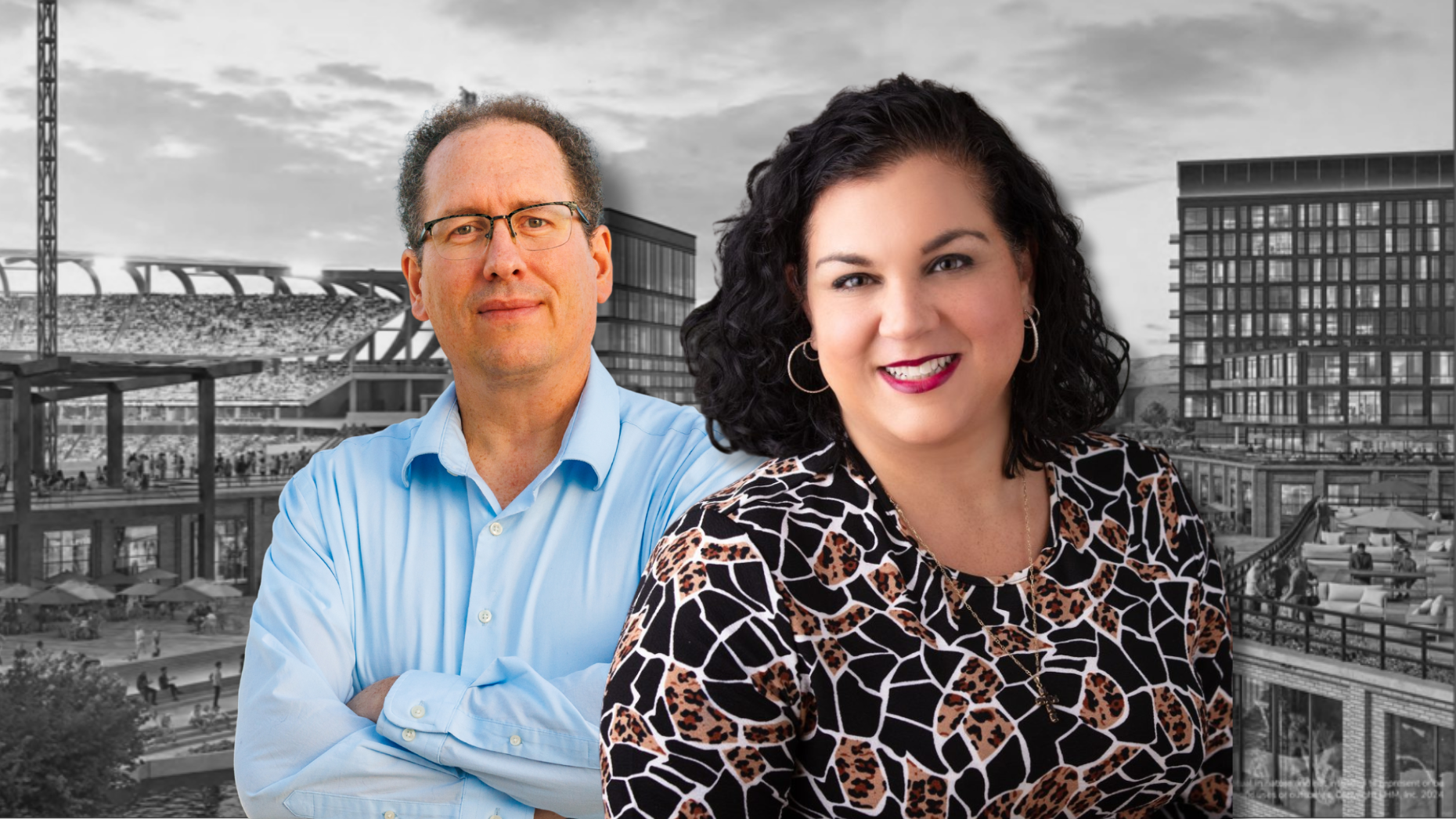
In a district that is poised to see some of the most intense real estate development in the coming years, candidates vying for the City Council are taking aim at whether the growth has been a net positive for west side neighborhoods.
Salt Lake City’s west side continues to be a growing hub for the city. More and more housing units continue to pop up along the North Temple corridor, meanwhile commercial growth continues to spread in Westpointe and the newly-annexed Northpoint areas.
District 1 incumbent Councilwoman Victoria Petro voiced concerns about the cluster of low-income housing that’s being built in her district, along with various state-driven initiatives that are poised to syphon tax revenue from the city. While at least one challenger is taking aim at the council’s support for recent subsidies to wealthy Utahns.
Three candidates have thrown their hats in the ring to represent one of the west side’s two City Council districts, with the District 1 incumbent, Victoria Petro, vying for another term while two newcomers, Stephen Otterstrom and Yussuf Abdi, seek to unseat her.
Building Salt Lake interviewed two of the three candidates, asking for their takes on the city’s ongoing growth, the increasing number of affordable units being built in District 1 and other topics relevant to those in the district.
One candidate, Yussuf Abdi, did not respond to multiple requests for an interview.
VICTORIA PETRO
Victoria Petro, a 44-year-old Rose Park resident, is running to retain her seat after representing District 1 for the past four years. Outside of the council, she’s the executive director of the Utah Hispanic Chamber of Commerce.
Petro told Building Salt Lake she wants to continue the generational work being done by the city, and she added that consistent leadership would be a benefit to the city.
“There’s a lot of truth to hitting your stride,” Petro said, “and so the first four years, I’m proud of a lot of the things I accomplished, but I recognize that there was some wasted energy as I tried to figure out the strategies for becoming good at what we do. I would like the opportunity to continue on, now that I feel more optimized, to really step into that and to serve the community.”
The North Temple corridor — which is nearly split down the middle between District 1 and 2 — continues to be a site of immense growth for apartment complexes, especially affordable units that receive LIHTC funds.
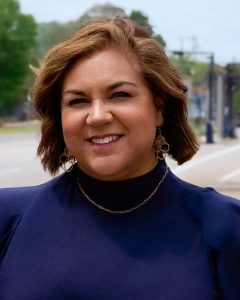
Victoria Petro. Courtesy image
Petro understands why it’s a popular site for new housing, saying the availability of the land and the lower costs make the area an easy target for developers. But she worries the concentrated, subsidized housing near industrial sites can lead to issues further down the road.
“We’re creating tenements and smokestacks with the industrialization immediately next to housing that’s going to be subsidized in perpetuity, or at least for 30 years,” she said. “It’s a recipe for us to never have the amenities that we need … I think the concentration of the need that is often associated with the people who live in LIHTC housing into one area is repeating historical mistakes.”
Petro said that because Utah is a free market-oriented state that heavily sides with landowners, she spends a lot of time with developers, pouring over plans to ensure the district has a say in what’s being built. She still worries that the result of the rush of low-income development will be a concentrated need for assistance.
While the west side’s new developments are certainly a big issue, Petro said one of her growing concerns is her district seeing an increasing number of state entities drawing away from the west side’s tax base.
“We have taken massive centers of tax revenue and we have diverted them to other priorities, and the end result is that me and my neighbors, in order to get this gentrification that we should expect from places like the Power District, will end up paying more, and I don’t know how to justify that,” she said.
One example she cited was the Inland Port in Salt Lake City’s northwest corner. Petro said business owners have asked for an expansion of the city’s police force in the area — citing things like street racing and copper being stripped from buildings. But Petro said that expansion would come from the city’s general fund, adding, “the port doesn’t contribute to our general fund in any meaningful way that expands service.”
“We’re being asked for substantive and meaningful improvements to quality of service without a tax base to sustain it,” Petro said. “Which means my neighbor, Richard, who lives on $950 a month in Social Security, who paid his house off 27 years ago, is being nickel and dimed out of his house by property taxes and the cost of eggs. That’s inhumane and immoral.”
The western neighborhoods of Salt Lake City have long been the site of more affordable homes but a lack of non-industrial businesses. Petro knows the area needs changes, but it boils down to responsible economic development. People often live on the west side and have businesses or work to the east, and Petro said the area’s biggest need is the ability to be self-sustaining.
“We don’t need to be saved,” she said. “What we need is for the systemic tools that make it more difficult for us to be self-determined, have those mitigated so that we can stand on our own and have our own voice, especially with the advent of 10,000 units or so that will come in the Power District, where only 10% will go down to 80% AMI, the rest of them will exist above it that that perpetually changes every demographic about the west side.”
She added that the Power District development can either be a boon for the west side or a detriment to the area. She said the Larry H. Miller Company is the right kind of partner to have on a project of that scale, but it remains to be seen to what extent the development would impact the area.
STEPHEN OTTERSTROM
One of two candidates running against Petro is Stephen Otterstrom, a 47-year-old Fairpark resident who works as a consultant who does corporate training.
Otterstrom jumped into the race for a handful of reasons, he said. But one specific reason was the city’s allocation of public funds to the Smith Entertainment Group, which largely occurred under pressure from the state Legislature. Otterstrom said he feels the number of deals given to SEG was an example of the city putting the ultra-wealthy above the needs of regular Salt Lakers.
“I really felt that we had been betrayed by our entire City Council,” Otterstrom said. “And it really began to make me think that if I wanted someone that ran a different formula in making their decisions, then maybe I needed to run, or find somebody else who was interested in running that I could support.”
As someone who has lived in affordable housing before — though it was around Lake Tahoe in California — Otterstrom said he would be unlikely to oppose any pitch for additional affordable units or funding for such programs. It’s in Lake Tahoe that he learned that affordable units are only affordable with a deed restriction, and when that deed restriction expires, the monthly rents can increase and drive tenants out.
Otterstrom said this happened at a trailer park in the Lake Tahoe area. The tenants, who owned their trailers but not the land underneath, were kicked out and uprooted, “for a few billionaires coming up from San Francisco.” He said he takes a somewhat cynical approach to affordable housing, though he certainly isn’t against it.
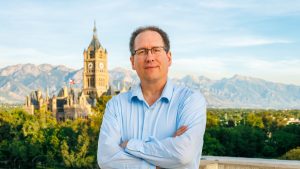
Stephen Otterstrom. Courtesy image
“We need to get people sheltered,” he said. “I’m a beggar, can’t be a chooser in some of these circumstances. However, affordable housing is not a sustainable solution. In Utah, in Salt Lake in particular, the only sustainable solution is ownership … When I look at all of these apartments going up, my question is, why are we using an ownership structure that doesn’t benefit the people who are going to live there to the maximum degree?”
Otterstrom said his goal, if elected, would be to focus the city’s efforts toward a cooperative housing approach, where the tenants are shareholders in a corporation that owns the building or complex where they live.
Some of the biggest concerns Otterstrom has heard from constituents in District 1 are the rising costs of city services and a feeling of not being represented in city hall. Increasing water bills, for example, is something that’s on people’s minds, he said. Otterstrom understands the increases are needed to replace aging infrastructure, but the city’s tiered system can disproportionally impact families.
“Now that we’ve moved to a tiered way of billing, it creates an environment where, if you are a family living in a home, you’re going to pay a lot more per person for your water, because you’re going to go into that next tier much faster,” he said.
While knocking on doors, Otterstrom said he’s heard from a number of senior citizens who are struggling to stay in their homes. Many are on fixed incomes but not fixed expenses, and he’s heard from some that have had to mortgage their homes to make necessary repairs or just to cover daily expenses.
“The city has no program to help them out, and I’m talking to seniors who are spending, many of them, 10%, 15%, 20% of their income on taxes,” Otterstrom said. “So one of the first things we need to do is we’ve got to protect those individuals. I understand the city needs to collect taxes, that’s how they make money. However, we have got to find a way that we don’t tax people out of the homes that they live in, especially those most vulnerable.”
While he said it would be nicer to have more grocery stores and other amenities nearby, Otterstrom said what the West Side needs more is for the city to support small businesses instead of the wealthy, like SEG. One example of this that Otterstrom cited was the Star of India restaurant, which had the copper stolen from their business. Though they figured out a way to reopen, Otterstrom said he would rather be in a city that can lend a small amount of money to a business like that rather than give millions of dollars to a company like SEG.
“We have some of the most resourceful people here,” he said. “If we made it easier for them to start little stores, little bodegas, things like that, we could probably use the know-how, the pluck of our very own residents to solve these problems. However, right now, they’re fighting against the system that says, ‘we’ll help a major grocery store get in, but we’re not going to help a little mom and pop find their way in.’”
VOTING
Ballots will start being mailed to registered voters on Oct. 14. Salt Lake County residents can also register to vote in-person at the Salt Lake County Clerk’s Office or residents can register to vote on Election Day, Tuesday, Nov. 4, at voting centers around the county.















I disagree with the assertion that the sales tax increase “largely occurred under pressure from the state Legislature.” The bill required the creation of the district, which the council did. It then said that the council “may” raise a tax of up to .5%, not “shall.” If it was something the city was forced to do, then there wouldn’t have needed to be a vote.