

The Salt Lake City Council agreed to set aside $2.1 million in city funds for family-sized, workforce housing in the Fairpark and Poplar Grove neighborhoods — but not without some debate over energy guidelines.
The council, acting as the Community Redevelopment Agency of Salt Lake City, voted unanimously Tuesday afternoon to approve a resolution allocating city funds to two projects in collaboration with NeighborWorks Salt Lake, a nonprofit that helps create affordable housing in the city.
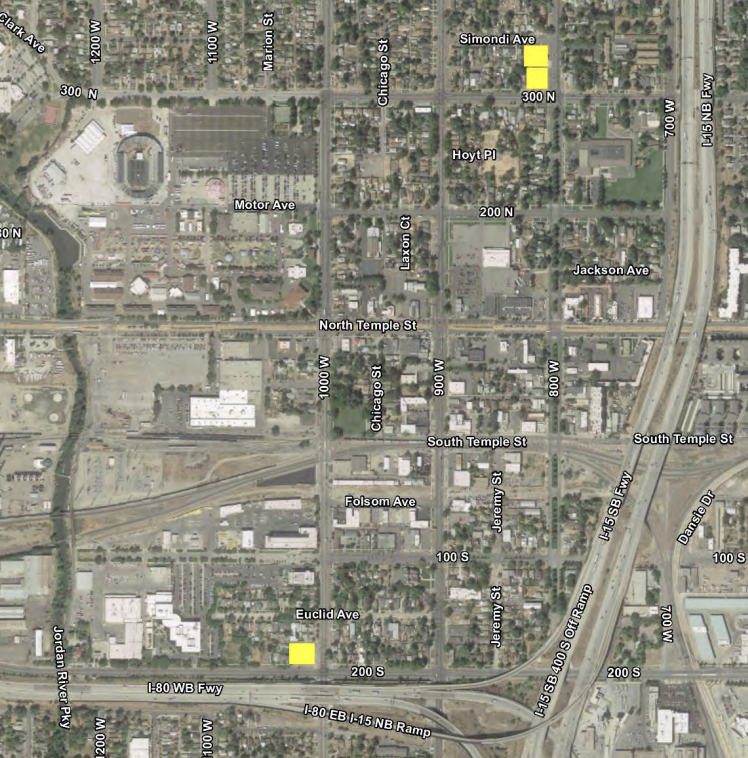
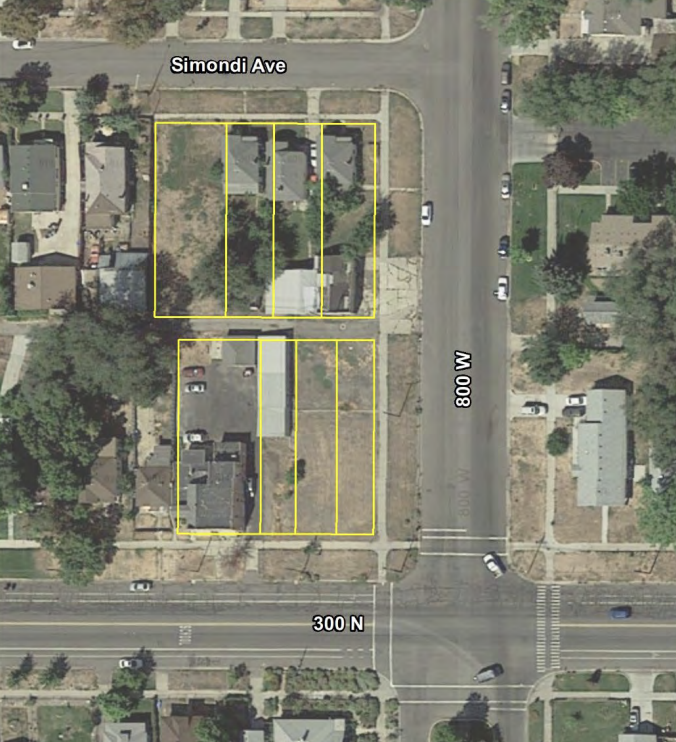
The proposal sets aside funds for two housing developments — the Maltair Lanes development at 1012 W. 200 South, and the Stanbridge property at 319 N. 800 West. Both developments are currently on vacant land.
The Maltair Lanes project would consist of 13 three-story townhomes in Poplar Grove on roughly .53 acres of land, and all the units would be for sale. The land is currently zoned as Transit Station Area – Urban Neighborhood – Transition (TSA-UN-T), which allows for heights up to 50 feet.
For the Stanbridge property in Fairpark, current plans call for around 18 townhome-style units or multifamily condos to be built on roughly .94 acres. The land is currently zoned as RMF-30, with a maximum building height of 30 feet.
All of the units would be deed restricted for families making 120% AMI, as the development would be labeled as workforce housing. At a minimum, 20% of the units must be affordable to households earning 80% AMI. In addition to the income requirements, each development must have 45% of all units have 3 or more bedrooms.
Both projects would be the first in NeighborWorks Salt Lake’s community land trust, which would include having a nonprofit own the land underneath the developments, which, “allows households to purchase or lease homes on it through long-term ground lease,” according to a presentation to the council Tuesday. Ideally, this arrangement would make homes more affordable.
Council members emphasized the need for this kind of housing in Salt Lake City, though they debated whether the developments should receive waivers for sustainability requirements that CRA projects typically include.
One requested waiver was to allow the Maltair Lanes project to have natural gas in the building, as CRA projects typically do not allow on-site fossil fuel combustion. The project was planned to have natural gas before the CRA was involved with the project. The other requirement being discussed is the need for CRA projects to earn an Energy Star score of over 90, which NeighborWorks couldn’t exactly calculate if the development had natural gas.
Bryce Garner, CEO of NeighborWorks Salt Lake, said redesigning the plans to get rid of natural gas would add roughly 3-6 months to the project’s schedule. He told the council his organization is trying to make the units as affordable as possible, and doing the redesign would be costly.
“We’re working on a razor’s edge,” Garner told the council. “It’s not just the delay in the construction, but also making it so it’s not affordable for workforce housing.”
Council members worried that if they approved the waivers, it could set a precedent that future developments could get those same waivers. Despite the worry, Council members like Victoria Petro said the benefits would outweigh the drawbacks. She added that she doesn’t want to set a precedent that developers could get around energy policies, but she said this type of housing is in short supply.
“This is the only proposal that has come across our desks that satisfies our request for family size, for ownership and for workforce (housing),” Petro said. “For me, this one checks as many boxes as I need.”
The council ultimately moved to approve the waivers with the expectation that NeighborWorks will come back to the council with an Energy Star rating and meet the requirements outlined in the term sheet. The council unanimously approved that motion.












0 Comments