

It’s been busy on the Salt Lake City Planning Commission since the advent of COVID, with more issues to address than developers needing design approvals for projects. Just the number of major zoning changes brought by the Mayor’s pro-housing agenda has kept the commission hustling.
And then there were the recent rapid zoning changes required by deadlines in state code for the Larry H. Miller’s Power District on North Temple and Smith Entertainment Group’s Delta Center mixed-use entertainment district.
While currently staffed at eight members, on some nights the commission has struggled to begin meetings on time with its minimum five commissioners for a quorum. Within the next nine months, the commission will also lose two of its most experienced members, both of whom are reaching the legal limit of serving two four-year terms.
One, an architect, planner, and professor will be gone in July. The other, a citizen expert with decades of experience in neighborhood activism, will retire from the commission in March of next year.
Last night the city council interviewed and approved three new commissioners to take their place. The benefits to commissioners aren’t huge. They receive $25 per meeting and a “dinner snack, because they can be long in duration,” says a senior planning official.
Let’s take a look at what the planning commission might lose and/or gain in the five-member transition.
The newbies
Mayor Mendenhall nominated, and the City Council approved three applicants to the planning commission:
•Jeffrey Barrett, trained in urban planning who has worked mainly in energy, including for Pacificorp and the Governor’s Office of Energy Development, and most recently in renewable energy
•Lilah Rosenfield, a service planner with UTA who has an educational and professional background in regional transportation planning and data analysis
•Michael Vela, an architect, principal, and senior vice president at HKS, a major international design firm
City code says “The Planning Commission shall consist of least five (5) and up to eleven (11) voting members, appointed from among qualified electors of the City in a manner providing balanced geographic, professional, neighborhood and community interests representation” (21A.06.030.D).
Traditionally, the “balance” on the commission has been made up of professionals in development-related industries, professionals who are in development-ajacent industries, citizen-experts, and generalists.
Generalists might raise questions of whether they are qualified to contribute meaningfully – and indeed some over the years appear to be merely mayoral patronage appointments.
But generalists also frequently bring to the commission a perspective based in the user’s perspective rather than the expert’s, and an ability to run meetings and communicate with the public more effectively than experts can.
For development-watchers, perhaps the main question for the rookie commissioners is whether they will be YIMBYs, supportive of all parts of the mayor’s pro-housing agenda? Or will they dig in on specific issues that may cause friction and course-correction for both policymakers and developers?
A look at some of the friction caused by the two veteran, departing commissioners may give insight as to what the current commission will be losing with their exit.
A recent example of commissioners’ influence
The retiring two-term commissioners, Bree Scheer and Amy Barry, recently had success pushing back on part of the Administration’s “Mutli-family Merger” proposal for RMF-35 and -45.
The potentially overwhelming scale of 45-55 foot buildings on blocks currently occupied by one and two-story detached homes is seemingly what motivated their resistance.
Scheer, a retired professor and resident of District 3, stated at a meeting this February, “I’m completely in favor of having lot sizes that make sense and that can have a larger number of units on them.”
But “What I am not in favor of is making a really jarring addition to a neighborhood or expecting somehow that that neighborhood is going to transition so that someday there’s going to be nothing but 45-foot or 50-foot buildings in something that is currently a single-family zone.”
Barry, a former chair of the Sugar House Community Council and District 7 city council candidate, also dug in against the maximum height allowances in the proposed consolidated zone.

“I don’t particularly find it congruent to say the stated goal is you want to promote missing middle and you do that through a high-density zone,” she commented in February. She lives on a street with RMF-35 zoning.
As a result of community and commissioner pushback on the Multi-family Merger, the planning staff revised their proposal to maintain the currently-existing 35 and 45-foot height limits in the liberalized zones.
If approved by the city council, RMF-35 and -45 will see reduced requirements for setbacks, minimum lot size, off-street parking mandates, and land square footage required per dwelling unit. The rewrite also eliminates the requirement for all dwellings to have street frontage, and allows for more than one primary dwelling per parcel.
The planning commission unanimously approved that version of the ordinance last week, sending it on to the city council for likely approval.
Barry’s continued influence
Just last week, Barry again flexed her user’s perspective and almost scuttled a respected local developers’ planned development proposal, a story we’ve been covering at 1518 S. Main St. in the Ballpark neighborhood.
In response to Urban Alfandre’s request for an exception to the 200-foot facade length maximum in the FB-UN-2 zone, planning staff had worked with architects at AE Urbia on a proposal to break up the long, nearly-300 foot facades with design elements.
Those drawings didn’t impress Barry, who maintained that it didn’t meet the walkability standards applied in the area.
“One of my concerns is the exceedance of length on both Main and well, the whole project. Because I feel like we’ve seen, I’ve seen, many things in design that talk about breaking it up, and I think, oh, that’ll be all right.
And in the seven years that I’ve been on here, I haven’t seen one successful in actual real life of it not feeling just enormous. So I’m more leery of applications, any of them that wanna go that far over [the facade length maximum].”
Barry moved to reject the proposal, which didn’t receive a second. The final vote to approve squeaked by on a 3-2 count.
Scheer’s big picture imprint
Subject of a “Legends” profile in the most recent edition of the American Institute of Architects’ local magazine, Brenda/Bree Scheer will leave some big shoes to fill when she departs the commission this summer.
In the AIA profile story, she tells of harassment as a woman in architecture school in the early 1970s, rewarding work for the city of Boston in neighborhood economic development, and a transformative fellowship at Harvard.
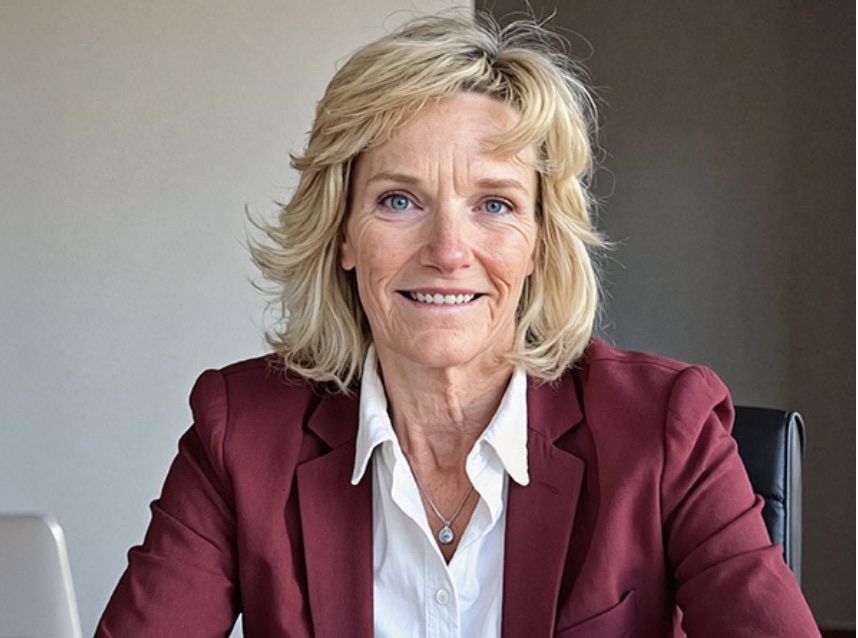
There she “learned about architecture as a field of ideas, a field of philosophy and an expansive revelation about human life. It helped me become an academically minded person — to see architecture more broadly and as an important cultural touchstone.”
Scheer started her career as a professor of urban planning in 1994 at the University of Cincinnati, and came to the University of Utah in 2002. She served as Dean of the College of Architecture + Metropolitan Planning for 11 years, and is now Professor Emeritus.
Scheer’s big-picture awareness on the planning commission rose to prominence most recently as SEG, the owner of Utah’s NBA and NHL sports franchises, applied for zoning changes and text amendments for its expansion of the Delta Center into a mixed-use entertainment zone.
Foreseeing a “a jumbotron-fueled, oversized and glitzy sports center” that will not “be anything but a relic needing overhaul in less than 20 years,” Scheer questioned the fundamental planning premises of the proposed development.
“In the last 25 years we have demolished a lot of urban fabric, and built a gigantic solution that promises to revitalize downtown. In fact we have made this move more than once. Each time with terrible consequences and each time successful for only a short period. From Main Street businesses that had thrived for over 100 years, we were wounded deeply by Crossroads Mall, which in turn was killed by The Gateway, which suffered near-mortal damage from City Creek Mall, which itself stumbles to find its sustainable way.”
“This is no way to plan a city. The key to urban development is to create a framework for orderly and incremental change by multiple actors, not to demolish entire two- or more 10-acre blocks, close streets and build a single unified vision.”
Looking to the future, Barry told us in an email, “I believe boards, commissions and councils should cycle through to new people with different perspectives to stay relevant and engaged.”
Whether the complement of Amy Barry’s close-in vision and Bree Scheer’s zoomed-out perspective can be equaled on the commission in the wake of their retirements will be seen, as the new members get their footing and make their impression.
















0 Comments