

The state of Utah spent $7.2 million to acquire three residential buildings next to the Governor’s Mansion in the Lower Avenues and is moving ahead with plans that likely involve knocking them down.
The work is part of a years-long and opaque effort to make changes at the executive residence near 603 E. South Temple, purportedly in the name of making things more comfortable and secure.
It has already cost the city 23 units of so-called naturally occurring affordable housing, as the state declined to renew the leases of tenants living in the three buildings now owned by the Division of Facilities Construction and Management, Building Salt Lake has learned.
The state has said it hasn’t decided what to do with the buildings. But multiple people who attended a meeting of the Greater Avenues Community Council last month say a representative for the state presented a plan that involved tearing down the historic apartments next to the Governor’s Mansion.
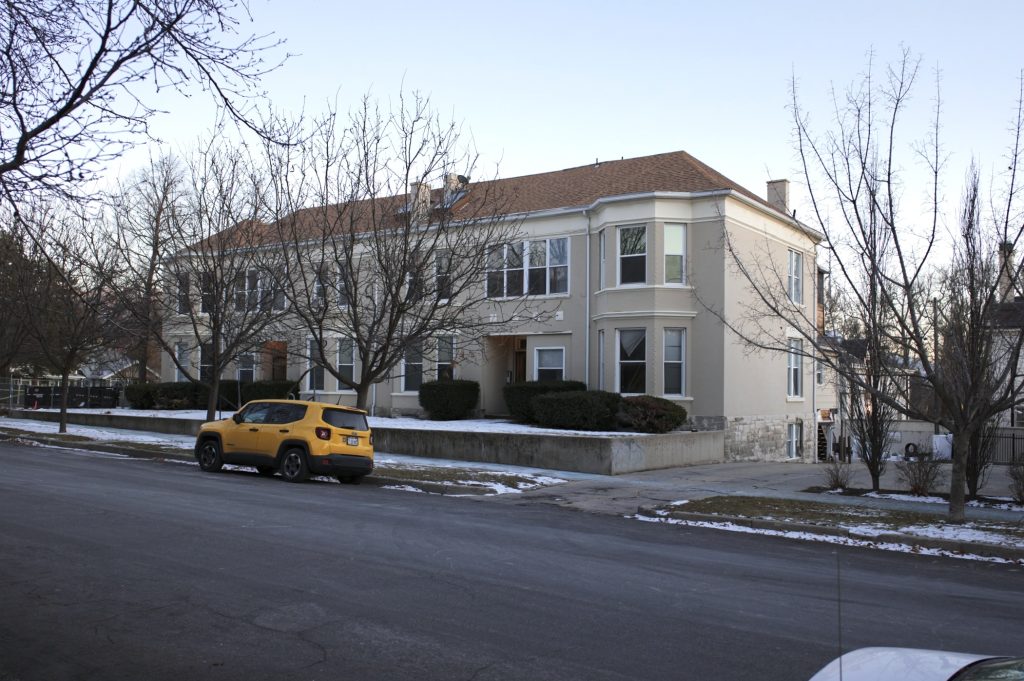
Dianne Leonard, chair of the Greater Avenues Community Council, said an architecture firm working on the plan for the governor’s mansion presented to the neighborhood group on Jan. 8.
“The plan is to remove 3 buildings on G street with a net loss of 23 housing units,” Leonard said in an email.
The state finished acquiring three historic apartment buildings next to the mansion last June, when it bought a triplex at 34 N. G St. That followed two other acquisitions — a six-unit property at 38 N. G St. in November 2023 and a 14-unit apartment building at 502 E. First in January 2024.
The state then cleared them of renters and is now apparently moving ahead with plans to knock them down.
The plan has already resulted in a net loss of 23 housing units at a time when Gov. Spencer Cox is calling for more housing to be built throughout the state, as the Division of Facilities Construction and Management declined to renew the leases for tenants in the buildings.
“I know that they are not going to be used as apartments anymore. That’s a definite,” said Lee Fairbourn, the state real estate manager with DFCM, the agency that manages state buildings. “Whether one, two or three of them are demoed has yet to be decided.”
“They will be repurposed or demolished. Either one,” Fairbourn added.
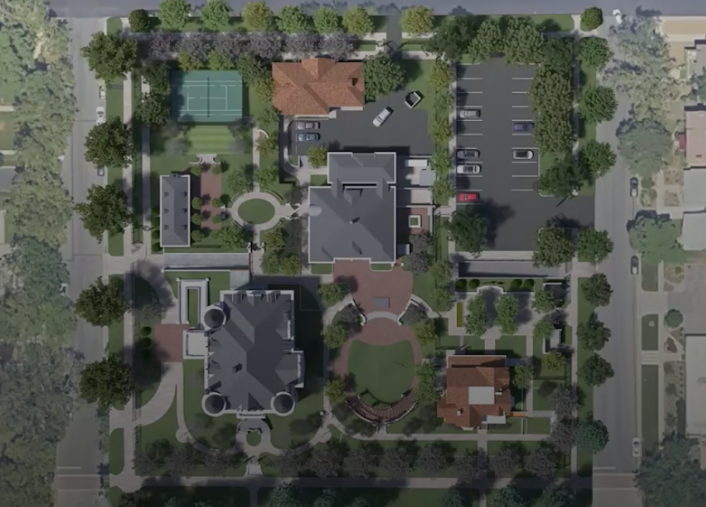
According to a frequently asked questions note presented to the Greater Avenues Community Council, the buildings will be demolished this year.
“DFCM is working closely with the State Historic Preservation Office (SHPO) to ensure broad historic preservation goals will be upheld on the project,” the FAQ said. “To accomplish security goals, the three residential rental properties will be razed in early 2025.”
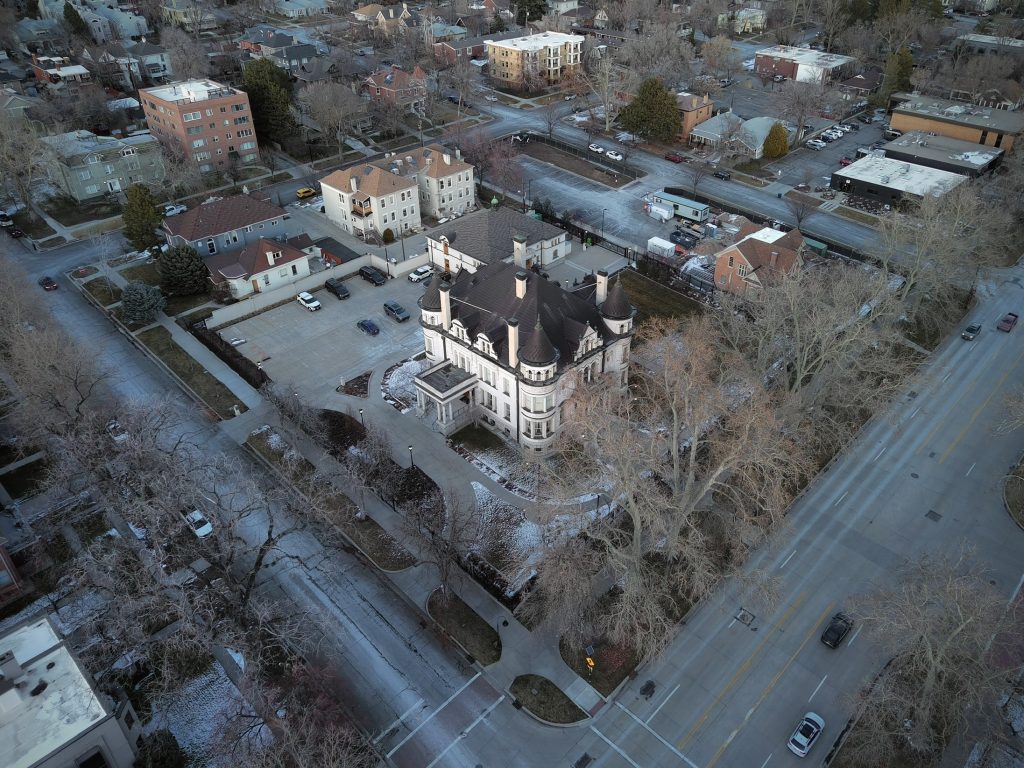
At least one of the buildings, 34 N. G St., which was built in 1896, has a direct view of Kearns Mansion, the honorary home of the governor that state officials have been working for years to revamp and secure.
It’s not clear why the state doesn’t consider other apartment buildings in the immediate area that also provide a clear view of the mansion as potential threats.
An 802-page master plan for the governor’s block remains available online, is not searchable and is heavily redacted, with entire pages blacked out.
Cox’s office didn’t respond to a written list of questions this week, including whether there had been security issues at the Governor’s Mansion in the 123 years since it was built, whether Cox supported demolishing the 23 housing units and whether it was possible to revamp the apartments as a source of housing.
The governor’s office instead forwarded the questions to the state Department of Public Safety, which didn’t answer the questions.
“We can’t discuss the specific security needs to maintain the safety of those who currently live, work, and visit the mansion,” said spokeswoman Hillary Koellner. “Regarding the properties surrounding the mansion, DFCM worked diligently with each tenant to help them relocate and make their moves as seamless as possible. Additionally, DFCM allowed owners to take anything they deemed of value, including, but not limited to, faucets, window panes, and hinges.”
Not bound by local rules
Under a 2023 bill passed by the Legislature, the entire block is now considered part of the executive residence.
Salt Lake City zoning and protections of historic buildings also don’t apply to buildings owned by the state, meaning Utah is free to demolish the historic buildings that sit within the Avenues local historic district.
The state paid $1.28 million for 34 N. G St., a three-unit property, in a sale that closed last June, county records show. It paid $1.85 million for 38 N. G St., and $4.07 million for 520 E. First.
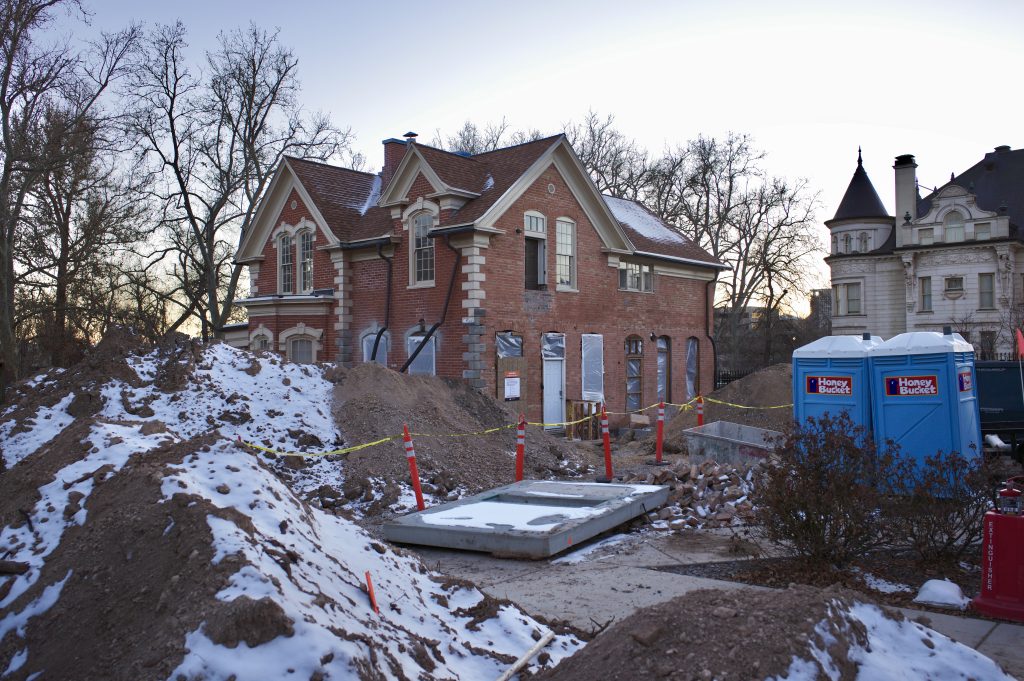
Representatives for the state are now presenting a plan to the neighborhood that outlines some of the changes that are intended to bolster security and also increase the comfort for the current and future occupants of the governor’s mansion.
The plan shows the governor’s representatives are requesting $30 million for the work.
The plan document lists the apartments as areas for “future study,” but one person who attended the neighborhood meeting in January said the renderings showed a basketball court on the site of at least one of the apartment buildings.
Other updates include building parking underground, improving private and events space and making general improvements to the screening and visitor flow through the property.
The plan is the result of work from a collection of government agents and staffers, including the Executive Residence Commission, Department of Public Safety, Department of Government Operations, Office of the Chief of Staff, Governor’s Mansion staff, Utah State Historical Preservation Office, Division of Museums and Arts, Division of Facilities Construction and Management.
It involved potential threats to the governor and buildings, existing safety and security issues, current and potential uses for the land and existing infrastructure.
They set it as a high priority to control buildings that overlook the governor’s mansion. The plan calls for creating private outdoor space for the governor and First Family, extending the secured boundary and building parking underground.
The Glendinning Home would be updated and used as office and security screening space by Utah Highway Patrol. An addition that was put on the 1882 building in 1960 would be removed as part of the work.
















0 Comments