
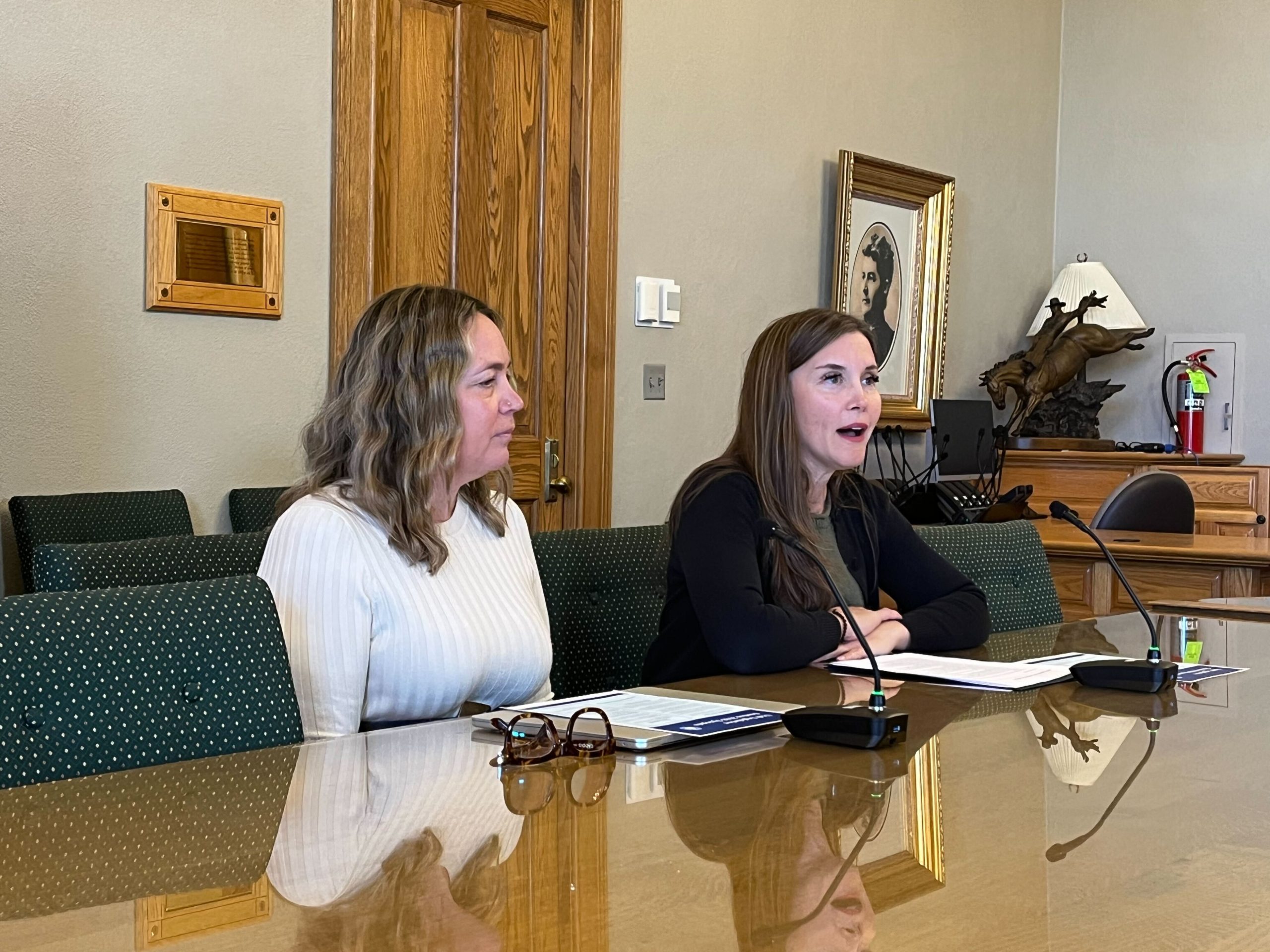
This time last year, Salt Lake City Mayor Erin Mendenhall decried the Utah Legislature’s “punitive” approach toward the capital city, putting specific targets on local roads and public safety.
This year was much different. Notably, a mix of bills that gave cities more local control and others that failed to advance left Mendenhall with a handful of wins to talk about on Wednesday, five days after the end of the legislative session.
“I can say, without a doubt, this is one of the most productive legislative sessions that we’ve had as far as our relationship goes with state legislators,” Mendenhall told reporters Wednesday morning. “I am thankful to Gov. (Spencer) Cox, President (J. Stuart) Adams, Speaker (Mike) Schultz, and other state leaders who have really partnered and worked with us, rather than against us.”
The 2025 legislative session infamously put restrictions on Salt Lake City’s transportation initiatives and mandated state approvals for many road projects as part of Senate Bill 195. Another 2025 bill threatened to penalize the city if it didn’t meet deadlines and work with state public safety officials.
Now, Mendenhall said this year’s transportation omnibus bill, Senate Bill 242, did away with the restrictions, adding that the bill doesn’t require the city to remove bike lanes, just to study how the lanes impact the roadway.
“It was a long and winding road, but it ended in a much better place than where we sat at the end of the 2025 session,” she said.
Angela Price, the city’s director of legislative affairs, said a big highlight of the session was House Bill 492, which unlocked around $100 million in state funds that cities can utilize to build infrastructure for single-family homes.
“We’re really excited about that funding opportunity and whether we can use that in Salt Lake, and it also unlocks that infrastructure that’s been tying up units in cities across the state,” Price said Wednesday.
In addition to funds for housing infrastructure, the same bill enables the transfer of $50 million in state transportation funds to the Salt Palace’s overhaul efforts. The transfer could take place as early as July 1 when the state’s fiscal year begins.
In another change of tune from 2025, the Utah Legislature actually handed more control to cities regarding how they handle alcohol licenses for hotel bars and restaurants near parks. The state’s alcohol omnibus bill, House Bill 597, would give cities the ability to screen such applications before going before the Utah Department of Alcoholic Beverage Services.
The bill would impact at least two projects in Salt Lake City — the rooftop bar and restaurant at a proposed Sugar House hotel and the Smith Entertainment Group’s proposed entertainment plaza near the Delta Center. It would also likely impact The Point, the massive redevelopment effort taking place in Draper where one of the state’s former prison was once housed. When asked Wednesday about the city’s appetite to screen these types of applications, Mendenhall replied, “thirsty.”
“I think the prohibition on proximity of alcohol to certain institutions is antiquated,” Mendenhall said. “That’s what municipalities and local officials are elected to do, listen to their community about what their needs, wants and dislikes are, and make those decisions at a local level.”
This year’s legislative session also yielded over $17.5 million in ongoing funds and $26 million in one-time funding for homelessness services. The state didn’t set aside money for the proposed homelessness campus on the edge of Salt Lake City, but this year’s legislation also places more of the financial burden on cities outside of Salt Lake, which Mendenhall said is long overdue.
“I expect all cities to need to invest more, but Salt Lake city’s investment has for a long time been exponentially greater than others,” Mendenhall said.
Unlike last year, the 2026 session was marked by bills that didn’t pass, Price said. She said a number of bills that could’ve impacted Salt Lakers were held in committees or didn’t make it past one chamber or the other.
One piece of legislation the city was happy to see fail was Senate Bill 97, which Price said would have put a 5% cap on property tax increases and change how a city’s new growth would be calculated. The bill did not pass out of the Utah Senate.
“It would have recalculated new growth, which could have had a profound impact on Salt Lake City, specifically with the development happening in the Delta Center with SEG,” Price said.
One failed bill that would’ve benefited Salt Lake City was Senate Bill 277, which would have made changes to the state’s legacy cities program that received funding last year. The bill passed the Utah Senate but was voted down in the Utah House.
Price said the proposed changes would have, “allowed us to be able to leverage that state funding source to be able to do more affordable housing in the city, specifically kind of modeling the Arbor 515 project.” She added that the bill didn’t fail due to the affordable housing aspects, but failed for other reasons.
Among other bills that failed was Senate Bill 245, which would have restricted where a city could use impact fees within its borders. The bill failed to pass out of the Utah Senate.
Despite any disappointment from failed bills like SB277, Mendenhall’s overall demeanor following the legislative session was positive — a dramatic shift from last year’s session. The mayor said the largely positive results of the 2026 session is the result of building better relationships with leaders at Capitol Hill.
“I’d say the banner theme for me in this session is that we have good relationships with state leadership, and we have been able to get through this session where we are because they have worked with us more than they worked against us, and we’re in an improved position compared to where we were years ago,” Mendenhall said.










0 Comments