

After a testy hearing last month, city officials approved a multi-million dollar tax increment agreement for a new development in the Granary District.
Members of the Salt Lake City Council, acting as the board of the city’s Community Reinvestment Agency, voted 6-1 on Tuesday to approve a tax increment reimbursement request for the Silo Park development. The roughly 8.2-acre project would add 740 housing units to the block between 500-600 South and 400-500 West.
In total, Silo Park will consist of numerous housing projects, dining options, commercial space and a hotel. The developers behind the project are Blaser Ventures and Lowe Property Group.
One of the first phases consists of building a 180-unit LIHTC housing project, which was officially opened earlier this week, according to a news release from Catalyst Opportunity Funds, a private equity firm that worked on funding the project. The building, named Millstone at Silo Park, is entirely dedicated to households earning at or below 60% AMI.
It’s the second building to open in the Silo Park block, as it joins the Greenside at Silo Park housing building that opened earlier this year, according to the Catalyst news release. Greenside is a 65-unit workforce housing development that offers units to households earning at or below 80% AMI.
Despite the added affordable units and plans to build out a block that’s been largely blighted, members of the Salt Lake City Council were not pleased with the initial pitch for the tax increment request, which took place in June. Council members ultimately chose to continue the item to a future meeting to allow for more time to analyze the pitch. The pitch was re-discussed by the council Tuesday.
Kristina Harrold, a project manager for the CRA, explained how the term sheet had changed since the last meeting, and the developer had clarified questions from the council.
She explained the modified term sheet cut about 10% of the maximum tax increment reimbursement. Initially, the project could essentially borrow up to $51,486,631 of tax increment funds over a 25-year term. The revised term sheet now sets that limit at $45,817,688.

The Silos project. Rendering by MVE Partners
That reduction is largely due to a waiver request from developers regarding CRA sustainability requirements, which was a sticking point during the last CRA meeting in June.
Typically CRA projects mandate all-electric appliances, but developers sought a waiver to allow gas cookstoves in planned restaurant spaces, as well as gas appliances in residential common areas and gas water heaters in both commercial spaces and in housing units. Harrold said that waiver request is still there, and it’s one reason why the CRA board requested the waiver cap to be reduced. Developers will pay up to $5,000 per month to the SLC Community Clean Energy Program and the Rocky Mountain Power Blue Sky Program.
She also clarified that the two workforce housing buildings would be offering their dedicated workforce units between 80% and 120% AMI, which includes 40 of the 65 units in the Greenside project. The other building has not yet been built. Harrold added that the workforce units would not be deed-restricted, as she said the affordability components “will be pursued more through leasing practices and through targeted marketing to households.”
Finally, Harrold said the board wanted to ensure the developer would follow through on fulfilling their public benefit obligations for the project. She said if a public benefit would not be included in the project, the annual reimbursement rate and cap would be cut by 10% for each benefit not maintained.
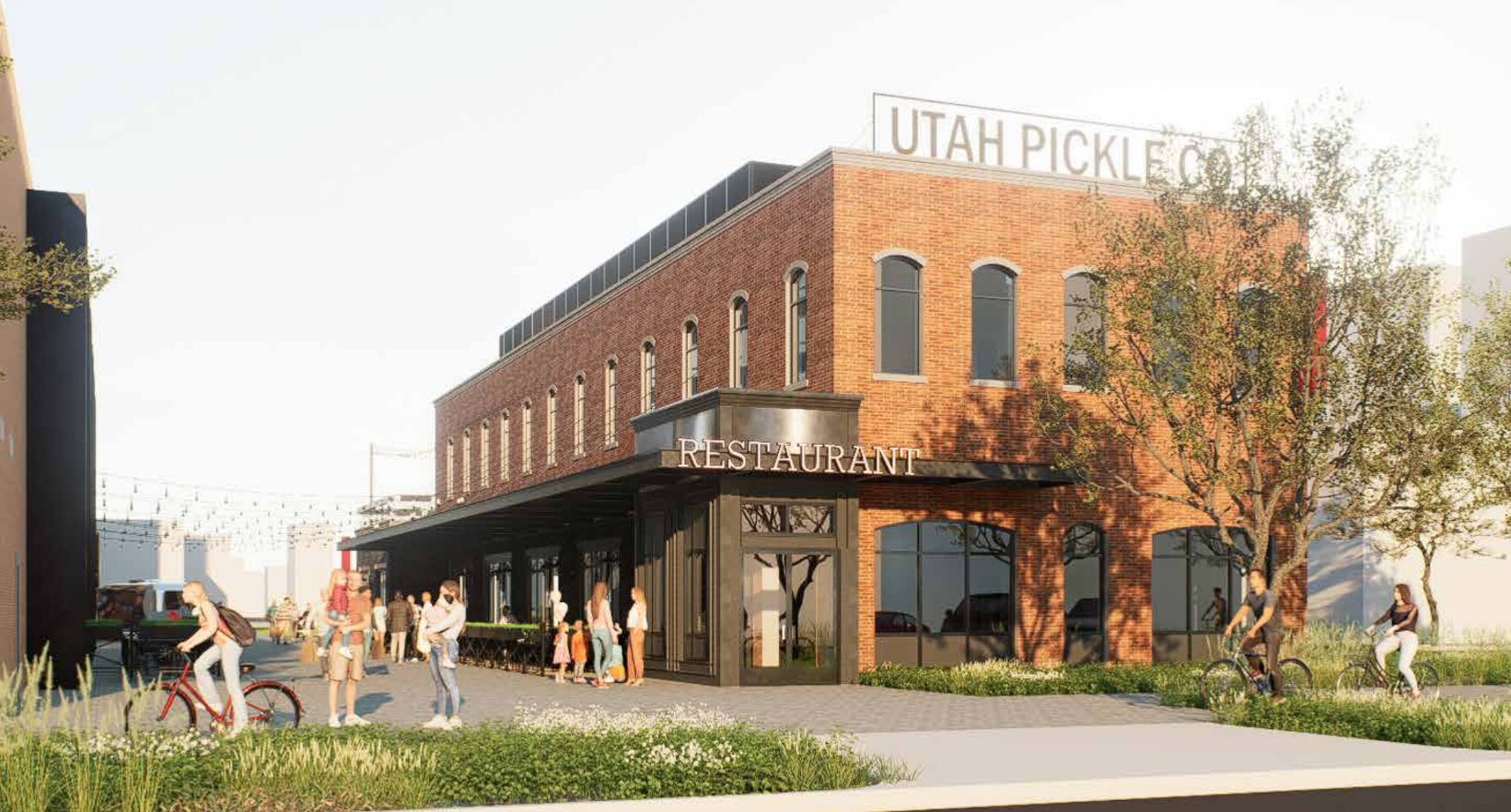
The distrust largely stemmed from issues surrounding the Pickle building, which was a focus at the last CRA meeting. The building was torn down despite the developer, Blaser Ventures, and the city council agreeing to renovate the building.
Though the Pickle building has been rebuilt to its original design, the ordeal left a bad taste in the council’s mouth and led them to reduce the project’s tax increment allotment by around $1 million. Since then, the council has kept a close eye on CRA projects with Blaser, and Tuesday was no different. Blaser was in attendance Tuesday and answered questions from council members.
New Council Member Jennifer Napier-Pearce asked Blaser if there were any structural issues surrounding the namesake silos on the block, hinting at the past issue with the Pickle building. The Pickle building’s structural integrity led to it being torn down without the council’s approval. Blaser said engineering reports and subsurface investigations indicated the silos were structurally sound, and the surrounding projects aren’t expected to cause issues for the silos.
“We’re very confident — especially survival from the earthquake more recently during the ownership period, that there would be no risk to it, outside of something completely outside of our control,” Blaser told the council.
Council Member Alejandro Puy, who was the most critical of Blaser during the June meeting, asked Blaser point blank if there were any other requests for waivers on the horizon for Silo Park. He previously voiced his frustration with the project requesting waivers for sustainability rules.
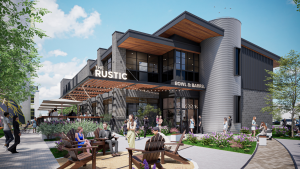
Blaser said there would be no additional waiver requests. He noted that the project’s food and beverage building is undergoing a design review before the Salt Lake City Planning Commission due to the building’s orientation toward a midblock walkway and away from the streetscape.

A rendering of the southwest corner of the Silo Park East Retail building. Image via Nelsen Partners Architects and Planners
Puy said he appreciated the response, noting that when waivers are requested, that’s when taxpayers are involved. He worried that the city could be creating a precedent to other developers that the city is willing to waive its own rules to make projects feasible.
Without making reference to the Pickle building, Puy also asked, “can I have your comment from your group that if anything changes, you will communicate with the city ahead of time before demolishing or changing the rules that they are stated on the contract?”
“Yes, 100%,” Blaser said. “The issues that arose in previous (projects) and communication breakdown there, I think there were a lot of lessons learned on both sides, and we would be in active communication from city planning, from zoning, all the way through this (CRA) commission, city council members.”
Though he thanked Blaser for the response, Puy said the breakdown in communication on the Pickle building was not a two-sided issue, adding, “you well know that we couldn’t prevent you from issuing that demolition, even though that is part of the contract to maintain that previous building.” Blaser apologized for the miscommunication, and said the issue rests with him.
“We’re not pointing fingers at anyone else but ourselves,” Blaser told the council. “We could have handled that much better. We could have been in front of that with the community much more. I believe our intentions were well intended but poorly executed. There was nothing intentional, and we will ensure that … if there are any changes to these plans and the commitment, we will be overly communicating that both with the community and with the council members here.”
The council later voted 6-1 to approve the revised tax increment reimbursement request, with only Puy voting against the proposal.












0 Comments