
Salt Lake City is considering a proposal to sell over two acres of its land for an 80 percent discount on its appraised value.
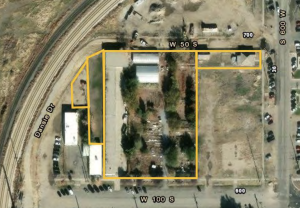
Members of the Salt Lake City Council will consider a proposal Tuesday afternoon that could allow for the sale of 2.33 acres of land in the Rio Grande District, which carries the Gateway Mixed Use zone (G-MU). The council will hear the sales proposal during a Salt Lake City Community Reinvestment Agency meeting. The CRA has owned the property since October 2008.
The proposed sales price for the parcels, which are located along 100 South between 600 West and Dansie Drive, is $2.5 million — even though the land’s appraised value in January was $12.18 million. The land, which was named the Parry Block, hit the market in March and was listed at roughly its appraised value, though the property had a number of strings attached in its Request for Proposals (RFP).
Requirements for a sale listed in its RFP included a minimum of 116 residential units, and half of all units had to be for-sale condominiums. The other half would be affordable rental units, though it’s not clear what rate of area median income the units would serve. Sale of the property also mandated at least 10,000 square feet available for art spaces, space for urban farming, surface parking and additional design elements. Proceeds from the sale are intended to go toward covering the cost for infrastructure in the Rio Grande District.
All those elements are included in the sales proposal, which the Salt Lake City Community Reinvestment Agency will discuss Tuesday. The group seeking to buy the land is Ulysses Development Group, a housing development company based in Denver. The staff report says there were two offers submitted to the CRA, and the pitch from Ulysses was the preferred option.
The company is looking to buy the land for $2.5 million, which would be around $25 per square foot. That’s in stark contrast to its initial listing price of $12,175,000 — which would total out to roughly $120 per square foot.
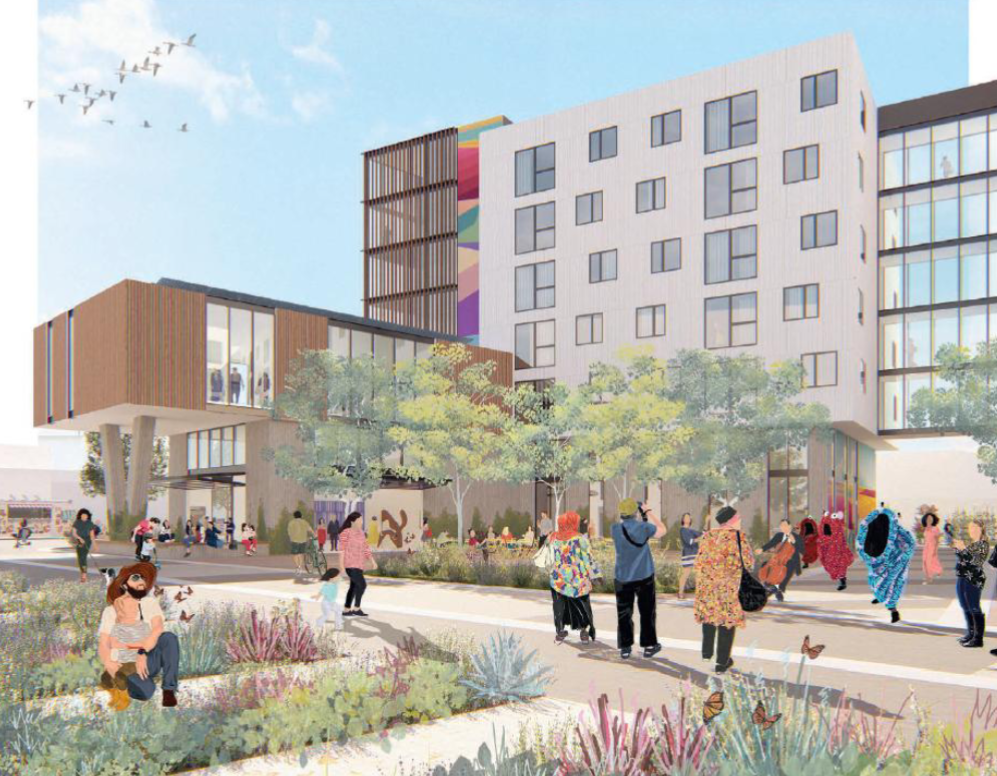
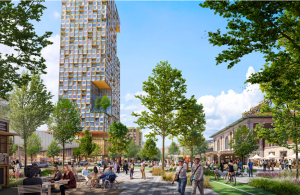
A rendering of the potential development at the Parry Block (foreground) looking to the southeast. Image via Salt Lake City Community Reinvestment Agency and Ulysses Development Group
Tauni Barker, a spokesperson for the CRA, told Building Salt Lake the land appraisal reflects the land’s unrestricted market value.
“However, the CRA’s request for proposal includes requirements for community benefits including affordable housing, for-sale housing, public art space, and a community garden,” Barker said. “Those requirements affect the economics of development.”
The staff report says the developer’s low offer on the land comes from two things. Certain aspects of the site — like restricted density, fire access requirements and other elements — limit the number of units that can be built on the site, the report says. The other reason for the low offer stems from Salt Lake City’s current market, as the report cites falling rents, increased vacancy and lower investor demand for multifamily as reasons for their offer.
The company proposes to build 116 units, and half of those units (58) would be for-sale. The project will consist of a multifamily building and a slate of townhomes, and each building type will total 94 and 22 units, respectively, according to the staff report. Of all units, 34 will have three bedrooms and be considered family-sized.
Project Details – Apartment Building
- 5 studios
- 31 one-bedrooms
- 34 two-bedrooms
- 24 three-bedrooms
- 94 total
Project Details – Townhomes
- 12 two-bedrooms
- 10 three-bedrooms
- 22 total
The staff memo projects the sales price for the for-sale units would range from $365,000 to $440,000, as two- and three-bedroom units would be available for sale. Projected apartment rents would range from $1,250 to $1,900, with units ranging from studios to three-bedroom units.
Though the staff report includes a breakdown of the unit count between the two building forms, it does not include exactly how many of each would be for-sale units and how many would be rentals.
In addition to the residential units, plans for the building include 10,000 square feet of artist space, which could include art galleries, performance spaces and studios. Utah Arts Alliance is listed in the CRA staff memo as a prospective tenant for the art space, though it doesn’t say if the organization could occupy all that space.
The plans also include space for a community garden, and the CRA staff memo lists Wasatch Community Gardens as a prospective tenant. The future development site used to house the group’s Green Phoenix Farm, which at the time was one of its largest urban farms.
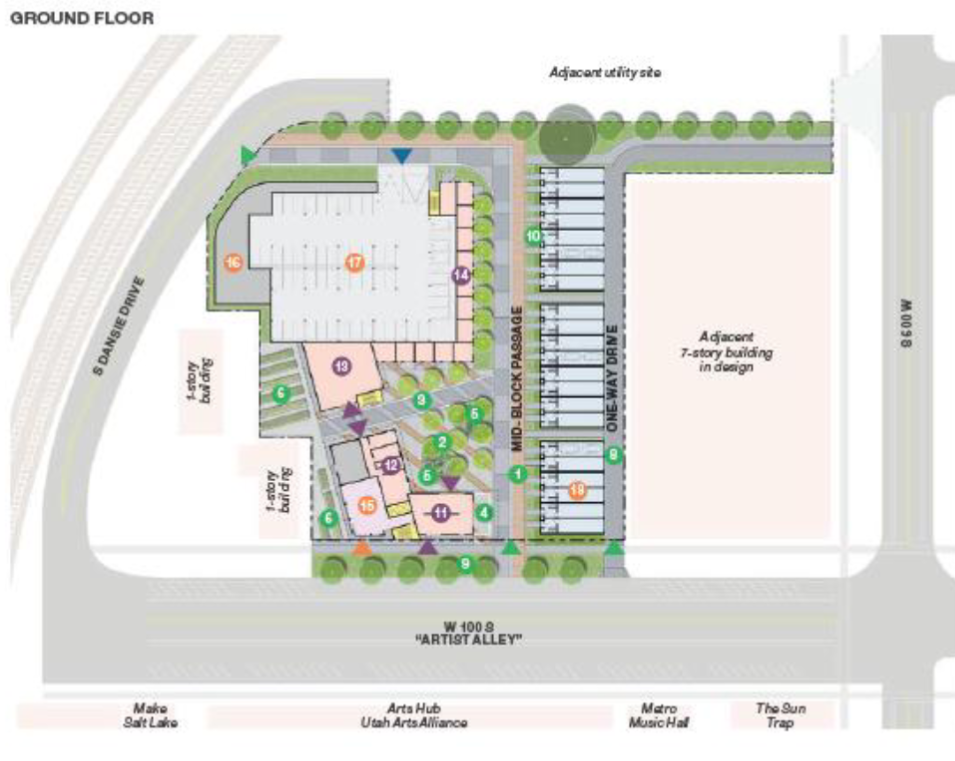
Plans included in the proposal show the apartment building would be built on the northwest corner of the parcel and continue diagonally toward the south. The ground floor of the building would include the commercial components, including the retail and artist studio areas, plus spaces for community gardens.
The townhome units would be built on the eastern side of the parcel and run the length of the parcel. The development would also be a mid-block passage, the renderings show, which would run between the mixed-use building and the townhomes.
Other required amenities on the site would largely front 100 South, which is labeled as “Artist Alley” in the renderings, and progress toward the center of the site. Businesses just to the south of the site along 100 South include Make Salt Lake, the Utah Arts Alliance’s Arts Hub building, Metro Music Hall and the SunTrapp bar.
Included in the renderings is a hint at future development nearby. The adjacent parcel, which is vacant and sits on the corner of 100 South and 600 West, is labeled in the renderings as “adjacent 7-story building in design.” It’s not clear what the building could be.
Barker said the $2.5 million sale price was offered by the developer and has not been finalized. She added that certain aspects of the deal — like contingency plans if the developers don’t meet all the requirements they should as part of the project — have not yet been negotiated. If the CRA board approves the sale Tuesday, additional details of the deal would be addressed at a later date.
Barker added the CRA’s mission is not limited to finding the highest sales price for a piece of land owned by the city.
“(The CRA’s) focus is on strategic, place-based investments that deliver long-term benefits to Salt Lake City neighborhoods,” she told BSL. “As development costs, financing conditions, and land values continue to shift, the board must carefully weigh current market conditions against the potential community benefits and long-term value of the proposed development.”
Council members, acting as CRA board members, will have the ability to accept, deny or provide a counter for the proposal, the staff memo says. The CRA board is required to screen any potential land transactions where the proposed sale price is discounted more than 10% of the appraised value, the memo says.
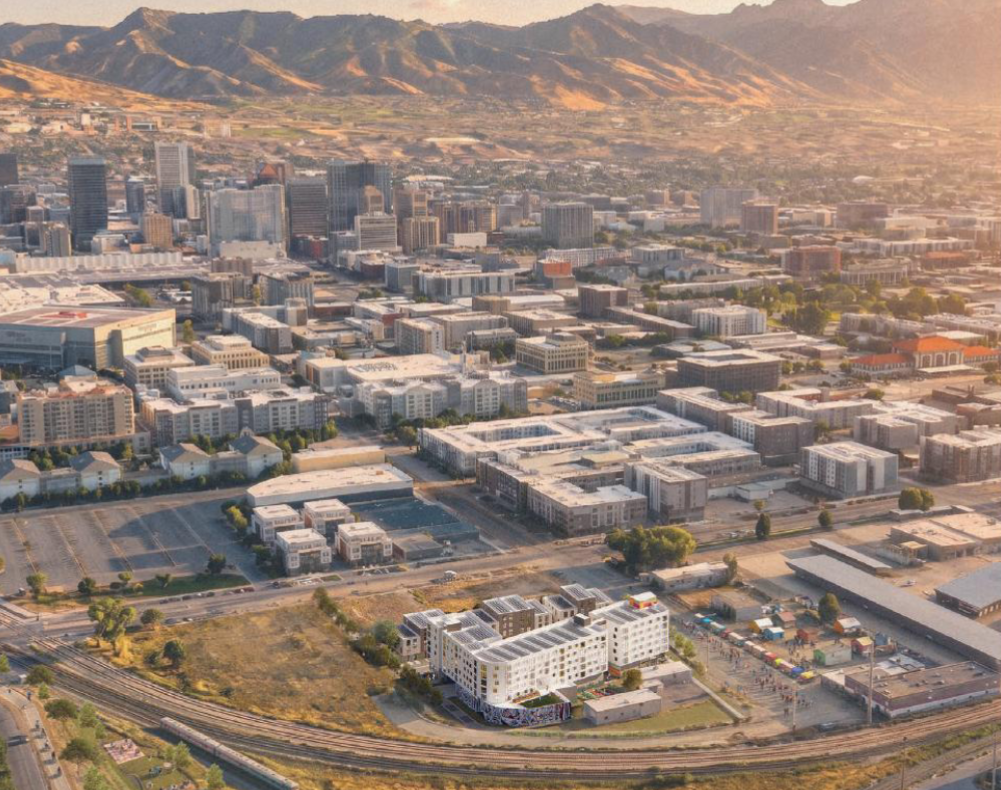
An aerial rendering of the potential development at the Parry Block. Image via Salt Lake City Community Reinvestment Agency and Ulysses Development Group
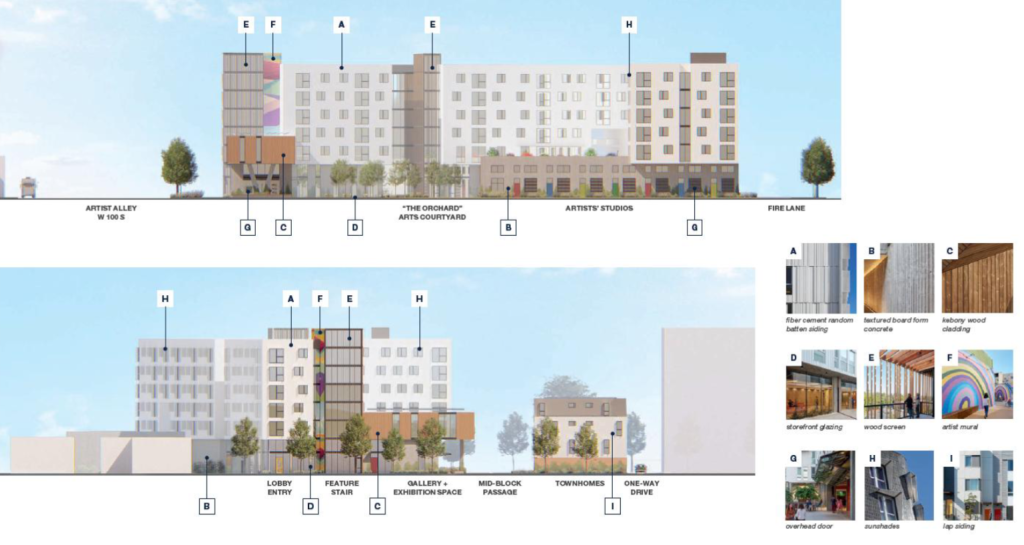
Renderings of the south facade (bottom) and mid-block walkway (top) of the potential Parry Block development. Image via Salt Lake City Community Reinvestment Agency and Ulysses Development Group




0 Comments