
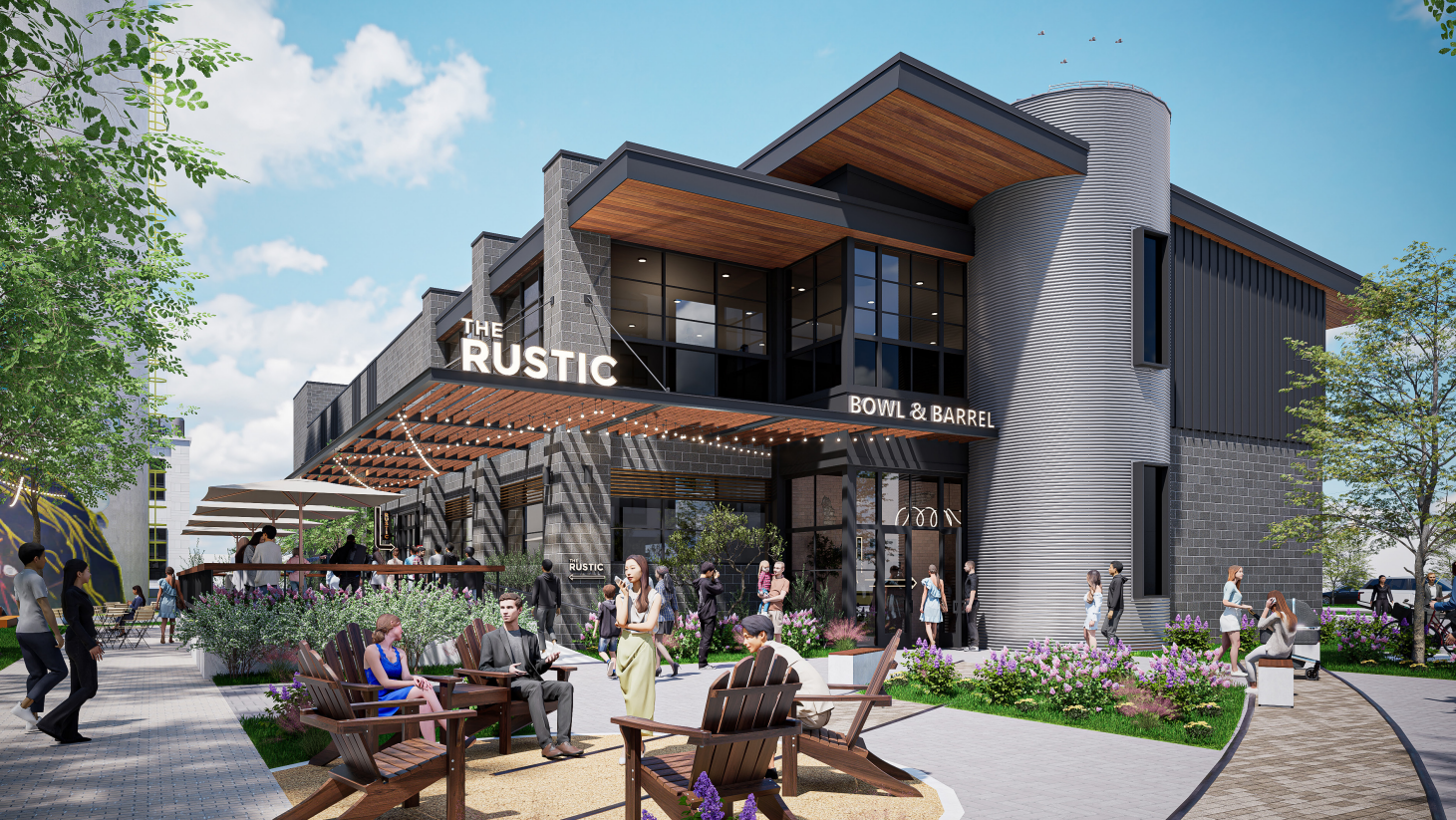
Retail developers across the Salt Lake City metro added 185,000 square feet of space in the first six months of 2026, the lowest January-to-June total on record, according to a third quarter report from Marcus & Millichap.
Last year, developers added more than 1.3 million square feet. What remains under construction totals less than 400,000 square feet, and two Lehi build-to-suits — a Target and a Life Time Fitness — accounted for half of that in July.
Almost no speculative multi-tenant retail is going up anywhere in the region, the report shows.
Kent Guerin, managing director of Marcus & Millichap’s Salt Lake City office, puts it down to cost. “With the interest rates and building costs and everything that’s happened in the last few years, we’re seeing a slowdown,” he said.
He doesn’t read it as a retreat from retail: “It’s going to cycle again.”
Retail vacancy in the Salt Lake Metro area was 4.0 percent entering the second half, the lowest among major Mountain and West Coast markets. The report projects a 19th consecutive year of positive absorption. Still, rents fell for a specific reason.
Rents fell anyway
Average asking rent peaked at $23.68 per square foot in June 2025 and dropped 5.2 percent over the following year. Multi-tenant space fell hardest, down 9.6 percent, even as multi-tenant vacancy dropped to 3.2 percent — third-lowest among major U.S. retail markets.
Guerin attributed the drop to the quality and makeup of available supply rather than weak demand. He said it points to older buildings in less desirable locations.
“You’re probably seeing it more in the value-add type of retail properties. Maybe Class C, where they’re not really nice,” he said.
He also thinks the metro figure hides more than it shows. “That’s a blanket statement, that rents declined 5.2 percent,” he said. “If you go submarket by submarket, you’re not going to see that across the board.”
West Valley, at roughly 1 percent vacancy, was the only submarket in the report where asking rents rose.
Who’s buying
Sales volume rose 40 percent over the 12 months ending in June. Utah is now drawing money that used to go elsewhere, Guerin said. “You had overinflation in other markets, including Denver, Phoenix and Seattle. Denver used to be the sweetheart of the West and they got overinflated and overbuilt.”
Breaking in is harder. “Depending on the asset, there’s not a lot of deal flow,” he said. “It’s more of a guarded community. I compare it to Colorado — a very guarded community where local people don’t want outsiders.” Outside buyers are getting in by paying more than locals will, and he expects more of them.
Some are hunting older centers to renovate, increasingly on the west side. Guerin expects the possibility of Major League Baseball expanding to Salt Lake City’s west side to sharpen that interest.














0 Comments