
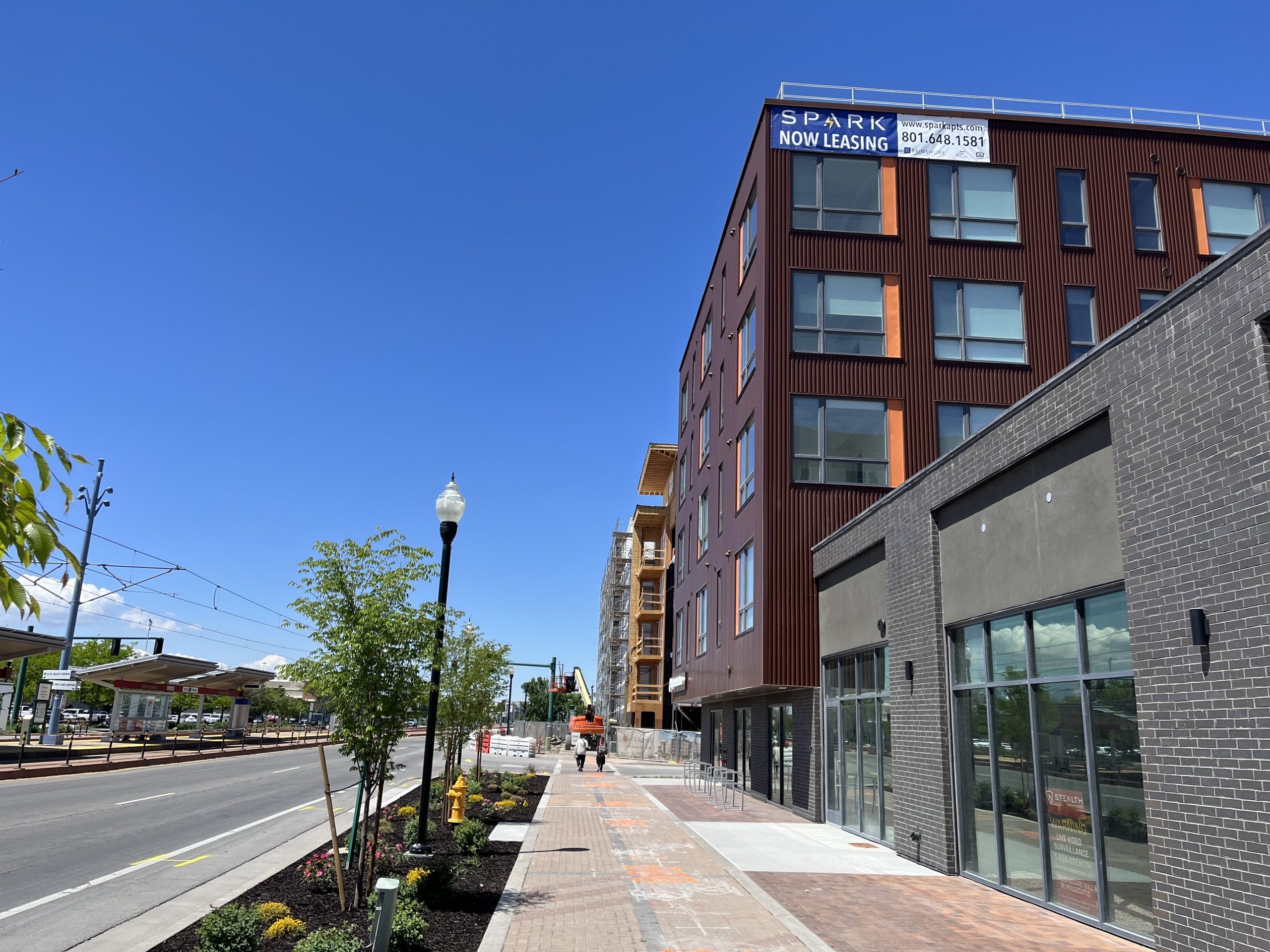
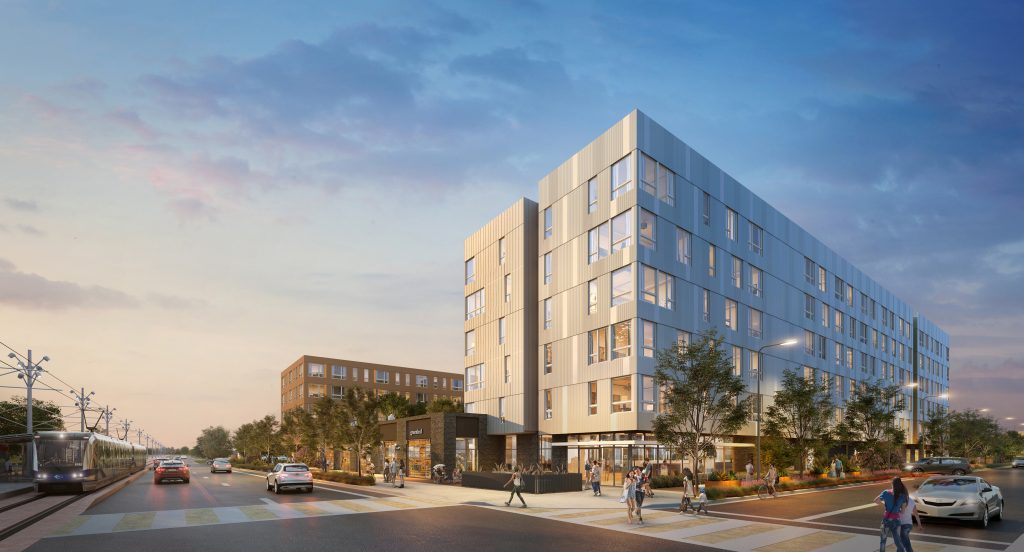
After years in the works, the site of a former mid-20th century motor inn is now the home of a new, $99 million mixed-use, affordable development on W. North Temple, directly across the street from the proposed Power District.
The SPARK apartments — located at 1490 W. North Temple and also just feet from the Power Station TRAX stop — will bring 200 below-market units and also include onsite childcare space operated by Neighborhood House, a nonprofit that has operated on the West Side since the 1890s.
In addition to childcare space, SPARK contributes another amenity that Salt Lake City desperately needs — deeply affordable housing. It’s the latest project to come online along North Temple, which remains a hotspot for developers building LIHTC housing.
Developed by Chicago-area-based Brinshore Development, almost a quarter of SPARK’s units — 48 out of 200 total — are available for families earning 20-30% AMI.
Salt Lake City hopes to build 2,000 deeply affordable units by June 2028.
Currently only around a quarter of that total is either completed, under construction or in the planning stage, according to the city’s affordable housing dashboard.
SPARK, which initially opened for tenants earlier this year, is currently around 40% occupied, according to Kathryn Morelock, a spokesperson for Salt Lake City’s Community Reinvestment Agency.
At a ribbon cutting event Wednesday, Danny Walz, the CRA’s director, said the SPARK site has come a long way since the CRA bought the property years ago. The CRA, then the Redevelopment Agency of Salt Lake City, paid $4 million for the 2-acre property in 2017, according to previous Building Salt Lake reporting.

Walz said the site used to be home to the less-than-savory Overnighter Motel, which he described as, “a classic motel from a long bygone era, and it had fallen into a state of disrepair to where it’s probably best left in your rear view mirror as you were driving away from it quickly.” He added that following the purchase, the RDA worked with over a dozen people who lived in the Overnighter to relocate them to more permanent housing.
The apartment building was already slated to be named SPARK due to its proximity to the power plant across the street. But later, the name would take on more meaning.
“When the RDA was getting ready to tear the building down, somebody created their own spark and burned down the old motel that was here,” said David Brint, co-founder and principal of Brinshore. “So maybe that was appropriate.”

Now, the site of the old motel will house between 700 and 800 residents, Brint said. He told Building Salt Lake that Brinshore, which mainly focuses on affordable housing, tries to include additional amenities in its developments, like space or arts, education or recreation to name a few.
“When we saw this project, we knew that we could create some density in the project because of the site,” Brint said. “(The) question was, how are we going to bring some of those other pieces into it? The most important piece is education. So early childhood education for every family, but especially low income families, it’s really important.”
The childcare space is 5,700 square feet, according to site plans submitted to Salt Lake City. The plans also show three commercial spaces on the first floor of the building, and the spaces are 1,500 square feet, 1,800 square feet and 2,300 square feet in size.
In addition to SPARK, Brint said the company also recently completed The Aster, a mixed-income development located at 255 S. State Street. Brinshore is also working on a project in Ballpark, and has its eye on other projects as well, Brint said. Despite being based in Chicago, he added the company plans to continue pursuing more projects in the Salt Lake City market.
“We’re committed to Salt Lake City,” he said Wednesday. “I have found it to be an environment that I can trust. It’s collegial in the sense that people don’t view developers as an enemy … that’s really important to us.”
In total, the CRA contributed $14.5 million in financing, along with an additional $1 million from the city’s Housing Stability Division. The project also received $2 million from the Olene Walker Housing Loan Fund and $710,776 in funds from Salt Lake County. SPARK also received Low-Income Housing Tax Credits from the Utah Housing Corporation, as well as state and federal tax credits, according to a news release from the city.
Project Details
- 23 studios
- 114 one-bedrooms
- 45 two-bedrooms
- 13 three-bedrooms
- 5 four-bedrooms
- 200 total
AMI Breakdown by Unit
- 8 units at 20% AMI
- 40 units at 30% AMI
- 30 units at 40% AMI
- 22 units at 50% AMI
- 70 units at 70% AMI
- 30 units at 80% AMI












0 Comments