

The price that developers pay to connect to city utilities will nearly triple over the next two years in Salt Lake City.
The City Council, following the recommendations of third-party studies voted this week to raise the costs to hook up to the city’s potable water supply and sewers (storm and sanitary), known as impact fees.
Those fees haven’t been raised significantly since 1999. Administration proposals to raise impact fees in 2008 and 2019 were scrapped by the council. This time, council members adopted the Department of Public Utilities’ proposal in toto.
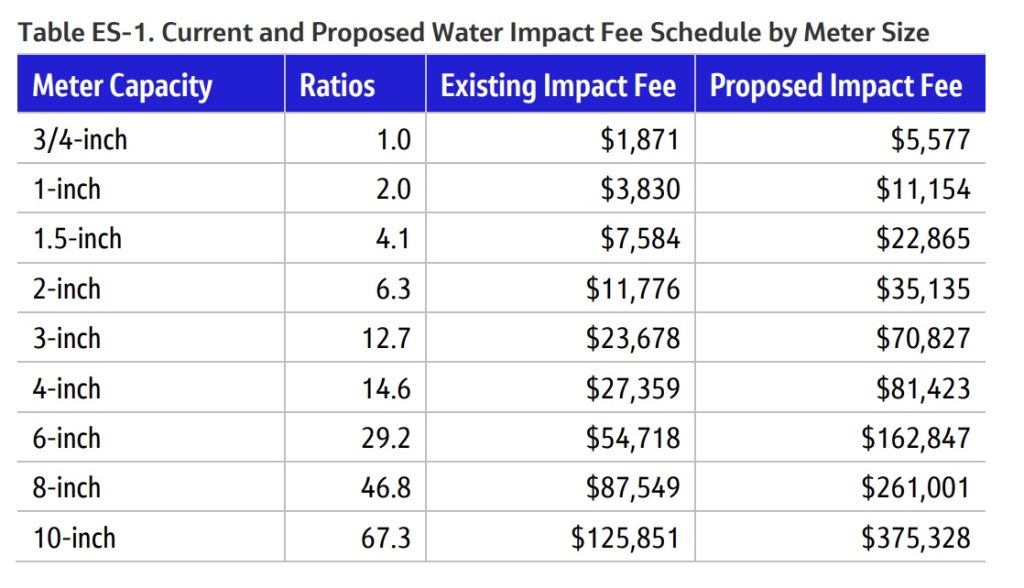
Developers will see a dramatic rise in potable water connection fees.
The dramatic hike in impact fees comes as City Hall is struggling to manage unprecedented debt service for its water infrastructure upgrades, including a $850 million water reclamation facility in Rose Park. A refrain frequently heard by policy makers is that “development should pay for itself,” instead of shunting costs onto existing property owners.
The increased fees, according to the impact fee analysis, are based on calculations to both recoup investments that sustain current capacity as well as help fund capital investments “in planned improvements that provide capacity to serve new users.”
Comparison with other cities
The impact fee study put Salt Lake City’s new fee schedule not at the top, but closer to the middle of the pack of Utah municipalities.
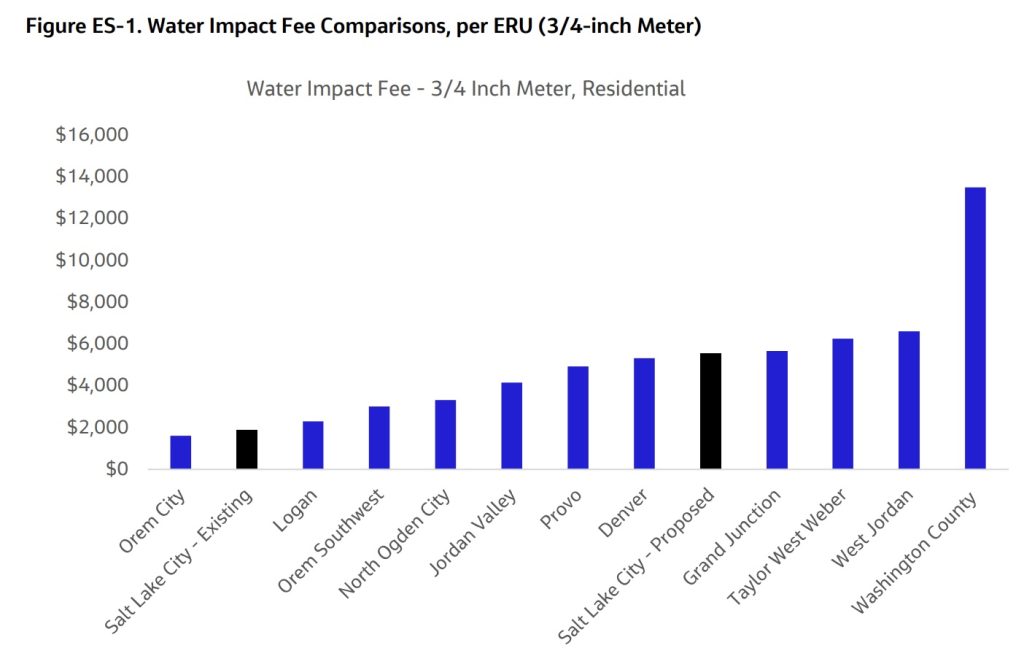
New impact fees, per ERU (Equal Residential Unit), to connect to potable water for a 3/4 inch (single-family) meter in comparison to other cities.
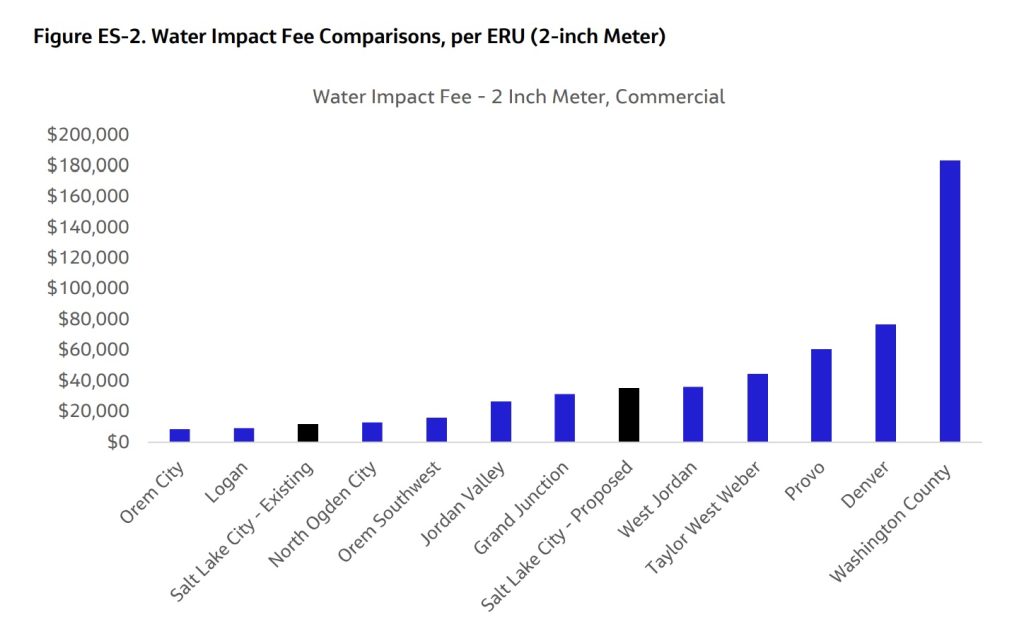
New impact fees, per ERU (Equal Residential Unit), to connect to potable water for a 2-inch meter (commercial) in comparison to other cities.
Effective date
The new rates will be quickly phased-in over less than two years. 70% will go into effect on January 1, 2027, and the full fee will be charged starting July 1, 2028.














I am glad to see that this is being done. The fees had not been updated in many years. Those advancing new developments may complain, but existing rate payers have good cause to complain about the many years that new or expanding utility customers did not cover a fair share of the costs to connect to the utility system. The decisions on impact fee charges are based on data, and charges do not exceed actual costs.