
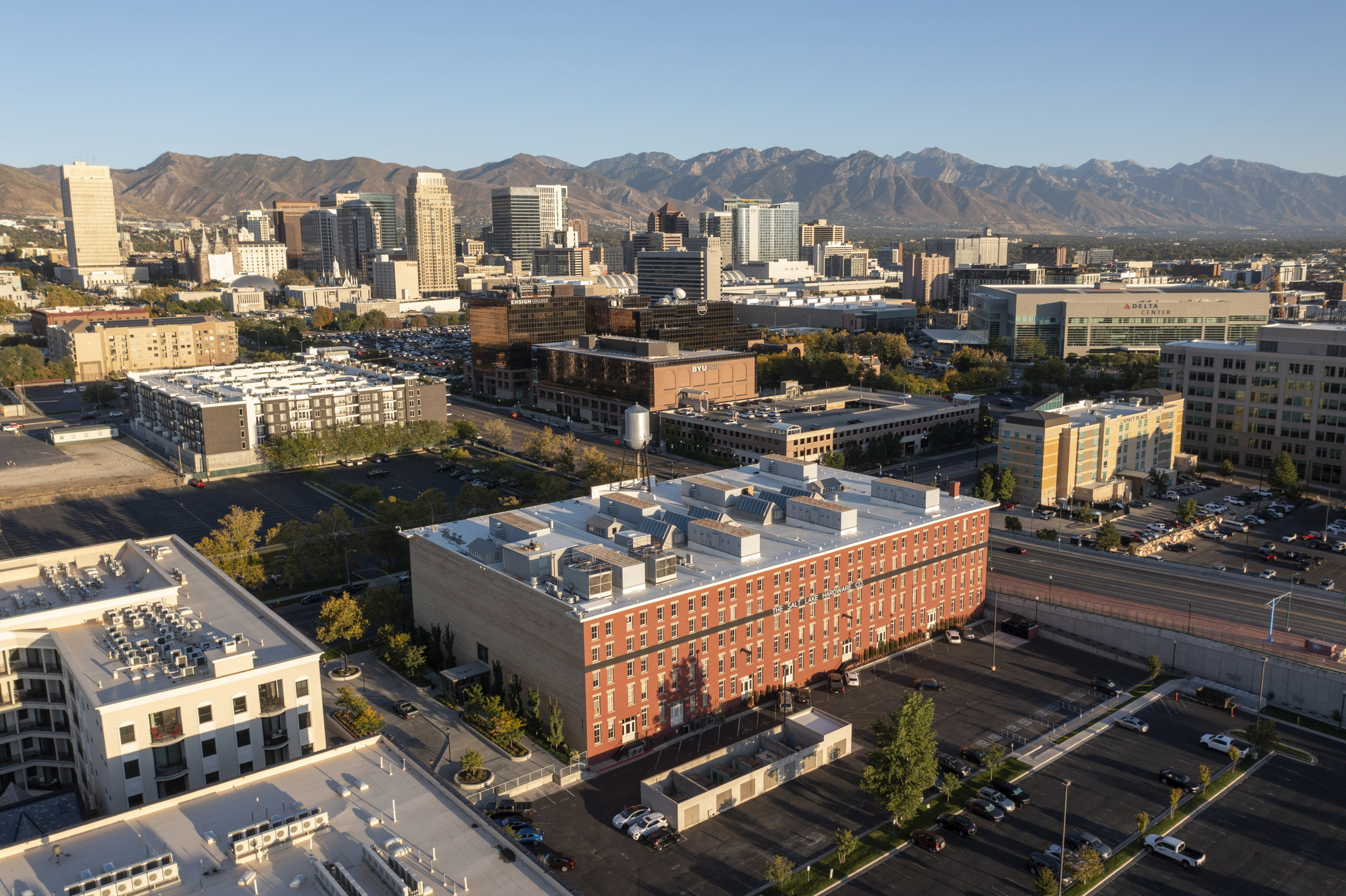
Even if the Salt Lake City Council agreed to adopt Mayor Erin Mendenhall’s proposed property tax increase as part of its 2026-2027 budget, the capital city would have one of the lowest tax rates in the county, according to an analysis of local tax rates.
Mendenhall called for increasing the city’s portion of property taxes by 12.5 percent next year to pay for capital improvements and infrastructure, among other city services and amenities.
The change would amount to an increase of about $140 annually, or about $12 per month, on median priced homes in the city. The median sold price in the city was $625,000 last month, according to Realtor.com.
Even if the hike is approved, Salt Lake City’s property tax rate would be lower than all but six cities and towns in Salt Lake County, according to the analysis, which was created using Claude Pro (methodology below).
The graphic pulls from tax rate data released by the Utah Tax Commission. It doesn’t account cities and towns that may have proposed tax increases of their own.
Salt Lake County already has one of the lowest overall property tax rates in the country, according to the Tax Foundation. An increase in property taxes could indirectly flow through to renters through higher rent.
The impact of other fee increases would actually hit harder than the tax hike and would account for renters in single-family homes if they directly pay their utilities.
The monthly water bill would go up around $14, sewer would increase by $11, stormwater by $2 and street lighting by $2.50, Mendenhall’s slides said. Garbage and recycling fees would increase by roughly $3 per month.
Methodology: Property tax rates in this calculator are drawn from the Utah State Tax Commission’s 2025 Tax Rates by Tax Area (Report 600, published January 5, 2026). Because rates vary by parcel depending on which special service districts apply, we used the most common representative tax area for each municipality — typically the area covering the largest share of properties in a city’s core. Total rates are broken into four components: the municipal levy, the applicable school district, the countywide levy, and all remaining special district charges (fire, law enforcement, library, water, mosquito abatement, and others). Utah law assesses residential primary residences at 55 percent of fair market value under the Homeowner’s Exemption; commercial properties are assessed at 100 percent. The proposed 2027 scenario applies a 12.5 percent increase to Salt Lake City’s municipal levy only — from 3.180 mills to 3.578 mills — holding all other components constant. All figures are estimates; actual bills depend on a property’s specific tax area and applicable exemptions.









0 Comments