
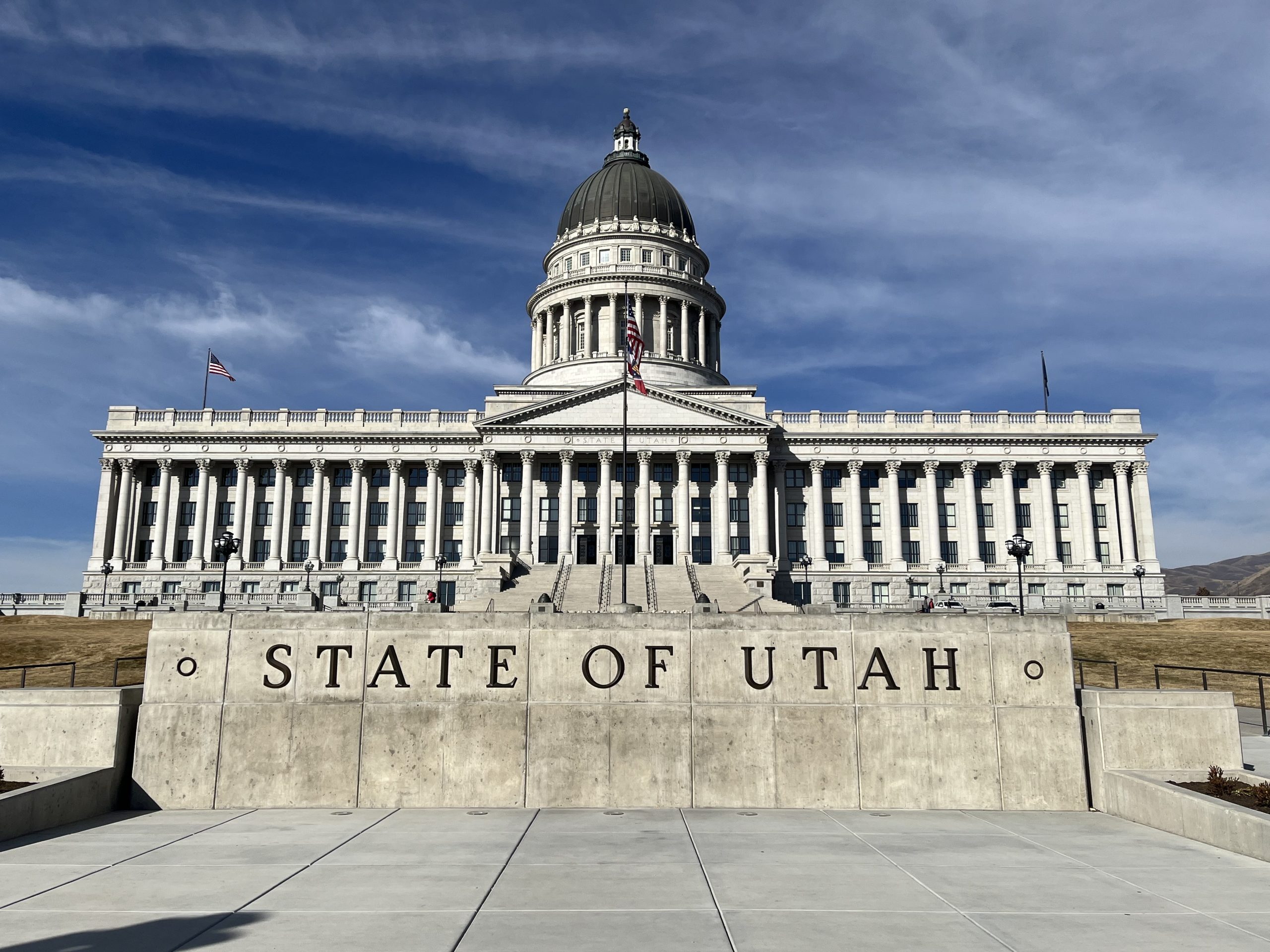
Nearly 3,000 households in Utah have utilized the state’s first-time homebuyer program since it was created in 2023, according to figures assembled by the Utah Housing Corporation and provided by the Utah Senate.
The Utah Housing Corporation has doled out over $58.5 million as part of the First-Time Homebuyers Assistance Program (FTHB), an initiative created as part of 2023’s Senate Bill 240. It included buyers of new-build homes, whether townhomes, single-family detached, condominiums or manufactured homes. The bill was authored by Senate President Stuart Adams, who asked for additional funds for the program Wednesday morning at the Utah State Capitol.
Here’s a look at the update proposed as well as the performance of the program so far.
Yesterday on the Hill
Adams sat before the Economic and Community Development Appropriations Subcommittee and asked for an additional $10 million for the program, adding that housing affordability remains a top priority for Utah leaders.
“The economy has been strong, but still, hard working Utahns who make really good salaries have not been able to get into a first home, and that’s been a big problem,” Adams told the subcommittee.
Buyers would not need to repay the loan via monthly payments, and instead would repay the loan whenever their home is sold or refinanced. Repaid funds would then be put back into the program for other home buyers to use. Funds got to the Utah Housing Corporation, which maintains the program.
Adams’ 2023 bill provided $50 million for the program, which provides loans up to $20,000 in an interest-free loan to a first-time home buyer. The loan program stipulates that only new-build homes that have not yet been occupied are eligible for the program, and homes must be priced below $450,000.
Adams said the loan can be used not only as a down payment, but also to buy down interest rates, pay for closing costs or other costs in the home buying process. He said the additional $10 million appropriation, “will allow more kids, more families, to be able to buy that first home, to be able to accomplish that American dream.”
“We’re not going to allow Utah to continue to be, or to be, a state of renters,” he said. “We’re going to make sure we get our kids into homes.”
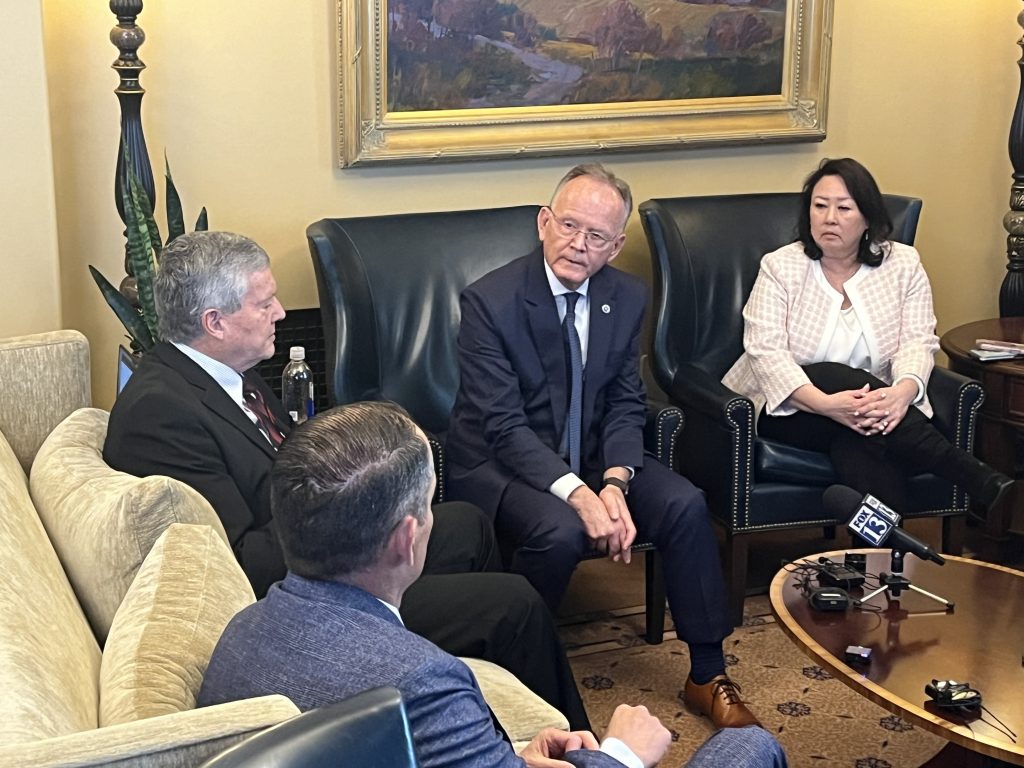
Utah Senate President J. Stuart Adams, center, speaks during media availability on Feb. 4, 2026. Photo by Jacob Scholl | Building Salt Lake
Following the Wednesday morning hearing, Adams told Building Salt Lake the program would not see any changes this year regarding eligibility or the terms of the loan program. Adams said he’s had people ask about dropping the new-build requirement, but he said that stipulation incentivizes new housing stock that Utah desperately needs.
Performance so far: SB 240 of 2023
The state has distributed $58.5 million as part of the First-Time Homebuyers Assistance Program (FTHB), an initiative created as part of 2023’s Senate Bill 240.
Data supplied to BSL by the Utah Senate outlines not only the number of Utahns that have utilized the program, but also the cities in which the funds have been spent.
As of Jan. 30, the Utah Housing Corporation (UHC) has awarded these loans to 2,934 households around the state, with the average loan totaling $19,948. The average price for homes purchased with the help of the FTHB program was $388,698, and the average annual household income for loan awardees was $90,321, the UHC data says.
For reference, Salt Lake County’s area median household income is $115,500 for a family of four, according to Salt Lake County. In Utah County, the area median household income is $118,700 for a family of four.
Utah County was the largest recipient of first-time home buyer funds, as the county accounted for 46% of properties purchased with the program. Salt Lake County saw 18% of purchases, Tooele County accounted for 8%, Washington County saw 8% and Cache County made up 4%. All other Utah counties combined to account for 16%.
For specific cities, Utah County had three of the top five cities awarded the most funds. Homes in Saratoga Springs and Eagle Mountain accounted for 16% and 13% of homes purchased with this program, respectively. Homes in Tooele City accounted for 7%, Magna saw 6% and Spanish Fork saw 6%, according to the UHC data. All other Utah cities accounted for 52% of homes purchased as part of the program.
The majority of homes purchased via the program were townhomes or attached units, the data says, accounting for 66.4% of those homes. Single-family homes or detached units made up 17.8% of homes purchased, 15.4% were condominium units and 0.4% were manufactured homes.













0 Comments